
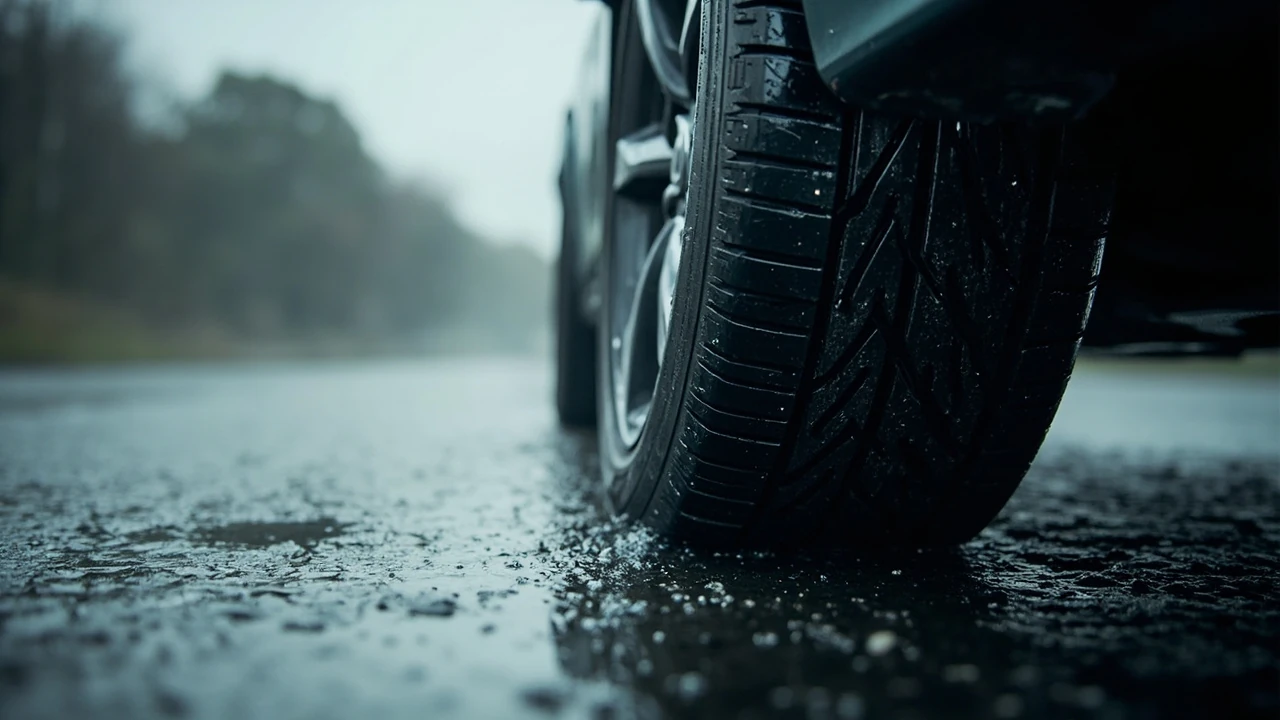
Firestone Weathergrip: what this all-season tire actually delivers
A driver shopping for a year-round tire in a region with mild winters, frequent rain, and the occasional surprise snowstorm faces a familiar trade-off. Dedicated winter tires wear out quickly when left on in July, summer tires lose grip the first time temperatures drop below about 45°F, and cheap all-seasons tend to be a compromise that fails at exactly the moment a driver needs them most. The Firestone Weathergrip is engineered for that middle ground, and the practical question most buyers ask is straightforward: does it actually hold up across the seasons, and what does the fine print cover if it does not.
This guide walks through what the Firestone Weathergrip is, how its design differs from a standard all-season, which vehicles and drivers it fits, what the published warranty covers, and which trade-offs a buyer should weigh before paying for a set. The goal is to give a homeowner or daily driver enough context to walk into a tire shop already knowing which questions matter and which marketing claims to set aside.
What the Firestone Weathergrip is designed to do
The Weathergrip sits in the all-season touring category rather than the high-performance or winter category. Touring all-seasons target a specific buyer: someone who drives a sedan, small SUV, crossover, or minivan, racks up moderate annual mileage, deals with rain and the occasional cold snap, and wants one set of tires that can stay on the vehicle year-round. The Weathergrip is engineered around three practical demands:
- Reliable wet traction for routine rain and the surprise thunderstorm on a summer highway.
- Enough cold-weather grip to handle a few light snow days without needing a seasonal swap.
- A quiet, comfortable ride that does not punish drivers on long commutes.
That is a different brief from a winter tire, which uses a softer rubber compound and aggressive siping for deep snow and ice, and from a summer performance tire, which prioritizes dry cornering and braking at the expense of cold grip. The Weathergrip is meant to be a sensible middle option rather than a specialist.
Key design and construction features
Although tire marketing tends to blur the line between engineering and slogans, several features of the Firestone Weathergrip are worth understanding because they shape the driving experience in measurable ways.
All-season tread compound
The Weathergrip uses a silica-enriched tread compound that stays flexible across a wider temperature range than a summer tire. The practical effect is shorter braking distances on cold, wet pavement, which matters more in daily driving than dry-corner grip numbers. Silica-rich compounds also tend to resist hardening as the tire ages, although no tire is immune to eventual dry rot.
Directional tread pattern with full-depth siping
The tread is directional, meaning the grooves form a V-shaped pattern that channels water away from the contact patch. Directional patterns are common on tires aimed at wet and light-snow performance. The siping, which refers to the small slits cut into the tread blocks, runs across the full tread depth rather than being limited to the surface. Full-depth siping helps maintain biting edges as the tire wears down, which keeps wet and light-snow traction more consistent through the tire’s life.
Asymmetric block design
Inside shoulder blocks are tuned to evacuate water, while outside shoulder blocks are stiffer to support cornering. The asymmetry is a quiet but real engineering choice. It is one of the reasons the Weathergrip can claim both wet performance and reasonable dry handling from the same tire.
Variable-pitch tread sequence
Pitch sequencing randomizes the spacing of tread blocks around the tire to break up the frequency of noise they generate against the road. A simpler tread pattern can hum at a single annoying frequency; variable pitch spreads that energy across a wider range so the cabin stays quieter, especially on highway drives.
Where the Firestone Weathergrip fits in the all-season market
Shopping for a touring all-season usually means comparing a few well-known names. The table below places the Weathergrip in context with the kind of alternatives a buyer is likely to see on a tire-shop wall.
| Attribute | Firestone Weathergrip | Typical premium touring all-season | Dedicated winter tire |
|---|---|---|---|
| Category | All-season touring | All-season touring | Winter / snow |
| Intended use | Year-round, light winter | Year-round, light winter | Cold months only |
| Wet braking emphasis | High | High | Moderate |
| Light snow traction | Good | Good | Excellent |
| Deep snow / ice | Limited | Limited | Strong |
| Treadlife warranty | Manufacturer-limited mileage warranty (see current terms) | Typically 50,000–70,000 miles | Not mileage-rated |
| Year-round use | Yes | Yes | No, swap seasonally |
The honest read of that comparison is that the Weathergrip is not trying to be a winter tire. It is a competent all-season that handles ordinary winter driving in most U.S. climates. Drivers in mountainous regions, the Upper Midwest, or anywhere that sees prolonged ice and deep snow should still plan on a dedicated winter set, because no all-season matches the grip of a true winter compound on frozen surfaces.
Vehicle fit, sizing, and speed ratings
The Weathergrip is produced in a wide range of sizes that cover most sedans, crossovers, and small SUVs on the road. Sizing is where many buyers first run into trouble, so it is worth a careful look.
How to read a tire size
A size string such as 215/55R17 covers three pieces of information: section width in millimeters, sidewall aspect ratio as a percentage of width, and the wheel diameter in inches. The speed rating and load index sit at the end. The vehicle’s door-jamb sticker lists the size the manufacturer recommends, and that recommendation is the safest starting point. Deviating from it requires attention to load index and overall diameter, because a taller or shorter tire changes speedometer accuracy, clearance in the wheel well, and sometimes ABS calibration.
Speed ratings you will see
All-season touring tires, including the Weathergrip, usually carry H or V speed ratings, which correspond to 130 mph and 149 mph respectively. Either is more than enough for legal U.S. highway driving. The rating matters mainly because it signals the level of heat resistance built into the tire, and a higher-rated tire is generally more tolerant of sustained high-speed use on hot pavement.
Load index
The load index is a two- or three-digit number that translates to a maximum weight each tire can carry. Owners of heavier vehicles, including three-row SUVs and light trucks, should pay close attention to load index rather than focusing only on size and price.
Performance in real conditions
Marketing claims on a tire sidewall are necessary, but a daily driver cares about how the tire behaves in the conditions that actually come up. The sections below summarize what the Weathergrip is generally credited for, and where it is not the right tool.
Wet roads
Wet traction is the Weathergrip’s strongest claim. The directional pattern and full-depth siping work together to move water out of the contact patch and to provide biting edges on a wet surface. Hydroplaning resistance is the practical concern in heavy rain, and that is where a directional touring pattern tends to outperform older symmetric all-season designs. Drivers who commute through frequent rain, or who live in the Pacific Northwest, the Southeast, or the Mid-Atlantic, will notice the difference on the first extended storm.
Light snow and slush
In a few inches of fresh snow, the Weathergrip performs like a competent all-season. It is not a snow tire, so very deep accumulation or packed ice will expose its limits quickly, but the cold-flexible compound and full-depth sipes help it clamber through the kind of slushy, plowed, partially cleared roads that most U.S. drivers actually face in winter. For a homeowner weighing whether to keep one set year-round, this is the relevant use case, not the worst-case blizzard.
Dry handling
Dry performance is competent rather than sporty. Steering response is predictable and braking distances are reasonable for the category. Drivers who want sharp turn-in and high lateral grip from a tire should look at a summer or ultra-high-performance tire instead. Touring all-seasons are tuned for comfort and predictability, not lap times.
Noise and comfort
Variable-pitch tread blocks and a relatively tall sidewall on many sizes keep cabin noise modest. The Weathergrip is generally considered a quiet touring tire, and on most family sedans and crossovers it does not introduce any noticeable hum at highway speed.
Warranty terms buyers should actually read
Warranties on tires are real contracts, but they are also one of the most common sources of disappointment at the service counter because buyers assume more coverage than the document actually provides. The published exchange and replacement terms on the official Firestone Weathergrip product page make the headline rule clear: exchanges are processed only when a Bridgestone or Firestone brand tire of equal or similar value is offered as the replacement, proof of purchase is required, in-store installation is mandatory and billed separately, and additional conditions, fees, and taxes can apply. The full warranty booklet governs the actual coverage.
That language is not unusual for the industry, but it carries practical consequences. A driver who bought the Weathergrip and wants to claim under the treadlife warranty needs to keep the original receipt, has to take the vehicle to a participating dealer for inspection, and should expect to pay for mounting, balancing, and any valve or disposal fees on top of any pro-rated credit. Planning around those requirements up front is the difference between a smooth claim and a frustrating afternoon.
What the limited warranty typically covers
Tire warranties generally cover two things. First, a treadlife mileage warranty, which pro-rates a credit toward a replacement if the tire wears down to a low tread indicator before the published mileage figure. Second, a uniformity and materials warranty, which addresses manufacturing defects, irregular wear from the factory, and problems with the tire’s construction. Both have conditions, time limits, and exclusions, so reading the booklet before a problem arises is the cheapest insurance a buyer can get.
What the warranty usually does not cover
Damage from road hazards such as potholes, curbs, nails, and debris is almost always excluded. So is irregular wear caused by misalignment, underinflation, overinflation, or improper rotation. Owners who skip rotations will often find their warranty claim denied even if the tire wore prematurely for a reason the manufacturer is willing to cover, because the burden of maintenance falls on the owner.
Maintenance that extends tread life
No tire lasts forever, and a few habits make a measurable difference in how long a set actually serves a driver. The list below covers the practices a careful owner should adopt on day one.
- Check tire pressure at least once a month, and again before any long trip. The correct pressure for the vehicle is on the door-jamb sticker, not on the sidewall of the tire.
- Rotate the tires every 5,000 to 7,500 miles, or at every other oil change, to even out wear between the front and rear axles.
- Inspect the tread depth with a simple gauge or the built-in wear bars. Tires that drop below about 4/32 of an inch in wet-prone regions lose meaningful wet grip.
- Have the alignment checked whenever the vehicle pulls to one side, after hitting a significant pothole, or whenever new tires are installed.
- Avoid mixing tire brands, models, and tread patterns on the same axle, which can upset handling balance and ABS behavior.
The first three habits account for most of the lifespan difference between a set of tires that lasts and one that fails early. Pressure alone is responsible for a large share of premature wear and for the gradual loss of wet and cold grip that owners sometimes blame on the tire itself.
How the Weathergrip compares on the practical decision points
Buyers rarely choose a tire on engineering data alone. The table below organizes the decision around the questions a shopper is actually asking in the store.
| Question | What the Weathergrip offers | What to weigh against it |
|---|---|---|
| Can I leave them on all year? | Yes, in most U.S. climates | In heavy-snow regions, a second set of winter tires is safer |
| How do they handle rain? | Strong wet braking and hydroplaning resistance | No tire is immune to standing water; slow down in storms |
| Are they noisy? | Quiet for the touring category | Aggressive-pattern tires are louder; ultra-high-performance tires can be harsher |
| Are they good for towing? | Limited by load index, not designed for heavy trailer use | Light truck or trailer-rated tires are a better match |
| What is the warranty? | Mileage and materials coverage with pro-ration, in-store installation required | Keep receipts, follow maintenance schedule, read the booklet |
| Are they a budget tire? | Mid-range, not the cheapest all-season available | Premium touring all-seasons cost more; budget all-seasons cost less and usually perform less |
The recurring theme is that the Weathergrip is a balanced touring tire that respects the limits of its category. It will not turn a family crossover into a sports car, and it will not pretend to be a snow tire in January, but it is a sensible default for the way most U.S. drivers actually use their vehicles.
Who should and should not buy the Firestone Weathergrip
It helps to make the decision explicit. The list below identifies the drivers for whom this tire is a natural fit, and the conditions in which another choice is the more responsible one.
Good fit for
- Sedan, hatchback, minivan, and crossover owners who want one set of tires for the full year.
- Daily commuters in regions with mild winters, frequent rain, and a few light-snow events each season.
- Drivers who prioritize wet braking, predictable handling, and a quiet cabin over outright sport performance.
- Households with two vehicles who want to standardize on a single all-season tire for both.
Less appropriate for
- Owners in regions with sustained sub-freezing temperatures, packed ice, and regular plow-depth snow.
- Drivers who want sharp, sporty turn-in response and are willing to give up cold-weather capability.
- Light trucks and three-row SUVs that regularly tow heavy loads and need trailer-rated load indexes.
- Performance-oriented drivers on dedicated summer cars who want maximum dry grip on warm days.
Common questions to ask the installer
A short list of practical questions turns a tire purchase from a transaction into a planned decision.
- What is the manufacturing date code on the tires being installed, and is the stock fresh?
- Does the quoted price include mounting, balancing, new valves, and disposal of the old tires?
- What is the documented tire pressure for this specific vehicle, including any rear-axle recommendation for towing or load?
- How often does the installer recommend rotation, and is there a schedule written into the service record?
- What does the pro-rated treadlife formula look like at, for example, half-wear, if a warranty claim becomes necessary?
Those questions do not take long, and the answers often determine whether two nearby quotes actually represent the same value or just the same headline number.
Cost expectations and how to read a quote
Total cost for a set of four Firestone Weathergrip tires is the sum of the tires, mounting, balancing, valves, disposal of the old tires, taxes, and any shop fees. The tire price itself is the most visible number, but the peripheral charges can add a meaningful percentage to the bill. A buyer who compares two quotes should ask each shop to itemize the same list of services so the comparison is fair.
Road-hazard coverage is sometimes offered as an add-on. It is not a manufacturer warranty, and it is not a substitute for careful driving. Some drivers find it useful, others consider it an unnecessary upsell. The decision depends on local road conditions and on how risk-averse the owner is, and it is worth making deliberately rather than accepting or declining it reflexively at the counter.
When a second set of tires still makes sense
Even buyers who choose the Weathergrip sometimes end up with a second set of wheels. The most common reasons are practical rather than aspirational. A driver who logs high mileage in a snowy region and does not want to schedule seasonal swaps can mount winter tires on a second set of wheels, then swap the whole package at home. A second set also keeps the original wheels from accumulating road-salt corrosion and avoids the repeated mounting and balancing charges that add up over a decade of seasonal changes.
That setup is not for everyone, but it is worth considering if a household owns a vehicle that has to be ready to drive in any condition, including a snowstorm on a school morning. The Weathergrip handles the shoulder seasons and the everyday winter commute; a dedicated winter set handles the worst week or two of the year.
A practical way to think about the decision
Choosing a tire is a small but recurring decision, and it pays to be deliberate. A useful way to frame it is to write down three answers before visiting a shop: the climate the vehicle actually lives in, the worst road conditions encountered in a typical year, and the kind of driving the owner does day to day. The Firestone Weathergrip makes sense for the largest middle of that triangle, where the climate is moderate, the worst conditions are wet roads and the occasional snow day, and the daily driving is commuting and family trips rather than track days or heavy towing. Drivers who fall clearly outside that middle should choose a tire built for their specific corner of the triangle instead.
If the buyer takes one practical step after reading this guide, it should be to confirm the published warranty terms against the current product page and the booklet that ships with the tires, then keep the proof of purchase in a known location. The best warranty is the one a driver can prove they qualify for on the day they need it.
Frequently asked questions
Is the Firestone Weathergrip a true all-season tire?
Yes, it is engineered as a year-round touring all-season. It is designed to handle dry, wet, and light winter conditions without requiring a seasonal swap, although it is not a substitute for a dedicated winter tire in regions with sustained snow and ice.
How many miles should a set of Firestone Weathergrip tires last?
Treadlife depends on driving habits, road conditions, climate, and maintenance, especially inflation and rotation. The published treadlife mileage figure is a guide for properly maintained tires on a typical driver. Routine rotations and correct pressure are the two habits that make the largest difference.
Does the Weathergrip perform well in heavy rain?
Wet braking and hydroplaning resistance are among the design priorities of this tire. The directional tread and full-depth siping help evacuate water from the contact patch, and the silica-enriched compound stays flexible when the pavement is cold and wet. The tire still requires sensible speed in standing water, since no consumer tire can defy hydroplaning at highway speed.
Can the Weathergrip handle snow and ice?
It can handle light snow, slush, and the kind of partially plowed roads that most drivers see in a typical U.S. winter. It is not a winter tire, and on packed ice or in deep snow its limits show quickly. Drivers in heavy-snow regions are safer with a dedicated winter set.
What does the Firestone Weathergrip warranty cover?
The warranty covers eligible treadlife replacement on a pro-rated basis, plus materials and workmanship defects under defined conditions. The published terms require proof of purchase, an exchange of equal or similar Bridgestone or Firestone brand value, and in-store installation, with additional conditions, fees, and taxes possible. The full warranty booklet governs the actual coverage.
Is the Weathergrip noisy on the highway?
It is generally considered a quiet touring tire. The variable-pitch tread sequence is designed to break up noise frequency, and on most sedans and crossovers the cabin stays calm at highway speed. Tire noise perception varies by vehicle, so a short test drive is the best way to confirm.
What sizes is the Weathergrip available in?
Sizing covers a wide range of fitments for sedans, crossovers, minivans, and small SUVs. The correct size for a specific vehicle is on the door-jamb sticker, and the load index and speed rating should match the manufacturer’s recommendation. A tire shop can confirm fitment before installation.
How does the Weathergrip compare with a dedicated winter tire?
A winter tire uses a softer rubber compound and a more aggressive tread pattern optimized for snow and ice. It grips far better in those conditions but wears quickly on warm, dry pavement. The Weathergrip trades some of that extreme winter capability for year-round usability and longer treadlife on hot roads.
Do I need an alignment when switching to the Weathergrip?
An alignment is a good idea any time new tires are installed, especially if the old tires wore unevenly or the vehicle has been pulling to one side. Correct alignment protects the new tread from premature wear and supports the warranty conditions that depend on proper maintenance.
Where is the Weathergrip manufactured?
Tire production locations can change over time, and specific plant information varies by size. The tire’s DOT code, which is printed on the sidewall, identifies the manufacturing plant and production week. A tire shop can read that code if origin matters for a particular purchase decision.
Leave a Reply