
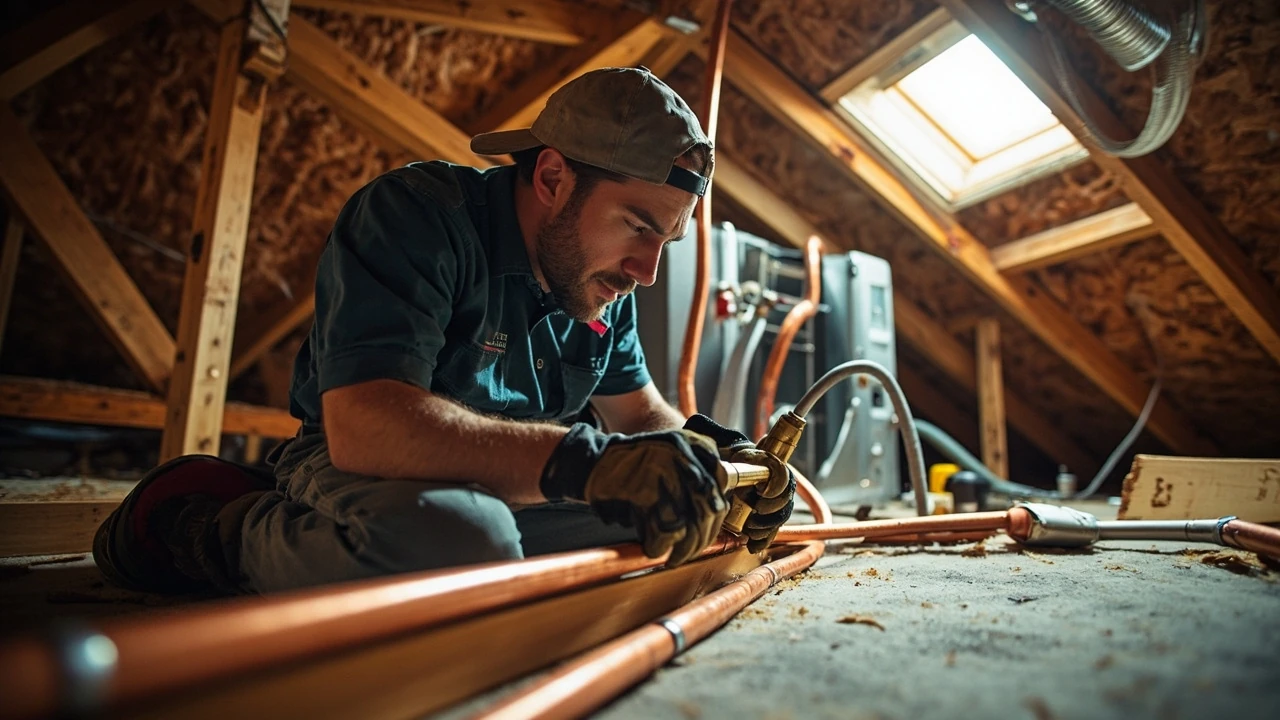
AC installation services: what homeowners should know before booking
A new central air conditioner is one of the larger mechanical purchases a U.S. homeowner will make, and the difference between a smooth install and a years-long headache usually comes down to decisions made before the crew ever shows up. AC installation services are not just a box on a quote line; they are a sequence of sizing, code, and craft decisions that determine whether your home stays cool, your utility bill stays predictable, and your equipment survives its full service life. This guide walks through how professional AC installation services actually work, what they should include, where homeowners get tripped up, and what to ask a contractor before signing a contract.
What AC installation services actually cover
When a licensed HVAC company quotes AC installation services, the scope can vary widely depending on the home and the existing system. A complete job usually touches every part of the cooling chain, not just the outdoor unit on the pad.
Typical AC installation services include a load calculation on the home, removal and responsible disposal of the old system, setting the new condenser on a level pad or bracket, mounting the indoor coil and line set, pulling a vacuum and pressure-testing the refrigerant circuit, electrical work at the disconnect and air handler, thermostat configuration, and a first-day startup with measured airflow and refrigerant subcooling. Ductwork inspection or modification, new return drops, condensate routing, and permit handling are also common line items, especially in homes that were not originally built with central air.
What is often missing from a lowball quote is just as important as what is included. A bid that only prices the condenser and coil, for example, may push the cost of electrical upgrades, code-required condensate work, and duct sealing onto the homeowner as a change order on installation day.
Why the load calculation matters more than the brand
Most comfort problems with new air conditioners are not caused by bad equipment. They are caused by equipment that is the wrong size for the home. Oversized systems short-cycle, leave humidity behind, and wear out their compressors early. Undersized systems run constantly, never reach setpoint on hot afternoons, and stress the electrical service. Either way, the homeowner pays more than they should.
Accurate AC installation services start with a load calculation, not a square-foot rule of thumb. The two accepted methods used by U.S. contractors are Manual J from the Air Conditioning Contractors of America (ACCA) for sensible and latent heat gains, and Manual S for equipment selection. A good contractor measures windows, insulation, infiltration, orientation, and internal gains before sizing anything.
| Factor | How it affects AC sizing | Where the contractor looks |
|---|---|---|
| Home square footage and ceiling height | Sets baseline cooling load | Floor plans or field measurements |
| Window area, orientation, and glazing | Major source of heat gain | Window schedule, window U-value |
| Insulation levels in attic and walls | Reduces conductive gain | Attic inspection, wall cavity checks |
| Air infiltration and duct leakage | Adds latent and sensible load | Blower door or visual duct review |
| Internal heat gains | Kitchen, baths, lighting, occupants | Appliance count and lifestyle notes |
| Orientation and shading | East and west exposures raise load | Site walk and sun study |
The practical takeaway is that two homes of the same size can need very different tonnages. A shaded, well-insulated 2,000-square-foot ranch with new windows may need 2.5 tons, while a sun-exposed, poorly sealed two-story of the same area may need 4 tons. AC installation services that skip this step are essentially guessing.
Choosing the right type of system for the home
AC installation services can deliver several configurations. The right one depends on the home’s existing infrastructure, the homeowner’s priorities, and the local climate.
- Split system with a gas furnace: the most common setup in cold and mixed climates, sharing ductwork and blower with the heating side.
- Split system with an air handler and electric strip heat: common where natural gas is unavailable or the homeowner wants a simpler fuel mix.
- Heat pump system: increasingly common in moderate climates, where the same refrigerant cycle provides cooling and heating with high efficiency.
- Ducted mini-split or multi-zone system: used where adding ductwork is impractical, in attic conversions, or in homes with room-by-room control needs.
- Packaged unit: a single rooftop or ground cabinet that contains the compressor and coil, used where indoor space is tight.
Each option has tradeoffs in efficiency, cost, and installation complexity. A contractor offering AC installation services should be able to explain why a particular configuration fits the home, rather than defaulting to whatever is on the truck that week.
What a quality AC installation actually looks like
The crew’s behavior on installation day is a strong signal of the company. A careful installer treats a refrigerant system like a sealed, dehydrated vessel, because that is what it is. Small shortcuts turn into long-term problems.
Pre-installation preparation
- Confirm the equipment matches the quote and the load calculation, with matching indoor and outdoor model numbers.
- Verify the electrical panel has enough ampacity and breaker space for the new equipment.
- Inspect the existing ductwork for leaks, disconnected runs, undersized returns, and dirty evaporator coils.
- Walk the homeowner through the day’s plan, the power-down procedure, and the expected outage window.
Mechanical and electrical work
The outdoor unit is set on a level pad or wall bracket with proper clearances for airflow and service access. The line set is routed with insulation intact, brazed under nitrogen to prevent internal scale, and the system is pressure-tested before any refrigerant is added. The vacuum pump pulls the line set and indoor coil down to a deep vacuum and holds it, which removes moisture that would otherwise react with the refrigerant and the oil.
Electrically, the crew installs or reuses a properly sized whip to the disconnect, verifies the breaker rating, and tightens lugs to spec. The thermostat is wired and configured with the correct staging and fan delays for the new equipment.
Startup and commissioning
A startup is not a flip of the breaker. AC installation services should end with measured numbers, not just confirmation that the system blows cold air. The contractor logs subcooling and superheat at the outdoor unit, checks the temperature split between return and supply, measures static pressure across the coil, and confirms the condensate drain is routed and accessible. These numbers belong in the homeowner’s file.
| Commissioning check | Acceptable range | What it tells you |
|---|---|---|
| Return-to-supply temperature split | 16 to 22 degrees F at design airflow | Confirms airflow and refrigerant charge are aligned |
| Subcooling (TXV systems) | Manufacturer spec, commonly 8 to 12 degrees F | Verifies the correct liquid line charge |
| Superheat (fixed orifice systems) | Manufacturer spec, commonly 8 to 18 degrees F | Indicates refrigerant feed into the evaporator |
| Total external static | Below the blower rating, typically 0.5 to 0.8 in. w.c. | Shows whether ducts are restrictive |
| Voltage at the disconnect | Within 10 percent of nameplate | Flags undersized wiring or utility issues |
Homeowners who receive these numbers have a real baseline. If a future service call questions the charge or the airflow, there is a starting point to compare against.
Cost, quotes, and how to compare bids
Most U.S. homeowners looking into AC installation services are comparing two or three written bids and trying to figure out why prices can differ by thousands of dollars on the same house. A few structural reasons explain most of the gap.
- Equipment tier: entry-level single-stage, mid-range two-stage, and variable-speed inverter systems all live under the heading of AC installation services, with very different price points.
- Labor scope: duct modifications, new return drops, electrical panel work, and concrete work for the pad all sit on top of the equipment price.
- Permits and code: cities and counties vary in permit fees and inspection requirements, and the contractor either passes these through or absorbs them.
- Warranty structure: a standard parts warranty is different from a registered warranty that requires commissioning documentation, and from a labor warranty the contractor stands behind directly.
When comparing quotes, it is worth asking each contractor to break out equipment, labor, ductwork, electrical, permits, and warranty. Apples-to-apples comparison only works when the line items line up.
Permits, codes, and refrigerant rules
Most jurisdictions require a mechanical permit for a full AC installation, especially when the work touches the electrical service or the duct system. The contractor pulls the permit, schedules the inspection, and the inspector verifies clearances, electrical bonding, refrigerant line protection, condensate routing, and combustion safety if a gas furnace is in the mix.
The refrigerant side has its own rules. Older systems used R-22, which is no longer manufactured or imported for new equipment. Modern AC installation services use R-410A or R-454B, and the equipment is rated for one specific refrigerant. Mixing refrigerants, cross-contaminating recovery cylinders, or venting refrigerant to atmosphere is illegal under U.S. Environmental Protection Agency rules, and a contractor who cuts corners here is signaling a deeper problem.
Common mistakes that show up on installation day
Most installation failures are not dramatic. They are small, repeated habits that quietly shorten equipment life or drive up utility bills.
- Skipping the Manual J and falling back on square-foot rules of thumb.
- Setting the outdoor unit on an unlevel pad, which can cause oil migration and noise.
- Reusing an old line set without flushing or pressure testing, which can introduce contaminants.
- Failing to pull a deep vacuum, leaving moisture in the system that forms acids over time.
- Charging by weight and walking away without checking superheat and subcooling.
- Ignoring return air restrictions, which can starve the blower and overheat the heat exchanger in winter.
- Routing the condensate line without a trap or secondary drain pan, risking water damage.
A homeowner does not need to be an HVAC technician to watch for these. Asking the crew how they handle each item, in plain language, is a fair filter. AC installation services that answer clearly and methodically tend to deliver clean work; AC installation services that get defensive about basic questions tend to cut corners.
How AC installation services interact with related home systems
A new air conditioner does not live in isolation. Its performance depends on the ducts, the envelope, and the electrical service. Homeowners planning AC installation services should consider whether the rest of the cooling chain is ready for the new equipment.
Ductwork
If the home already has leaky or undersized ducts, a high-efficiency condenser will only deliver a fraction of its rated performance. Duct sealing, return-side improvements, and balancing are often the highest-leverage add-ons during a system replacement. Homeowners tackling bigger projects at the same time, such as finishing a basement egress window conversion, should coordinate schedules so the HVAC crew and the structural crew are not stepping on each other.
Electrical service
Modern condensing units often need 30 to 60 amp dedicated circuits at 208/240 volts. Older homes with 100-amp service can be tight, especially once a heat pump, an electric range, and a car charger are added to the load. A load calculation on the panel, not just the AC circuit, protects the homeowner from nuisance trips and overheated conductors.
Indoor air quality
Replacing a system is a natural moment to add filtration upgrades, a media filter cabinet, or a dehumidification control, especially in humid climates. The labor to add these is much lower during AC installation services than it would be a year later.
Maintenance after the install
Even a perfect install needs regular care. Most manufacturers require proof of annual maintenance to keep the parts warranty valid, and the homeowner’s manual will spell out the specific items a technician must check each year.
A reasonable annual service plan covers coil cleaning, condensate flush, refrigerant check, electrical tightening, and a thermostat review. Some homeowners add a plumbing-style walkthrough for the condensate line, since clogs there are a common source of ceiling stains. For broader home questions, similar preventive logic applies to systems like the water heater, which benefits from a periodic anode rod and pressure valve check rather than waiting for a leak.
How to vet an HVAC contractor
Not every company that offers AC installation services is set up to do them well. A few checks help separate the qualified contractors from the rest.
- State HVAC license and any required registrations, plus a copy of the contractor’s insurance certificate.
- Local references, with addresses the homeowner can drive past to see completed work.
- NATE-certified technicians, which is a U.S. industry credential for HVAC service.
- A written proposal with model numbers, scope, warranty terms, and payment schedule.
- Willingness to pull the permit and put the inspection on the schedule.
A contractor who resists any of these steps is signaling that AC installation services are not a fit for this homeowner.
Where AC installation services fit in a broader remodel
Cooling decisions rarely happen alone. A homeowner finishing an attic, redoing a bathroom, or converting a garage may be coordinating several trades, and the timing of AC installation services matters. Duct reroutes, vent additions, and new returns all become much cheaper when the walls and ceilings are already open.
For homeowners planning a larger project, it is worth sequencing trades early. The same logic that pushes duct sealing and panel upgrades into the AC install also applies to other systems in the home, from the drain lines a hydro jetting crew will clean, to the skylight and roof penetrations a roofer will warranty, to the plumbing repairs a homeowner schedules before a small leak turns into a remodel. A short planning conversation with each trade up front prevents expensive rework later.
Red flags during the proposal process
Some warning signs show up before any tools come out of the truck. Homeowners comparing AC installation services should treat the following as reasons to slow down and ask more questions.
- A bid that skips a load calculation and quotes by square footage alone.
- A quote without model numbers, or one that names a tier without specifying the exact unit.
- Pressure to sign the same day for a special discount that disappears if the homeowner does not commit.
- Refusal to provide a written warranty or to register the equipment with the manufacturer.
- Cash-only terms or a request for a large deposit before any work is scheduled.
These are not unique to HVAC. They mirror the warning signs that show up in other trades, from plumbing repair to brake service, and they are worth treating the same way across the home.
Questions to ask before signing the contract
AC installation services are a significant purchase, and a clear contract protects both sides. Before signing, a homeowner should be able to get straight answers to a short list of questions.
- What is the exact make, model, and efficiency rating of the equipment being installed?
- Was a Manual J load calculation performed, and what tonnage did it recommend?
- What does the warranty cover, how long does it run, and what does the homeowner need to do to keep it valid?
- Are duct modifications, electrical upgrades, and permits included in the price, or are they change orders?
- Who pulls the permit, and when is the inspection scheduled?
- What numbers will the technician measure at startup, and will the homeowner receive them in writing?
- What is the plan for the old equipment, the line set, and any waste from the job?
A contractor who can answer these clearly, in writing, is offering the kind of AC installation services that hold up over the life of the system.
A short checklist before installation day
The week of the install is a good time to set the job up for success. A few small steps reduce surprises and protect the rest of the home.
- Clear access to the attic, crawlspace, mechanical room, and electrical panel.
- Move vehicles out of the driveway to give the crew room for the truck and materials.
- Secure pets, since open doors and loud work can stress animals and the crew.
- Confirm the thermostat location is final, or schedule a relocation before the install.
- Plan for a power outage of a few hours while the electrical work is completed.
AC installation services move faster and cleaner when the home is ready, and the crew can focus on craft rather than navigation.
What a good outcome looks like
A well-executed AC installation looks uneventful from the homeowner’s chair. The system reaches setpoint on a hot afternoon, the house stays quiet, the humidity feels comfortable rather than clammy, and the utility bill is in line with the projection. The thermostat logs make sense, the filter is in an accessible cabinet, the condensate line is routed where the homeowner can see it, and the warranty paperwork is filed with the model and serial numbers.
That quiet, predictable result is the real product of AC installation services. The equipment matters, the brand matters, and the price matters, but the install is what determines whether the homeowner’s next ten summers feel easy or feel like a slow fight with a system that was never quite right. Treating AC installation services as a craft decision, with a real scope, real measurements, and a real warranty, is the most reliable way to get there.
Frequently asked questions
How long do AC installation services usually take?
A straightforward replacement of an existing split system typically takes one full working day, including removal, install, vacuum, startup, and cleanup. Projects that include duct modifications, electrical upgrades, or a new line set run can stretch into two days, especially in tight attics or homes with difficult access.
Do AC installation services require a permit?
Most U.S. jurisdictions require a mechanical permit when the work involves a new circuit, a new line set, or a new air handler. The contractor typically pulls the permit, and a city or county inspector verifies the work. Homeowners can confirm local requirements with the building department before scheduling.
What size air conditioner does the home actually need?
Size is determined by a Manual J load calculation, not by square footage alone. The calculation accounts for insulation, windows, orientation, infiltration, and internal gains. Two homes of the same size can need different tonnages depending on these factors, which is why a contractor who skips the calculation is guessing.
How much do AC installation services cost on average?
Costs vary by region, equipment tier, and scope, but most U.S. homeowners will see a range that reflects equipment, labor, ductwork, electrical, and permits. The most useful comparison is between written quotes that break out each of those line items rather than a single bottom-line number.
Should the ductwork be replaced at the same time?
Not always, but it is worth inspecting. Leaky, undersized, or disconnected ducts limit the performance of even the best equipment, and sealing or modifying them is cheaper during AC installation services than as a stand-alone project later. A contractor can test static pressure and recommend only the work that is actually needed.
What warranty should homeowners expect?
Most new condensing units carry a parts warranty of ten years, with a separate compressor warranty, and indoor coils usually carry a matching parts warranty. These warranties are typically contingent on professional installation and annual maintenance, and many require registration with the manufacturer within a set window after install. The contractor should provide both the manufacturer warranty and a written labor warranty for the installation itself.
Are heat pumps a good option under AC installation services?
For many U.S. homes, especially in mild to moderate climates, a heat pump is a strong fit. It provides cooling and heating from the same equipment, often with high efficiency, and modern cold-climate models perform well at low outdoor temperatures. A contractor can model annual energy use for the home’s specific climate to compare options.
How does the homeowner prepare the home for installation day?
Clear access to the attic, crawlspace, mechanical room, and electrical panel, move vehicles out of the driveway, secure pets, and plan for a few hours without power. The crew will also need a path between the outdoor unit location and the indoor equipment, which often means moving patio furniture or garden items temporarily.
What is the difference between a single-stage, two-stage, and variable-speed system?
Single-stage systems run at one capacity, two-stage systems can run at a lower capacity most of the time and a higher capacity on peak days, and variable-speed systems modulate across a range. Two-stage and variable-speed equipment usually delivers better humidity control, quieter operation, and higher efficiency, at a higher equipment cost. The right choice depends on the home, the climate, and the homeowner’s priorities.
When should AC installation services be scheduled?
Spring and early fall are the practical sweet spots, since HVAC contractors are less busy than at the height of summer, and the homeowner is not depending on cooling during the work. That said, a failed system in July is its own reason to schedule, and many contractors offer emergency replacement service for that exact situation.
Leave a Reply