
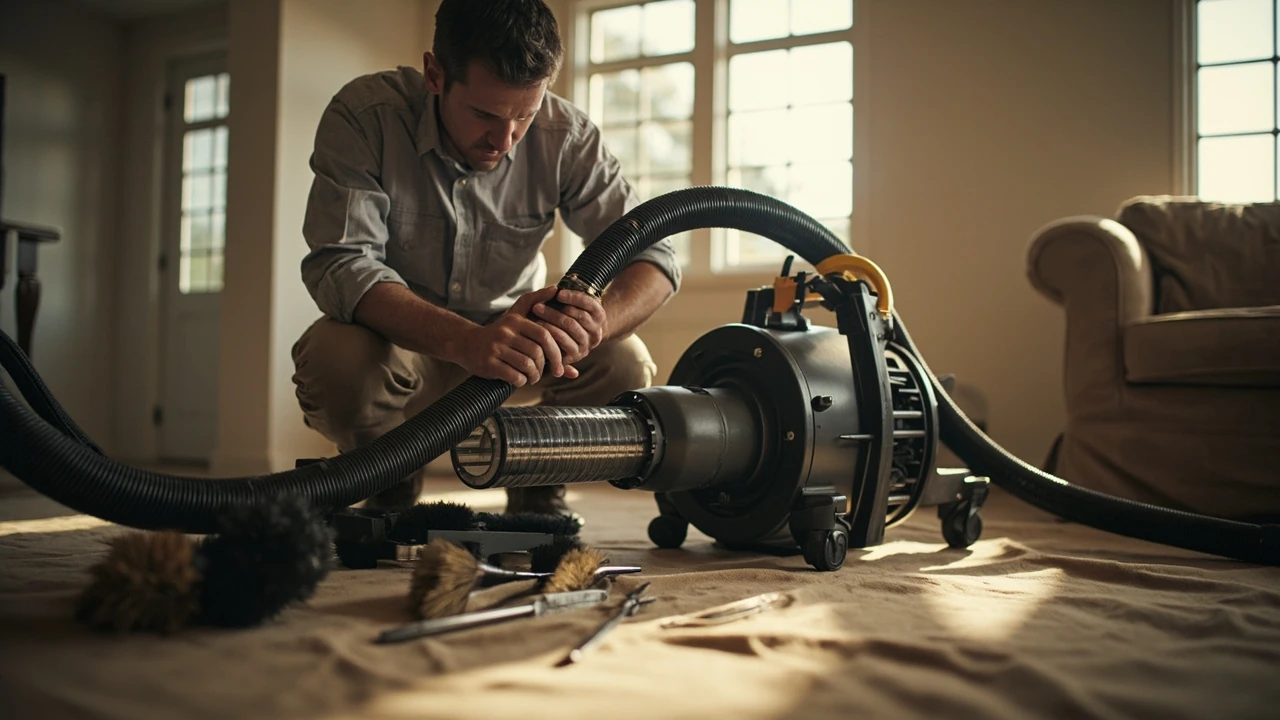
Home air duct cleaning services: what homeowners should actually expect
Most homeowners think about their ducts only when something goes wrong: a musty smell that returns every summer, dust that settles on furniture a day after cleaning, or a filter that turns gray in a few weeks instead of a few months. By the time those signs show up, the inside of the ductwork has usually been collecting debris for years. That is the moment when home air duct cleaning services start to look less like a luxury and more like a maintenance question.
The hard part is sorting real information from marketing. Duct cleaning is a small industry, and the claims around it range from modest (removing dust and pet dander) to sweeping (eliminating allergies and asthma). This article walks through what professional home air duct cleaning services actually do, when they tend to help, what they usually cost, and how to evaluate a company before booking a visit. The goal is to help a homeowner make a calm, well-informed decision rather than a reactive one.
What duct cleaning actually is
Duct cleaning is the mechanical cleaning of the supply and return air ducts, registers, grilles, and the internal components of the heating and cooling system that air passes through. The purpose is to remove contaminants that have built up on the inside surfaces of the ductwork over time. Those contaminants typically include dust, lint, pet hair, pollen, mold spores, construction debris, and in some homes, residues from past smoking or cooking.
According to the U.S. For additional context, Environmental Protection Agency, duct cleaning is not routinely required for most homes, but it can be useful in specific situations such as visible mold growth inside the ducts, a recent renovation, or a verified pest infestation. The EPA is the main federal source on the question of whether ductwork should be cleaned, and it treats the issue as situational rather than universal.
Professional home air duct cleaning services do not simply run a vacuum hose into a vent and call it a day. The industry standard, defined by the Air Conditioning, Heating, and Refrigeration Institute, requires technicians to open access panels, use a high-efficiency particulate collection vacuum, agitate the duct surfaces with brushes or compressed air tools, and clean the blower, evaporator coil housing, and other accessible components. Skipping any of these steps usually means a partial job, even if the invoice looks complete.
How the process works in a real home
Although every company has its own workflow, a credible duct cleaning appointment tends to follow a similar sequence. Knowing the steps helps a homeowner compare estimates, ask the right questions, and spot shortcuts that might otherwise go unnoticed.
- Pre-inspection and setup. The technician walks the home, locates the air handler, counts supply and return registers, and looks for access panels. Many duct systems were never built with service panels, so the technician may need to cut and later seal new ones.
- Connecting a HEPA-filtered vacuum. A powerful vacuum, usually truck- or van-mounted, is connected to the duct system at a strategic point so that the entire system is under negative pressure. This pulls dislodged debris toward the vacuum rather than into the living space.
- Agitating and extracting debris. Brushes, air whips, or rotating contact tools are pushed through each branch of the ductwork to loosen buildup. A separate vacuum hose captures the debris as it is released.
- Cleaning registers, grilles, and accessible components. Registers are removed, washed, and reinstalled. The blower, accessible portions of the coil, and the air handler cabinet are wiped or vacuumed as well.
- Sealing and post-inspection. New access panels are sealed with metal screws and foil tape, the vacuum is disconnected, and the system is tested to confirm normal airflow.
A typical single-family home takes two to four hours depending on duct length, accessibility, and the level of contamination. Homes with multiple HVAC systems or difficult-to-reach duct runs in attics and crawl spaces can take longer. A company that quotes a one-hour cleaning for a 2,500 square foot home is almost certainly doing less than a full job.
When duct cleaning is genuinely worth scheduling
It is easy to talk a homeowner into duct cleaning because the visible result, a clean register grille, looks dramatic. The honest case is narrower. There are a few situations where cleaning tends to produce a real, observable benefit, and a few where it is unlikely to matter.
Situations that usually justify a cleaning
- Visible mold inside the ductwork. If a flashlight shows dark spots on the inside of the ducts, especially near the evaporator coil or in sections that stay damp, cleaning is reasonable. The underlying moisture problem has to be fixed as well, or the mold will return.
- Recent renovation or remodeling. Drywall dust, sawdust, and insulation fibers get pulled into the return side of the system during construction. Even a careful contractor cannot fully prevent this, and the dust usually stays there for years.
- Verified pest activity. Rodents, insects, and their droppings inside ducts are a clear reason to clean, and also to seal entry points.
- A smoker lived in the home for years. Tar and nicotine residues can build up on duct walls and continue to release odor long after the smoking has stopped.
- Persistent musty or burning smells that change with the fan. When the smell gets stronger every time the blower kicks on, the ductwork itself is a likely source.
Situations where duct cleaning is unlikely to help
- General seasonal allergies without other indicators.
- A house that is less than five years old and has had no major work done.
- Unusually high energy bills that have no clear mechanical cause.
- As a routine annual service, with no other reason to suspect buildup.
The point is not that duct cleaning is unnecessary, only that the strongest reason to book it is a specific situation rather than a vague feeling that the air could be cleaner.
What the evidence says about health benefits
The health question is the one most homeowners actually care about, and it is also the one with the weakest evidence. A For additional context, review of available research published in recent years found that duct cleaning has not been shown to produce consistent clinical improvements in allergy or asthma symptoms. The studies are limited, and the populations studied vary, so the absence of strong evidence is not the same as evidence of absence, but it is the honest summary of what is currently known.
What the evidence does support is that visible mold, vermin contamination, and heavy dust accumulation are legitimate indoor air quality problems, and that addressing them through cleaning, source removal, and filtration tends to improve comfort even when formal clinical measures do not change. For a homeowner with severe allergies or asthma, the more important intervention is usually a properly sized MERV-rated filter or a dedicated air cleaner, used together with duct cleaning rather than instead of it.
How often to schedule cleaning
There is no industry-wide mandate for how often ducts should be cleaned, and most authoritative sources, including the EPA, deliberately avoid giving a fixed interval. The general guidance from experienced contractors and home service organizations is to base the schedule on the home rather than the calendar.
| Home profile | Suggested cleaning interval | Main reason for the interval |
|---|---|---|
| Single-family home, no pets, no recent renovation | Every 5 to 7 years | Slow accumulation of household dust |
| Home with one or more shedding pets | Every 3 to 4 years | Pet hair and dander build up faster |
| Home with a smoker or recent remodeling | Every 2 to 3 years | Residues and construction debris |
| Home with allergy or asthma sufferers | Every 2 to 3 years, with upgraded filtration | Reduced allergen load in the airstream |
| Home with confirmed mold or pest issue | Immediately, plus source remediation | Active contamination that will not resolve on its own |
These ranges are starting points, not rules. The real test is what the ductwork looks like when inspected with a flashlight and a borescope. A home with a good filter and minimal indoor pollution may go a decade between cleanings. A home with multiple shedding pets and an attached garage may need attention more often.
What professional duct cleaning should include
Not every service is the same, and the difference between a careful job and a rushed one is usually visible in the written scope. Before booking, it is worth asking for a clear list of what is included.
| Service element | What it should cover | What to watch for as a red flag |
|---|---|---|
| Inspection | Visual review of ducts, registers, air handler, and coil | A quote given without ever looking at the system |
| Truck- or van-mounted HEPA-filtered vacuum connected at the trunk line | A small shop vacuum connected to a single register | |
| Agitation method | Brushes, air whips, or rotating tools for every run | Handheld brush only, or no agitation at all |
| Component cleaning | Blower, accessible coil surfaces, drip pan, and air handler cabinet | Only registers and visible duct surfaces |
| Sanitization | Optional EPA-registered biocide, only if mold is present | Mandatory fogging of every job with no explanation |
| Sealing | New access panels fastened and sealed after the job | Open holes, foil tape alone, or no new panel at all |
A good company will explain each of these steps in plain language. If a salesperson cannot describe what their equipment actually does, that is a sign to keep looking.
What home air duct cleaning services typically cost
Pricing varies by region, system size, and the level of contamination, but there are common ranges in the U.S. market. The numbers below reflect typical 2026 pricing for single-family homes and should be treated as a starting point rather than a quote.
| Home size and complexity | Typical price range | What usually affects the price |
|---|---|---|
| Small single system, under 1,500 sq ft | $300 to $500 | Number of registers, accessibility, and contamination level |
| Average single system, 1,500 to 2,500 sq ft | $400 to $700 | Two-story layout, attic ducts, and pet hair |
| Large or multi-system home, 2,500+ sq ft | $700 to $1,200 | Multiple air handlers and longer trunk lines |
| Add-ons such as coil cleaning, sanitizing, or dryer vent cleaning | $75 to $250 each | Whether the work is bundled or charged separately |
Some companies advertise very low introductory prices, often under $100, and then upsell aggressively once they are in the home. That is not unique to duct cleaning, but it is common in the industry. A written estimate that lists every line item, the number of vents included, and the conditions under which the price can change is the simplest protection against this pattern.
Choosing a duct cleaning company without regret
Duct cleaning is a service where a poor job is hard to detect afterward. The homeowner cannot see inside the ducts, and the work that was skipped does not leave a visible trace. That makes the choice of contractor more important than the choice of price. A few practical filters can help narrow the field.
- Check the certifications and affiliations. The National Air Duct Cleaners Association, often abbreviated NADCA, is the main industry body. NADCA-certified technicians follow a published standard and carry photo ID. Certification is not a guarantee of quality, but the absence of it is a useful warning.
- Ask how the company protects the home. Drop cloths, register bags, and corner guards on the equipment path are small details that signal a careful technician.
- Confirm the vacuum setup. A truck-mounted vacuum with HEPA filtration is the industry standard. Portable vacuums are acceptable for small jobs but should not be the only tool for a whole-house cleaning.
- Read recent reviews with a critical eye. Look for reviews that mention specific technicians, time on site, and before-and-after photos. Generic five-star reviews written in the same week are a softer signal.
- Get the scope of work in writing. The estimate should list the number of supply and return vents, the components that will be cleaned, and what is excluded. Verbal promises tend to be forgotten on the day of service.
A useful habit is to ask the company what they will do if the ducts turn out to be cleaner than expected. A confident answer, including an honest willingness to recommend against a full cleaning, is a good sign. A scripted response that still insists on the original price is not.
What homeowners can do between cleanings
Duct cleaning is a single event, but indoor air quality is an ongoing condition. A few routine practices can extend the benefit of a professional cleaning and reduce how often the next one is needed.
- Change the filter on schedule. A high-quality pleated filter with a MERV rating between 8 and 13 captures most household dust without choking airflow. Check the filter every two to three months and replace it when it looks gray.
- Keep supply and return registers clear. Furniture, rugs, and curtains pushed against a register force the system to work harder and pull more debris into the return side.
- Vacuum with a HEPA-equipped cleaner. Standard vacuums exhaust fine dust back into the room. A sealed HEPA system captures it instead.
- Control moisture. Standing water in the drip pan, a clogged condensate line, or high indoor humidity all encourage mold growth inside the ductwork. A dehumidifier in a damp basement is often a more useful investment than another cleaning.
- Seal duct leaks. Leaks in the return side pull dust from attics, crawl spaces, and wall cavities directly into the airstream. Sealing obvious leaks with mastic or foil tape is a low-cost way to reduce buildup over time.
None of these steps replaces a real cleaning when one is needed, but together they lengthen the interval and make the next service less expensive because there is less to remove.
Common myths worth retiring
Duct cleaning is surrounded by claims that sound technical but do not hold up. A few of the most common ones are worth addressing directly so that future decisions can rest on a clearer foundation.
- “Duct cleaning eliminates allergies.” It can reduce indoor allergens, but it does not treat the immune system. For people with diagnosed allergies, a better filter, source control, and medical treatment do more than duct cleaning alone.
- “You must clean the ducts after any new HVAC installation.” A new system installed in a clean home does not need an immediate cleaning. Construction dust from the install is usually limited and can be addressed with a filter change.
- “If the ducts look clean from the vent, they are clean.” The first foot of a duct near the register is often the cleanest. The buildup is usually further along the run, near bends, and at the air handler.
- “Sanitizing sprays fix mold problems.” Biocides treat surfaces, not the moisture that caused the growth. Used alone, they are a short-term cover, not a solution.
How to prepare the home for a cleaning visit
Preparation is simple, but it does shorten the visit and reduces the chance of accidental damage. A short checklist, done the day before, covers most of it.
- Clear a path to the air handler, which is often in a closet, attic, basement, or garage.
- Move furniture at least a few feet away from supply and return registers.
- Secure pets in a separate room. The equipment is loud, and technicians moving through the home with hoses and cords can be stressful for animals.
- Make sure someone is home for the full appointment. The technician often has questions about access points, and the walk-through at the end is when the results are explained.
- Turn off the HVAC system at the thermostat and at the breaker if the company asks for it. Some companies prefer to manage this themselves.
A good crew will arrive with everything they need, including their own drop cloths and register bags. If a homeowner is asked to supply their own vacuum or run an extension cord across the house, the level of professionalism is not where it should be.
Red flags that suggest a poor service
Most homeowners do not get to see the inside of their ducts after a cleaning, so it helps to know in advance what a rushed or dishonest job looks like from the outside.
- The crew arrives with only a small shop vacuum and a hand brush.
- The estimate is given over the phone without any inspection.
- The technician is unwilling to open an access panel or show the homeowner the interior of the ducts before and after.
- All supply and return vents are cleaned in under 45 minutes for a full single-family home.
- The crew refuses to provide a written invoice that lists what was done.
- High-pressure add-ons such as sanitizing fog or sealants are pushed without a clear reason tied to the home.
None of these signs automatically means the company is dishonest, but several of them together usually mean the job is not what the homeowner was sold.
Frequently asked questions
How long does a professional duct cleaning take?
Most single-family homes take between two and four hours for a complete cleaning of one HVAC system. Larger homes, multi-story layouts, and systems with hard-to-reach duct runs in attics or crawl spaces can take longer. A company that promises a one-hour cleaning for a typical home is almost certainly skipping steps.
Do home air duct cleaning services really improve air quality?
They can, but the effect depends on the starting condition. If the ducts contain visible dust, pet hair, or mild mold, removing that material reduces what the system circulates. In a relatively clean system, the measurable difference is small. The strongest improvements tend to come when cleaning is combined with better filtration and source control.
How often should ducts be cleaned in a home with pets?
A common interval is every three to four years, but the right answer depends on how many pets live in the home, how much they shed, and how often the filter is changed. Homes with multiple heavy-shedding dogs or cats often benefit from a cleaning every two to three years along with a higher-quality filter.
Is duct cleaning worth it if no one in the home has allergies?
It can still be worth scheduling if there is a clear reason, such as a recent renovation, a musty smell, or a rodent problem. In a clean, well-maintained home with no specific complaint, the cost may be hard to justify. The decision usually comes down to whether there is a real problem to solve rather than a general feeling that the air could be cleaner.
Will duct cleaning lower energy bills?
If the ductwork is heavily clogged, cleaning can reduce the workload on the blower and modestly improve efficiency. In most homes the effect is small, and changes in monthly utility bills are more often driven by filter changes, sealing leaks, and HVAC maintenance. Duct cleaning should not be presented primarily as an energy-saving measure.
Is there a difference between duct cleaning and duct sanitizing?
Yes. Cleaning is the physical removal of dust, debris, and biological material from the inside surfaces. Sanitizing is the application of an EPA-registered biocide to reduce microbial growth, and it is only useful when there is a confirmed microbial issue. A responsible company will explain when sanitizing is appropriate and when it is not needed.
Can duct cleaning make the situation worse?
It can, if it is done incorrectly. A poorly designed cleaning can dislodge material from one part of the system and push it into another, especially when the vacuum is undersized. It can also release dust into the living space if registers are not sealed during agitation. The fix is not to avoid cleaning entirely but to use a properly equipped contractor.
What questions should I ask before booking a duct cleaning?
Ask whether the company is NADCA-certified, what vacuum setup they use, how long the job is expected to take, and what is included in the written estimate. Ask whether they open access panels, clean the blower, and seal the panels after the work. The answers should be clear, specific, and consistent.
Should dryer vents be cleaned at the same time?
Dryer vent cleaning is a separate service but is often bundled with duct cleaning because the equipment and access are similar. A clogged dryer vent is a real fire risk, so adding it is usually a reasonable use of the visit. Confirm the price and ask whether the duct cleaning estimate assumes the dryer vent is included or not.
What is the single best reason to schedule a cleaning this year?
A recent renovation is probably the strongest reason. Construction dust is fine, pervasive, and easily pulled into the return side of the system. A cleaning within a few months of a project, combined with several filter changes, prevents that dust from settling into the ductwork for the next decade.
Leave a Reply