
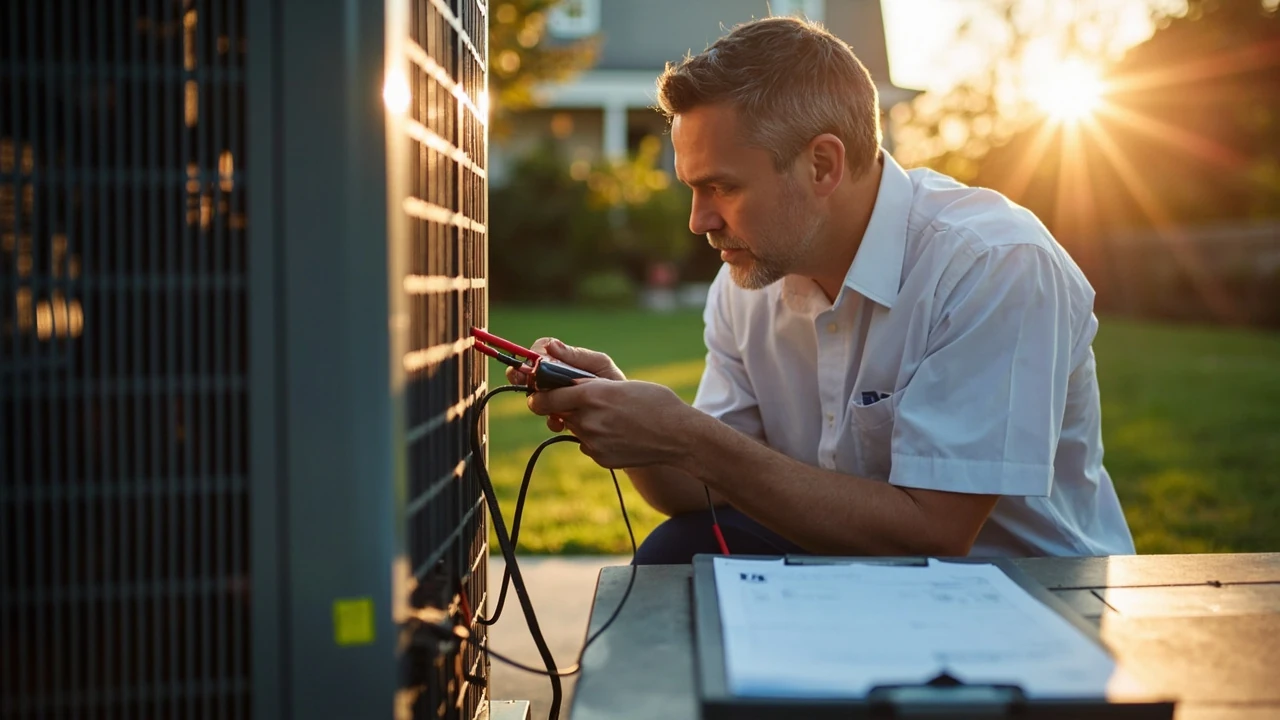
Air conditioner repair services: what homeowners should expect
A central air system that worked fine through last summer can stop cooling on the first 90-degree day, and the first instinct is usually to search for air conditioner repair services as quickly as possible. That urgency is reasonable: in many U.S. homes, the air conditioner is the single most important appliance during a heat wave, especially for households with children, older adults, or anyone managing a health condition made worse by high indoor temperatures.
The trouble is that the search results in the first ten minutes are rarely the ones a homeowner would pick after a calmer review. Some companies are full-service HVAC contractors with licensed technicians and written diagnostic procedures. Others are one-truck operations with a strong local reputation but limited capacity during a heat wave. A few are call centers that sell the job to the highest bidder and then dispatch whoever is available.
This guide walks through how professional air conditioner repair services actually work, what a homeowner can reasonably expect during a service call, how pricing is typically structured, and how to evaluate a company before signing a work order. It also covers the most common repair categories, the difference between repair and replacement decisions, and the questions worth asking before any technician touches the equipment.
How professional air conditioner repair services are structured
Most legitimate residential air conditioner repair services in the U.S. follow a similar workflow, even when the company size, equipment brands, and local codes vary. Understanding the steps helps a homeowner know what they are paying for at each stage and where the real decisions sit.
- Initial contact and triage. A dispatcher asks about the system age, fuel type, symptoms, and whether the home has any working cooling at all. The goal is to match the urgency to the right technician and to flag any safety concerns such as a burning smell, water near electrical panels, or a frozen indoor coil.
- On-site diagnostic visit. A licensed technician arrives, interviews the homeowner, inspects the thermostat, indoor air handler, outdoor condensing unit, refrigerant lines, condensate drain, and electrical connections. Measurements typically include return-air and supply-air temperature, static pressure, amp draw on the compressor and fan motors, and refrigerant pressures.
- Written estimate and options. The technician explains the failure, the available repair paths, parts availability, expected lifespan of the repair, and any related issues found during the inspection. A good company provides a written estimate with parts, labor, taxes, and any trip or diagnostic fee separated.
- Repair work or temporary measures. If parts are on the truck, repairs are often completed the same day. For proprietary boards, specific compressor models, or uncommon refrigerant lines, the technician may stabilize the system, restore limited cooling, and schedule a return visit.
- Verification and documentation. After the fix, the technician re-measures temperatures, confirms airflow, and documents the work with a service ticket that lists parts, serial numbers, refrigerant added, and any recommendations for follow-up.
- Follow-up and warranty. A reputable company follows up within a few days, explains the warranty on parts and labor, and flags any recurring issues that suggest a larger underlying problem.
Common problems a repair service is asked to fix
Not every air conditioner problem is expensive, and not every expensive symptom is a sign the unit is finished. The table below summarizes the issues most repair services see on a regular basis, what typically causes them, and what a realistic fix involves.
| Symptom | Most common cause | Typical repair | Likely outcome |
|---|---|---|---|
| System runs but air is not cold | Low refrigerant from a slow leak, dirty evaporator coil, failing capacitor, or bad contactor | Leak search, refrigerant top-off, coil cleaning, or component replacement | Often a same-day fix if the leak is accessible and the refrigerant is still available |
| Outdoor unit does not start | Failed run capacitor, bad contactor, tripped breaker, or control board fault | Capacitor, contactor, or board replacement after electrical checks | Moderate cost, fast turnaround |
| Water leaking from the indoor unit | Clogged condensate drain, broken condensate pump, or frozen coil that thawed | Drain clearing, pump replacement, or addressing the cause of the freeze | Usually inexpensive, but recurring freezes point to a refrigerant or airflow problem |
| Weak airflow from registers | Dirty filter, blocked return, failing blower motor, or duct issues | Filter change, motor replacement, or duct sealing | Filter fixes are immediate; motor replacement can be more involved |
| System short-cycles on and off | Oversized equipment, low refrigerant, thermostat location, or pressure switch issue | Charge adjustment, thermostat relocation, or pressure switch service | Diagnostic effort is the real cost; the actual fix is often small |
| Loud noises from the outdoor unit | Worn compressor, loose mounting, debris in the fan, or failing motor bearings | Fan motor replacement, debris removal, or compressor diagnosis | Compressor replacement is the expensive case; fans are usually affordable |
| Burning or electrical smell | Overheated motor, failing capacitor, dust on heat exchanger, or wiring issue | Power shut off at the breaker, full electrical inspection, component replacement | Safety-first call; the system should stay off until inspected |
Two things are worth highlighting. First, the same symptom can have very different causes depending on the system’s age, maintenance history, and installation quality. Second, refrigerant problems deserve careful attention: simply adding refrigerant without finding a leak is usually a short-term patch, and many modern systems use refrigerants that are regulated, expensive, and require certified handling.
Repair vs. replacement: how a good technician frames the decision
Every reputable repair technician eventually has a conversation with a homeowner about whether to keep repairing a system or to replace it. The honest answer depends on more than the cost of the current repair, and a clear-eyed comparison usually looks at the age, condition, and history of the equipment.
The U.S. Department of Energy’s standard guidance is that air conditioners older than about ten years, or that have had a major component failure such as a compressor, are usually worth a careful repair-versus-replace review. Newer systems with isolated failures are often the opposite: a single failed part on a five-year-old system is almost always worth fixing.
| Factor | Leaning toward repair | Leaning toward replacement |
|---|---|---|
| System age | Under 8-10 years, well maintained | Over 12-15 years or unknown history |
| Repair type | Capacitor, contactor, motor, drain, thermostat | Compressor, heat exchanger, coil, or sealed-system leak |
| Repair cost | Below roughly 30-40% of replacement cost | Above that range, especially on older equipment |
| Refrigerant type | Standard R-410A system, leak found and repairable | R-22 system with a leak, since R-22 is phased out and expensive |
| Energy use | Reasonable utility bills, even cooling across the home | Rising bills, hot and cold rooms, frequent cycling |
| Comfort complaints | None beyond the current issue | Persistent humidity, poor dehumidification, noise |
| Home plans | Staying in the home short term | Staying in the home long term, with renovation plans |
A trustworthy technician will explain where the system sits on this scale, present the cost and expected life of the proposed repair, and outline the trade-offs of replacement. The homeowner should walk away with a clear sense of the worst case, best case, and likely case, not a sales pitch.
What a typical service call looks like, step by step
The first visit from a repair service is often a diagnostic visit, sometimes combined with a minor repair if the fix is simple. Knowing what to expect during that visit makes it easier to judge whether the work is thorough and whether the price is fair.
- Walkthrough and history. The technician asks when the problem started, what the thermostat is doing, whether any rooms are noticeably different, and whether the system has been serviced recently.
- Thermostat check. Settings, batteries, schedule, and temperature readings are verified. A miscalibrated thermostat can mimic a refrigerant problem.
- Indoor inspection. The air handler or furnace is opened, the filter is checked, the evaporator coil is examined, the drain pan and condensate line are inspected, and the blower is observed running.
- Outdoor inspection. The condensing unit is checked for power, fan operation, capacitor health, contactor condition, coil cleanliness, and refrigerant line temperature and insulation.
- Measurements. Return-air and supply-air temperature are measured to calculate the temperature split, refrigerant pressures are taken at the service ports, and amp draws are read on the compressor and fan motor.
- Diagnosis and options. The technician explains the most likely cause, any contributing issues, and the available repair paths with pricing.
- Decision and repair. With approval, the technician performs the repair, re-measures to confirm the fix, and documents the work.
- Cleanup and review. The work area is cleaned, the homeowner is walked through what was done, and any follow-up is scheduled.
A good diagnostic visit usually takes 45 to 90 minutes including the interview. A short visit that ends with a vague answer and a flat-fee repair recommendation is a red flag. A long visit with clear measurements, a written estimate, and a couple of repair options is the standard to expect.
How air conditioner repair services are priced
There is no single national price list for residential air conditioner repair, because labor rates, parts availability, refrigerant costs, and travel distances vary widely across the U.S. That said, the structure of the bill is fairly consistent, and recognizing the line items makes it easier to compare estimates.
| Line item | What it covers | What a homeowner should look for |
|---|---|---|
| Diagnostic or trip fee | The cost of sending a technician to the home and identifying the problem | Whether the fee is credited toward the repair if the homeowner proceeds |
| Labor hours | Time on the job, sometimes with a minimum hour charge | Whether the company bills in quarter-hour or half-hour increments after the minimum |
| Parts | Components such as capacitors, contactors, motors, valves, boards, refrigerant | Brand of part, whether new or rebuilt, and warranty terms |
| Refrigerant | Reclaimed or new refrigerant added during the repair | Type of refrigerant, pounds added, and whether the leak was found and documented |
| After-hours or emergency surcharge | Premium for nights, weekends, or holidays | Whether the surcharge is a flat fee or a percentage of the bill |
| Permit or code fees | Local requirements for certain repairs, such as electrical or refrigerant work | Whether the company handles the permit and passes the cost through |
Two pricing patterns are worth recognizing. Flat-rate pricing means the company charges a set price for a defined repair, regardless of how long the job takes. Time-and-materials pricing means the bill is built from labor hours plus parts. Flat-rate pricing is easier to compare, but the company has to build the average job length into the price. Time-and-materials pricing is fairer on simple jobs, but it can punish homeowners when a repair takes longer than expected.
Choosing an air conditioner repair service
The goal of selecting a service is to find a company that will be honest about whether to repair or replace, will do the work to code, and will stand behind the repair if something goes wrong. A short screening process saves a lot of money and stress.
- Check licensing and insurance. Most U.S. states require HVAC contractors to hold a license and carry general liability and workers’ compensation insurance. The state contractor licensing board is usually the right place to confirm a license is current.
- Look for NATE certification. The North American Technician Excellence certification is a strong signal that the technician who shows up has passed standardized HVAC testing. It is not a guarantee, but it is a useful filter.
- Read local reviews with context. A company with hundreds of reviews and a consistent story about communication, cleanliness, and follow-through is usually a safer bet than a company with a small number of perfect scores.
- Ask about the diagnostic process. A company that explains how it diagnoses problems before quoting a repair is signaling that the visit is built around finding the real cause, not selling a part.
- Request a written estimate. Verbal quotes are a frequent source of disputes. A written estimate with parts, labor, and warranty terms gives both sides something to reference.
- Compare warranty terms. A one-year warranty on parts and labor is a common industry baseline. Longer warranties on specific components such as compressors are worth asking about.
- Watch for high-pressure tactics. A legitimate company will not pressure a homeowner into signing a replacement contract during a repair visit, will not demand full payment before any work is done, and will not refuse to leave a written estimate.
What homeowners can do before the technician arrives
A few simple checks before calling for service can save a trip charge and sometimes restore cooling on the spot. They also help the technician get to the real problem faster, which can reduce labor cost.
- Replace the air filter. A clogged filter is one of the most common causes of weak cooling, frozen coils, and short cycling. If the filter is gray and packed, swap it before the visit.
- Check the thermostat. Confirm the system is set to cool, the setpoint is below the room temperature, and the batteries are fresh. A blank thermostat screen after a power blink is a frequent false alarm.
- Look at the breaker. A tripped breaker at the air handler or outdoor unit often points to a real electrical problem, but a single reset attempt is a reasonable diagnostic step before calling.
- Clear the area around the outdoor unit. Leaves, grass clippings, and stored items close to the condenser reduce airflow and raise head pressure. Two feet of clearance on all sides is a reasonable target.
- Note the symptoms with dates. A short written log of when the problem started, what changed, and how often it happens helps the technician narrow the cause quickly.
- Find the model and serial number. The data plate on the outdoor unit or indoor air handler speeds up parts lookup and helps the technician arrive with the right components if the issue is known.
These steps do not replace a professional diagnosis, but they put the homeowner in a stronger position when the technician arrives and reduce the chance of paying for a service call that turns out to be a tripped breaker or a dead thermostat battery.
How air conditioner repair services connect to the rest of the home
An air conditioning system is part of a larger mechanical system, and a service visit is often a useful moment to look at the related equipment. A technician who notices a failing water heater, signs of a slow plumbing leak near the air handler, or a window well that is failing against the foundation can save a homeowner from a separate emergency later.
This is also a good moment to consider how the home’s shell affects the cooling system. Heavy shading, attic insulation gaps, duct leakage in the attic, and unsealed bypasses around egress windows or around skylight frames can each push the air conditioner harder than it should run. A repair visit is not the right time to plan a full remodel, but it is a reasonable time to ask whether any of these issues are making the cooling problem worse than it has to be.
For homeowners with multiple plumbing fixtures on a shared stack, it is also worth asking whether the condensate drain line is in good shape. The same plumbing repair standards that apply to sinks and water lines apply to the small-diameter PVC drain that carries condensate away from the indoor coil: a clean, properly trapped line protects the ceiling, the air handler, and the floor below it.
Frequently asked questions
How quickly can air conditioner repair services respond during a heat wave?
Response times during a heat wave stretch out for almost every company, because demand spikes faster than staffing can scale. Same-day service is common for homeowners who call early in the morning, especially for households with infants, older adults, or medical conditions made worse by heat. Most companies prioritize no-cool calls over comfort calls such as weak airflow or unusual noise, and a few offer reduced rates for appointments that can be scheduled midweek rather than on the first hot weekend.
Is a diagnostic fee usually charged even if the homeowner decides not to repair?
Yes, most companies charge a diagnostic or trip fee for the visit, because the technician’s time on site costs the company money regardless of whether a repair is approved. The difference between companies is whether the fee is credited toward the repair if the homeowner proceeds. It is reasonable to ask about that policy when scheduling the visit.
How long should a residential air conditioner last before it needs major repair?
Most modern residential systems run for 12 to 18 years with routine maintenance, but the first major repair often appears in the 8 to 12 year range. Components such as capacitors, contactors, and blower motors wear out gradually. Compressors and coil failures are rarer, but when they happen early in a system’s life they are usually tied to installation issues, refrigerant problems, or electrical faults.
Are refrigerant top-offs a real fix or just a temporary patch?
Adding refrigerant without finding and repairing a leak is a temporary patch at best. A sealed system should not lose refrigerant, and any system that needs regular top-offs is losing it somewhere. Modern refrigerants are also regulated and expensive, so a proper repair almost always includes leak search, repair of the leak source, and a full recharge to the manufacturer’s charge.
Should a homeowner be present during the entire repair visit?
Yes, at least for the diagnostic and the final walkthrough. The technician needs access to the thermostat, the indoor air handler, the outdoor unit, and the electrical panel, and the homeowner needs to hear the diagnosis firsthand, see the measurements, and approve the estimate before the work begins. Many companies will work with a trusted adult who is not the homeowner, but a real conversation about options should happen before any major work is started.
Is a maintenance plan worth it if the system is new?
A basic maintenance plan that includes an annual inspection, a filter reminder, and priority scheduling usually pays for itself through avoided service-call fees, longer equipment life, and maintained warranty coverage. The plans that bundle in discounts on parts and labor can be worthwhile on older systems, where the risk of an out-of-warranty failure is higher. The plans that lock a homeowner into long contracts with low-value perks are usually not worth the commitment.
What should a homeowner do if the technician recommends full replacement?
Ask for the reasoning in writing, including the specific failure, the cost of the recommended repair, the expected life of that repair, and a comparison with a new system sized for the home. A second opinion from another licensed HVAC contractor is a reasonable step, especially on systems under fifteen years old. If the system uses R-22 refrigerant, that factor alone can shift the balance toward replacement, because R-22 is phased out and increasingly expensive.
Are there warning signs a homeowner can catch before a full breakdown?
A handful of early signs are worth watching for: rising utility bills with no weather change, longer run times to reach the same temperature, ice forming on the refrigerant line at the outdoor unit, musty smells at startup, and rooms that become harder to cool over a single season. Each of these can have a small cause, but they are also the early signs of larger problems, and a service visit during mild weather is usually cheaper and easier than an emergency call in July.
Do air conditioner repair services handle indoor air quality issues too?
Many do, but indoor air quality work ranges widely from simple filter and UV light upgrades to full duct system redesigns. A standard repair service call is the right place to ask whether the duct system, the filter cabinet, and the return-air layout are appropriate for the home, and to schedule a separate visit for any upgrades that go beyond the repair itself.
How does a homeowner know if a quoted repair price is reasonable?
The honest answer is that a single number in isolation is hard to judge, because local labor rates and parts pricing vary. The more useful approach is to get two or three written estimates from licensed companies for the same repair, ask each one to break out parts, labor, and warranty, and check whether the diagnostic steps described in the estimate match the actual work performed. Consistency across two or three estimates is a much stronger signal than any single price.
Leave a Reply