
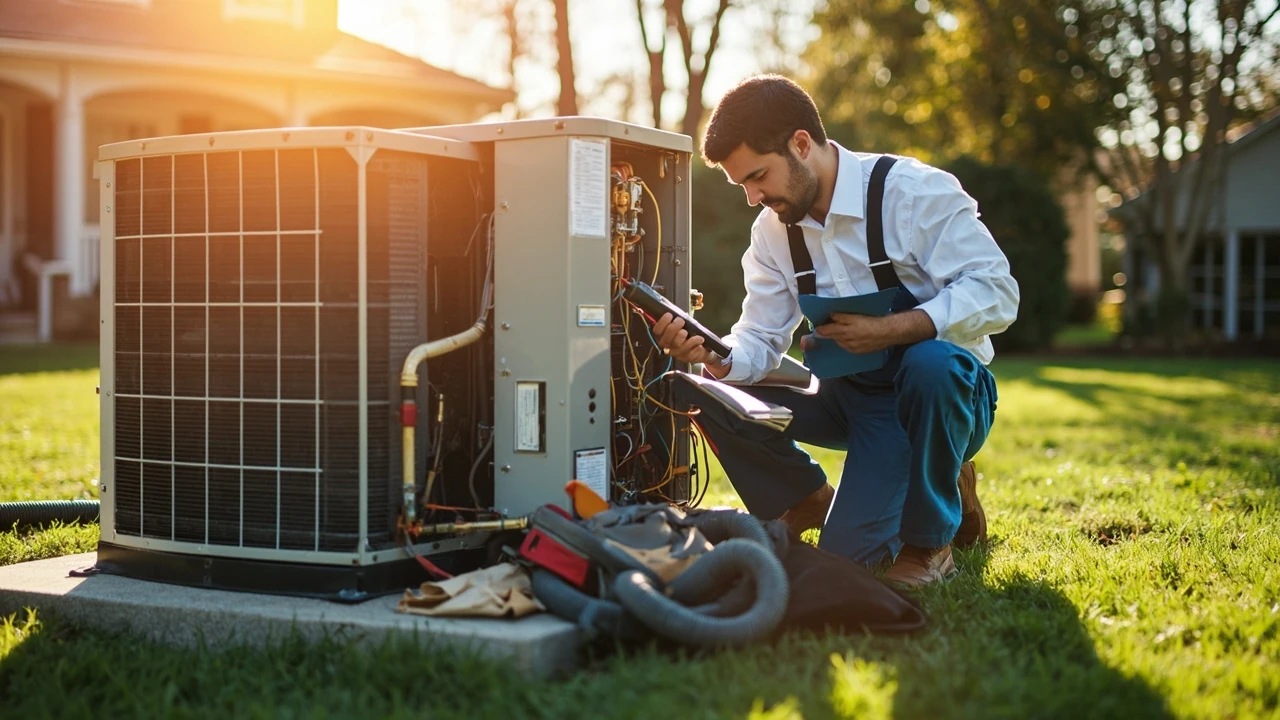
Central AC repair: what homeowners should know before calling a technician
A central air conditioner that once cooled the whole house in minutes now struggles to push the thermostat below 80 on a July afternoon. Before reaching for the phone, a homeowner can rule out a handful of simple causes, gather useful information, and decide whether the problem looks like a routine service call, a mid-range repair, or a system that is past the point of sensible fixes. Central AC repair is most often a question of diagnosis first and cost second, because the same symptom, such as warm air or short cycling, can point to very different parts with very different price tags.
This guide walks through how a central cooling system is supposed to work, the warning signs that usually appear before a breakdown, the questions a technician should answer during a diagnostic visit, and the realistic range of repair costs for common parts. It also covers when repair stops making financial sense, what a preventive maintenance visit typically includes, and how to keep good records so warranty claims and future service calls go smoothly.
How a central air conditioning system actually works
A split central AC system has three main pieces: an indoor evaporator coil and air handler, an outdoor condensing unit, and the line set and control wiring that connect them. The thermostat calls for cooling, the indoor blower pulls warm air across the evaporator coil where refrigerant absorbs heat, and the now-cooled air is pushed through the ductwork. The refrigerant carries that heat outside, where the condensing unit releases it to the outdoor air. A cycle of expansion, compression, and condensation repeats as long as the thermostat is calling for cooling.
Understanding the basic cycle helps because most central AC repair calls trace back to one of three layers: airflow problems at the indoor side, electrical or control problems at the thermostat and contactor, or refrigerant and mechanical problems at the outdoor unit. The first layer is often the cheapest to fix, and the third is often the most expensive.
Early warning signs that central AC repair is coming
Central air conditioners rarely fail without warning. The first signs are usually subtle, and a homeowner who knows what to look for can often schedule service on their own terms instead of during a 95-degree weekend emergency.
- Weak airflow from supply registers. A single weak register usually points to a damper or duct issue, while uniformly weak airflow across the house points to the blower, the filter, or a failing indoor fan motor.
- Warm air instead of cold air. The blower may be running but the air never gets cold, which usually means a compressor, refrigerant, or metering device problem.
- Short cycling. The system starts, runs for a few minutes, shuts off, then restarts. This often traces to a dirty evaporator coil, a low refrigerant charge, or an oversized system.
- Ice on the refrigerant line or indoor coil. Visible frost on the copper suction line or on the evaporator coil housing is a clear sign of a low charge or restricted airflow.
- Higher than normal summer utility bills. A system that suddenly costs 25 to 40 percent more to run is usually losing efficiency, often from a dirty coil, a slipping blower belt, or a capacitor that is weakening.
- Unusual sounds. Screeching, grinding, rattling, or repeated clicking from either the indoor or outdoor unit deserves attention before it becomes a no-cool emergency.
The first checks a homeowner can do safely
Not every central AC repair requires a service call. Before booking a visit, it is worth running through a short list of safe homeowner checks. None of these require opening the electrical panel or removing panels on the equipment.
- Set the thermostat correctly. Confirm the system is set to COOL, the fan is set to AUTO, and the target temperature is at least three degrees below the current room temperature.
- Replace the air filter. A clogged filter is the single most common cause of weak airflow, frozen coils, and short cycling. Use the size printed on the existing filter, not a guess.
- Check the breaker. The outdoor condensing unit often has a dedicated 240-voint breaker in the main panel. If it is tripped, reset it once. A second trip on the same day is a sign to stop and call a technician.
- Clear the area around the outdoor unit. Leaves, grass clippings, and a tarp pulled tight against the coil can all block airflow. The manufacturer usually calls for two feet of clearance on all sides.
- Make sure all supply vents are open. Closing registers in unused rooms sounds efficient, but it often raises static pressure and stresses the blower.
- Confirm the condensate drain is clear. Many modern air handlers have a float switch that shuts the system down when the drain pan is full. A clogged condensate line is a common, inexpensive fix.
If the system still does not cool normally after these checks, the problem is almost certainly inside the equipment, and a licensed HVAC technician is the right next step.
What a technician should actually check during a diagnostic visit
A good central AC repair visit looks the same regardless of brand. The technician’s goal is to identify the root cause, not just the symptom, and a thorough diagnostic usually takes 30 to 60 minutes. Homeowners can use the list below to judge whether a visit feels complete or rushed.
| Step | What the technician is checking | Why it matters |
|---|---|---|
| Interview | When the problem started, room temperatures, recent weather, prior service | Filters the most likely cause before opening anything |
| Thermostat check | Power, battery, calibration, wiring at the indoor terminal | Misreading thermostats cause a high share of “broken” calls |
| Indoor airflow | Filter, blower speed, evaporator coil cleanliness, return-side restrictions | Low airflow is the most common cause of frozen coils and short cycling |
| Electrical readings | Voltage at the disconnect, capacitor microfarads, contactor condition, compressor amp draw | Weak capacitors and pitted contactors are cheap, common failures |
| Refrigerant circuit | Superheat and subcooling, line temperatures, leak search if pressures are off | Confirms whether the problem is charge, metering device, or compressor |
| Condensate system | Drain pan, trap, float switch, discharge point | A full drain pan can shut the system down and cause water damage |
| Duct and static pressure | Return-side and supply-side static, visible duct damage | Hidden duct problems look like equipment problems |
A technician who only replaces a part without measuring pressures, checking capacitance, or testing the thermostat is guessing. Homeowners are within their rights to ask which tests were run and what the readings were.
Common central AC repair problems and realistic cost ranges
Repair costs vary by region, season, and the age of the system, but the parts and labor categories below cover the majority of service calls. The ranges below are typical for the United States and reflect what homeowners often see on a written estimate, not emergency weekend premiums. Any specific price should come from a written quote from a licensed local contractor.
| Common repair | Typical symptoms | Approximate cost range | Notes |
|---|---|---|---|
| Run capacitor replacement | Outdoor unit hums but does not start, weak cooling, hard starting | Low to mid range, often a single visit | Very common, usually quick |
| Contactor replacement | Chattering from outdoor unit, intermittent operation | Low range, often paired with capacitor | Common when units run heavily |
| Blower motor replacement | Weak airflow, no air at all, burning smell from air handler | Mid to upper range depending on variable-speed design | ECM motors cost more than PSC motors |
| Thermostat replacement | Display blank, wrong temperature, system not responding | Low range for the part, plus simple install labor | Smart thermostats need a common wire |
| Refrigerant recharge (no leak repair) | Low charge, frozen suction line, short cycling | Mid range, but a true fix requires finding the leak | Recharging without leak repair is rarely a lasting fix |
| Leak search and repair | System undercharged more than once, oil staining at fittings | Mid range for a brazed fitting, higher for a coil | Coil leaks often end the conversation about repair |
| Condensate drain clearing or float switch | Water in the drain pan, system shut down, water near the air handler | Low range | Often preventable with annual flushing |
| Evaporator or condenser coil replacement | Persistent leaks, low airflow, poor cooling after cleaning | Upper range, often close to a replacement estimate | Decision point for repair vs. replace |
| Compressor replacement | Outdoor unit silent after start, hot discharge line, low suction | Upper range, often above half the cost of a new system | Usually only sensible on newer equipment |
The exact numbers on a real quote will depend on local labor rates, refrigerant type, and whether the part is OEM or aftermarket. The point of the table is to show that not all central AC repair work is the same, and the difference between a capacitor and a compressor is the difference between a coffee and a used car.
Repair vs. replace: the decision most homeowners eventually face
For additional context, Most central air conditioners are designed to last somewhere between 12 and 20 years, depending on climate, usage, and maintenance history. As a system ages, repair bills tend to arrive more often and to hit harder. The most common rule of thumb in the HVAC industry is to compare the cost of the repair to the age of the system, but the comparison should be done on a real estimate, not a rough guess.
The questions below are a practical way to think through the decision. None of them are absolute, and a trusted local contractor can add useful detail based on the actual condition of the system.
- Is the repair cost above a meaningful share of a new system of similar efficiency? Many contractors treat any single repair above that threshold as a serious signal.
- Is the system still under manufacturer warranty on parts, or under a labor warranty from the installing contractor? A covered compressor changes the math completely.
- Has the system needed more than one significant repair in the past two seasons? Repeated failures on different parts usually point to a system that is wearing out.
- Is the refrigerant type still in production? Equipment using phased-out refrigerants can be expensive to service because reclaimed or recycled refrigerant carries a premium.
- Would a new system meaningfully lower operating costs? A modern variable-speed system can trim summer electric bills, but the payback depends on local rates and usage.
- Is the ductwork in good shape? Replacing the cooling equipment without addressing leaking or undersized ducts leaves most of the efficiency on the table.
When the answer to most of these questions is “no” or “not really,” a planned replacement is usually cheaper than a third or fourth emergency repair.
What proper annual maintenance actually includes
Annual maintenance is not the same as a quick visual look. A real maintenance visit touches both the indoor and outdoor units, takes a handful of measurements, and ends with a written summary of what was found. Homeowners who do not receive that written record are often paying for a glance, not a tune-up.
- Indoor side. Replace or clean the filter, inspect the evaporator coil, check the blower assembly, measure temperature split across the coil, and confirm the condensate drain is clear and the float switch operates.
- Outdoor side. Clean the condenser coil, check fan motor amp draw, inspect the contactor and capacitor, verify line voltage at the disconnect, and clear debris from the base pan.
- System level. Record refrigerant pressures and superheat or subcooling, check duct static if accessible, and review thermostat operation including schedule and battery condition.
- Documentation. A short written report with measurements and any recommendations is the single best predictor of whether a maintenance contract is delivering real value.
Two maintenance visits a year, one in spring before heavy use and one light check in fall, are common in hot climates. In milder climates, a single annual visit is usually enough.
Questions worth asking before any service call
Central AC repair is an industry where the quality of the diagnostic determines the quality of the outcome. The questions below help separate a careful contractor from a guess-and-go one. They also help a homeowner compare two written estimates on the same problem.
- What exactly was tested, and what were the readings? Pressure, temperature, capacitance, and voltage should all be in the work order.
- Is the failed part a wear item or a one-time failure? Capacitors and contactors wear out, while a cracked compressor housing does not.
- What is the warranty on the new part, and is labor covered separately? Manufacturer warranty on parts and contractor warranty on labor are not the same thing.
- Is the refrigerant charge correct by measurement, or did the technician just “top it off”? A correct charge is a number, not a feeling.
- If a leak was found, where is it and what is the long-term fix? Recharging a leaking system without addressing the source is a short-term answer.
- What is the realistic remaining life of the system, and what would replacement cost? A contractor who refuses to discuss replacement is not giving the full picture.
- Is the technician EPA-certified for refrigerant work, and is the company licensed and insured locally? Both should be easy to confirm before work begins.
Asking these questions up front can prevent both overspending on an unneeded fix and underspending on a stopgap that fails in the first heat wave.
Warranty, permits, and paperwork that often get overlooked
Central AC repair can involve manufacturer warranties, utility rebates, local permits, and in some jurisdictions, inspections. Keeping all of this in a single folder, physical or digital, is one of the cheapest ways to protect the value of the equipment.
- Save the model and serial numbers for both the indoor and outdoor units, along with the install date if known. A photo of the data plate is enough.
- Keep every service invoice with the date, technician name, parts used, and any measurements recorded.
- Hold on to the original warranty registration and any extended warranty paperwork. Manufacturers often require proof of professional installation and annual maintenance before honoring a claim.
- Check whether the local utility offers a rebate on high-efficiency repairs or on smart thermostats. A small rebate is not a reason to do the work, but it is worth claiming when the work is happening anyway.
- For major work such as coil or compressor replacement, confirm whether the local building department requires a mechanical permit. A permit is not just paperwork; it is also a safety check.
Energy-saving habits that reduce the odds of a breakdown
No set of habits will turn a 17-year-old condensing unit into a new one, but a few small changes do reduce wear and lower the chance of an emergency service call in the middle of August.
- Keep the filter on a calendar. A clogged filter is the single most common cause of avoidable central AC repair calls.
- Set the thermostat a degree or two higher when nobody is home. A small setback reduces compressor runtime without making the house uncomfortable on return.
- Use the fan on AUTO rather than ON. Continuous fan operation adds wear and energy use without improving comfort in most homes.
- Keep blinds closed on sun-facing windows during the hottest hours. Less heat gain means less compressor runtime.
- Trim vegetation back from the outdoor unit each spring. Two feet of clear space around the condenser is enough to make a measurable difference in summer performance.
- Have the condensate drain flushed with a dilute vinegar or peroxide solution once a year to prevent the slime that causes pan overflows.
None of these replace an annual service visit, but together they reduce the odds that the system will fail on the first truly hot weekend of the year.
Working with a contractor and what a good service call looks like
A high-quality central AC repair experience is rarely accidental. It usually comes from a contractor who has invested in training, written procedures, and clear communication, and from a homeowner who knows what to expect. A few markers of a good service call are worth looking for:
- The technician arrives in a marked vehicle with a stocked inventory of common capacitors, contactors, and motors.
- The technician explains the diagnostic plan before opening panels and gives a written estimate before starting the repair.
- The work area is protected, especially around the indoor air handler, and any mess from coil cleaning is cleaned up before the technician leaves.
- The technician tests the system after the repair, records measurements, and walks the homeowner through what was done and what to watch for next.
- The invoice includes the model and serial numbers, the parts installed with part numbers where possible, the test readings, and the warranty terms.
When these markers are present, the cost of the visit usually reflects the quality of the work. When they are missing, even a low price can end up being expensive.
Where central AC repair fits next to other home systems
Cooling is one of several mechanical systems in a typical home, and the same logic that makes sense for the air conditioner often makes sense for the water heater, the plumbing, and the drainage system. Catching a small problem early on any of these is almost always cheaper than waiting for an emergency, and an annual maintenance habit tends to spread naturally from one system to the next once a homeowner sees the value. Homeowners who keep up with central AC repair records and scheduled hydro jetting for slow drains tend to spend less on emergency calls across the board, simply because small issues never get the chance to grow. The same idea applies to water heater repair, where a noisy tank or a small leak caught early avoids a basement flood a year later.
Frequently asked questions
How long does a typical central AC repair take?
Most common repairs, including capacitor, contactor, thermostat, and condensate service, are completed in a single visit that runs one to two hours. Larger jobs such as blower motor or compressor replacement can take half a day or longer, especially if the part has to be ordered.
Is central AC repair covered by homeowner’s insurance?
Standard homeowner’s policies usually cover sudden and accidental damage, such as a lightning strike that destroys the compressor, but they do not cover wear-and-tear failures. A separate equipment breakdown endorsement or a home warranty can fill some of that gap, but coverage varies widely, so the policy itself is the source of truth.
Can a homeowner legally recharge central AC refrigerant?
In the United States, the EPA requires Section 608 certification for anyone who opens a system to add refrigerant. Homeowners can purchase some refrigerant for self-sealing cans on legacy systems, but any meaningful central AC repair that requires recovery, evacuation, or leak testing should be done by a certified technician.
How do I know if my compressor is bad or if it is just a capacitor?
The two failures can look similar from inside the house, but a technician can test the capacitor with a multimeter in seconds. A bad capacitor usually prevents the compressor from starting, while a bad compressor may hum, draw locked-rotor amps, or trip the breaker. The test is quick, and the cost difference between the two repairs is large enough that the diagnostic is always worth doing.
What is a fair price for a central AC diagnostic visit?
Diagnostic fees vary by region and season, but most homeowners can expect a flat trip-and-diagnostic charge that is credited against the cost of the repair if they go ahead. Off-hours, weekend, and holiday visits usually carry a premium. A written estimate before any repair work begins is a reasonable expectation on any visit.
Should I keep running the system if it is short cycling?
Short cycling is hard on the compressor and the blower, and on systems with a frozen coil it can make the failure worse. If the system has been short cycling, the safer move is to turn the thermostat to OFF, let the fan run on FAN ONLY if available, and schedule service as soon as possible.
How often should the evaporator coil be cleaned?
In most homes, the evaporator coil only needs cleaning every few years, but a filter that is not changed regularly can shorten that interval dramatically. The best signal is reduced cooling or visible ice, both of which point to a coil that needs attention. A technician can inspect the coil during the annual service visit and recommend cleaning only when it is actually needed.
Does a smart thermostat reduce central AC repair calls?
A smart thermostat does not fix mechanical problems, but it can reduce wear by allowing finer control over temperature and schedule, and many models send alerts when the system runs longer than expected. That early warning often turns a Saturday emergency into a weekday service call.
What information should I have ready when I call for service?
The brand, model, and age of the system, a short description of the symptom, what the thermostat is doing, when the problem started, and any recent service history. Photos of the data plates on both the indoor and outdoor units save time and let the contractor bring the right parts on the first trip.
Is it worth repairing a 15-year-old central AC system?
It depends on the failure. A capacitor on a 15-year-old system is still worth replacing, while a compressor on the same unit is often not. The repair-versus-replace calculation should use the actual repair quote, the realistic remaining life of the system, and the cost of a modern replacement of similar efficiency, all of which a local contractor can put in writing.
Leave a Reply