
Land clearing services: what property owners should know before work begins
A two-acre lot covered in blackjack oak, volunteer cedar, and waist-high brush looks manageable from the road, but the moment a property owner tries to walk the back fence line they feel the real cost of the overgrowth. Roots lock into old fencing, vines climb the storage shed, and stumps from a clearing done thirty years ago still sit where the original dozer left them. This is the situation that drives most calls for professional land clearing services, and it is the reason estimates vary so widely from one contractor to the next.
Land clearing is not a single task. It is a stack of related jobs, from a light brush mow to a full forestry mulching and stump grinding project, and the equipment, labor, and disposal plan change with each step. A good contractor walks the site, talks through the end use of the property, and writes the estimate against that picture. The article below walks through the same decisions a careful owner should make, so the conversation with a contractor starts from a shared understanding rather than a guess.
What “land clearing services” actually include
The phrase covers a wide range of work, and the line between one service and the next is usually drawn by the size of the vegetation, the terrain, and what the property will be used for afterward. Most contractors organize the work into a handful of categories that build on each other.
- Brush mowing and cutting. Removal of herbaceous growth, vines, saplings, and small shrubs with a rotary cutter or flail mower. Typical for lots that are overgrown but have no mature trees to remove.
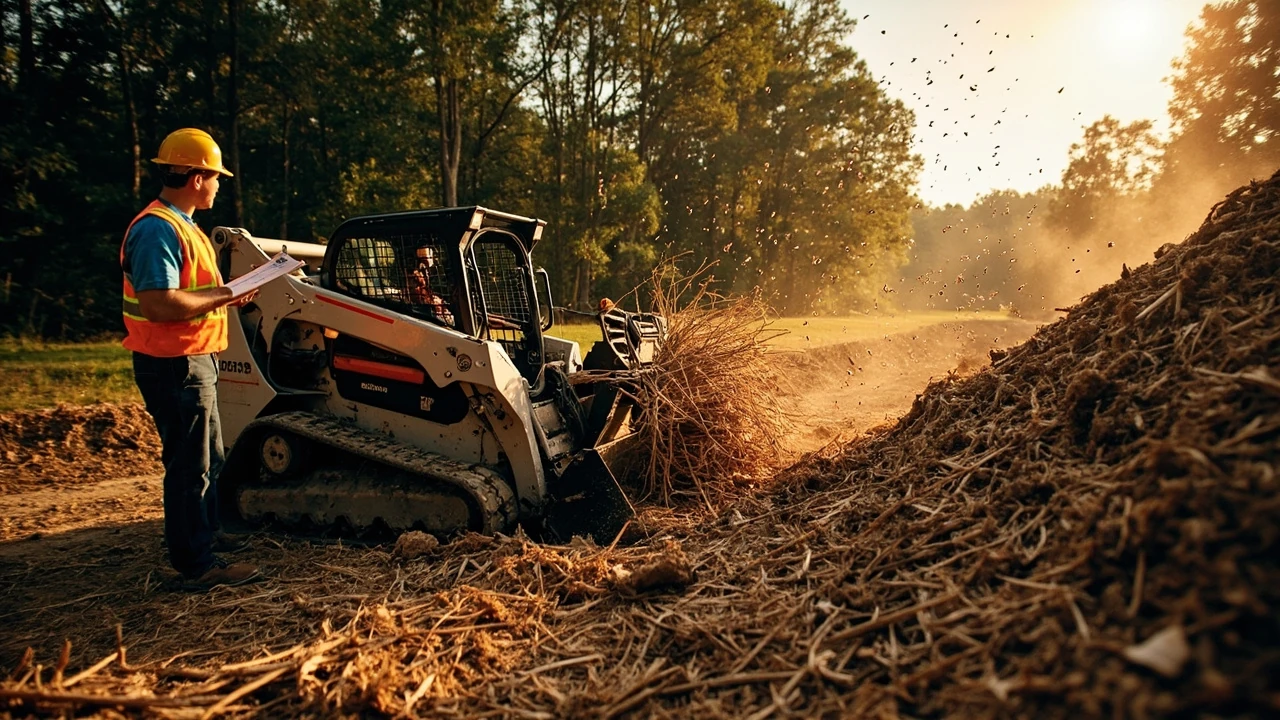
- Forestry mulching. A tracked machine with a rotating drum or disc grinder chews brush and small trees into a mat of wood chips left on the ground. No hauling is involved, which keeps cost down on rural sites.
- Tree removal and felling. Cutting of standing trees above a diameter threshold, usually 6 to 12 inches, done with chainsaws, feller bunchers, or excavator-mounted saw heads.
- Stump grinding and removal. Grinding stumps below grade with a dedicated stump grinder, or popping them out with an excavator. Each method has trade-offs in cleanup and ground disturbance.
- Grubbing and root raking. Raking the topsoil to remove roots, debris, and remaining organic material so the surface is ready for grading, pasture, or building pads.
- Haul-off and disposal. Loading, trucking, and lawful disposal of brush, logs, and stumps when the site cannot absorb the material as mulch.
A single property may only need one of these, or it may need four of them in sequence. The order matters. Mulching over uncut trees does not save labor, and grading over ungrounded stumps leaves soft spots that settle for years.
How contractors size a project
Estimating land clearing is part math, part judgment, and the judgment part is what separates a careful operator from one who quotes a flat rate over the phone. Most contractors blend three inputs to arrive at a number.
| Input | What the contractor measures | Why it moves the price |
|---|---|---|
| Acres or square feet | Total area to be cleared, often measured with GIS, a wheel, or a drone | Sets the base production rate for the equipment that will be on site |
| Vegetation density | Light brush, medium regrowth, or heavy timber; trunk counts per acre as a sanity check | Denser growth can cut daily production in half, so the cost per acre climbs sharply |
| Terrain and access | Slope, soil type, rock, wet ground, gate width, and distance to a dump site | Hard access limits machine size, slows the cycle, and may require a smaller, slower machine at a higher hourly rate |
| End use | Pasture, building pad, fence row, view corridor, fire break, or right-of-way | Defines how clean the finish must be and whether stumps and roots have to come out |
Two one-acre lots on the same road can carry quotes that differ by a factor of three if one is a mowed field with a few saplings and the other is a forgotten woodlot. The honest way to compare bids is to ask each contractor to list the same line items, with the same finish standard, on the same walk-through.
Equipment used and why it drives the price
The machine on the trailer is the single biggest clue to what the work will cost. Crews do not bring a 30,000-pound tracked mulcher to a half-acre brush job, and they will not show up with a 60-inch riding mower to clear two feet of regrowth. Matching machine to task is how the contractor protects their margin, and it is also how the property owner gets the right finish.
| Machine | Typical use | Best fit |
|---|---|---|
| Skid steer with rotary cutter | Brush and small saplings up to about 3 inches | Light lots, pasture reclaim, fence line work |
| Tracked skid steer with forestry mulcher | Brush, saplings, and small trees up to 8 to 12 inches | Rural lots, reclaim projects, fire breaks |
| Excavator with thumb or shear | Tree felling, stump popping, rock work | Lots with mature trees, old stumps, or uneven ground |
| Bulldozer | Pushing, grubbing, rough grading | Large acreages, pasture conversion, building pads |
| Stump grinder | Below-grade removal of remaining stumps | Final pass before lawn, pasture, or landscaping |
| Chip truck and trailer | Hauling chips, logs, and debris off site | Urban and suburban projects with strict disposal rules |
Hourly rates for this equipment vary by region, by fuel cost, and by who is operating it. A machine without a skilled operator is expensive down time, which is one reason a low day rate from an inexperienced crew can end up costing more than a higher rate from a known operator. The equipment list on the estimate is a useful way to test whether the bid matches the job.
Permits, rules, and neighborhood constraints
Clearing land is one of the more heavily regulated categories of property work, and the rules that apply depend almost entirely on where the property sits. A rural parcel in one county may need nothing more than a working phone call to the extension office, while a lot inside city limits can require a tree removal permit, a grading permit, a dust control plan, and a notice to neighbors before any machine rolls in.
- Local tree and vegetation ordinances. Many cities protect certain species or sizes of tree, and removing them without a permit can trigger fines that dwarf the cost of the original job.
- Stormwater and grading rules. Disturbing more than a threshold area of soil usually triggers erosion control requirements, and a contractor who ignores them puts the liability on the owner.
- Watershed and wetland buffers. Work near creeks, ponds, and identified wetlands is restricted in most states, and a contractor should be able to point to the setback on the plan.
- HOA and private deed restrictions. Even where the city is silent, a homeowners association can require review, especially on lots that back up to common areas or golf courses.
- Utility locates. A reputable crew calls 811 before any digging and waits for the marks to age the required number of business days. Skipping this step is a common source of unexpected bills.
Owners can save themselves trouble by asking the contractor, in writing, to identify every permit the job requires and who is responsible for pulling it. The conversation is short, and the answers are often a strong signal of how the rest of the project will go.
How to read a land clearing estimate
Estimates for land clearing come in several formats, and a careful comparison means pushing each bid into the same shape. A For additional context, one-line “clear lot, $X” quote is hard to evaluate because the finish standard is hidden. A more useful estimate lists scope, equipment, finish, and exclusions in plain language.
- Scope line by line. Brush mow, tree felling, stump grinding, and haul-off should each be a separate line with its own quantity and rate.
- Finish standard. How short is the cut, how deep are stumps ground, and is the mulch left on site or removed.
- Exclusions. Fence repair, reseeding, erosion control, and any tree the owner asked to keep are common items contractors will spell out as not included.
- Site protection. Driveway mats, tree-save fencing, and protected zones for landscaping should be priced or noted, not assumed.
- Payment terms. A small deposit on mobilization is normal; a request for most of the cost up front is a red flag for any sizeable project.
The lowest bid is often missing one of these lines, and the missing line tends to be the one that surfaces as a change order on the day the work begins. Reading the estimate the way an editor reads a contract is the single most useful thing an owner can do before signing.
Common mistakes that drive cost overruns
Most overruns on clearing projects do not come from the contractor’s hourly rate. They come from conditions the contractor could not see from the road and the owner did not think to mention. A short list covers most of them.
- Hidden debris. Old fencing, collapsed sheds, buried concrete, and abandoned vehicles push tonnage up quickly and may need a separate haul.
- Unknown utilities. A private water line or a landscape lighting circuit that was never marked can stop a machine cold and require a hand dig.
- Wet or frozen ground. Soft soils rut badly under a tracked mulcher, and a contractor may need to pause until the site dries out or use mats to spread the load.
- Stumps that go deeper than expected. Old growth stumps can run two to three feet below grade, and grinding to that depth takes more time and teeth than a shallow estimate allows for.
- Scope creep on trees. “While you are here” is the phrase that quietly adds a 30-inch oak to the day’s production and a thousand dollars to the invoice.
Walking the lot with the contractor and pointing out every anomaly is cheaper than discovering them with a track hoe in the ground. A good operator will do this walk without being asked, and the way they react to the property is a better predictor of the final bill than the number on the front of the proposal.
How clearing work affects the rest of the project
Clearing is the first paid step on most rural builds, and the way it is done shapes everything that follows. A pasture that was mulched but not grubbed will hold hidden roots that snag a plow for years. A building pad that was cleared and rough graded but not compacted will settle under the slab. A drainage path that was buried under a windrow of chips will redirect the first hard rain onto the neighbor’s garage.
For a homeowner thinking about a future outbuilding, a workshop, a guest cabin, or even a garage, the clearing pass is the right moment to plan the building footprint, the drive, and the utility runs. Staking those out with a surveyor or a careful owner before the mulcher arrives is a low-cost way to avoid redoing work later. For owners who only need a tidy, usable yard, a lighter touch with the brush mower and a single pass of the stump grinder is usually the right scope, and a contractor who pushes for a heavier job is not listening.
None of this is unique to a single region. The same basic sequence of work appears in nearly every market, from the small weekend lots around growing towns to the larger rural acreages further out. Owners who understand the sequence tend to ask better questions, and contractors tend to respond with cleaner bids when the questions show up early.
Choosing between forestry mulching and traditional clearing
For many property owners the first real decision is whether to leave the woody material on the ground as mulch or to haul it away. Both approaches are common, and the right choice depends on the end use of the lot and on local rules about open burning and disposal.
| Approach | What happens to the biomass | Best fit |
|---|---|---|
| Forestry mulching in place | Brush and small trees are ground into a layer of chips and left on the soil | Rural lots, pasture reclaim, fire breaks, lots where soil cover is a benefit |
| Cut, pile, and burn | Material is stacked and burned on site where allowed | Large acreages with brush that is too coarse to mulch efficiently and where burning is legal |
| Cut, chip, and haul | Material is chipped or logged and removed to a yard or landfill | Urban and suburban lots, lots with disposal rules, sites that will be landscaped or built on |
| Cut, skid, and sell | Logs are removed for timber, brush is handled separately | Lots with enough saw timber to interest a logger who will take the wood in exchange for the work |
Mulching in place is usually the fastest and cheapest option, and the chips break down over a season or two, feeding the soil and suppressing regrowth. It is not a fit for every lot. A future building pad should not sit on a thick layer of fresh chips, because the layer will decompose unevenly and leave a wavy surface. In that case the right sequence is mulching, then a separate cut and haul, then a proper rough grade.
What to ask a contractor before signing
The conversation before the work begins is the cheapest place to fix problems that would be expensive to fix later. A short list of questions, asked in person, will tell an owner almost everything they need to know about a potential contractor.
- Are you licensed and insured for this work in this county, and can you send a current certificate of insurance.
- Will you pull the permits, or is the owner expected to do it, and which permits do you see as required for this lot.
- What equipment will be on site, who is operating it, and what is the expected production rate for my vegetation.
- How is the finish defined, what height of cut, what depth of stump grind, and what stays versus what goes.
- How are change orders handled, and at what dollar threshold do you stop and call before continuing.
- What is the payment schedule, and is there a mechanic’s lien waiver on the final payment.
- Can you provide two or three local references on projects of similar size from the last twelve months.
The answers to those questions are rarely pretty on paper, and that is the point. A contractor who is comfortable with them is a contractor who is likely to handle the surprise on the lot the same way they handled the surprise in the meeting.
Frequently asked questions
How much do land clearing services cost per acre?
Pricing depends on vegetation density, terrain, and the finish standard. Light brush mowing is the cheapest per acre, and heavy timber clearing with stump removal is the most expensive. Owners should ask for line-item bids on the same scope rather than comparing single numbers across contractors.
What is the difference between forestry mulching and brush mowing?
Brush mowing uses a rotary cutter to take down herbaceous growth, vines, and small saplings, leaving the soil relatively smooth. Forestry mulching uses a heavier grinder to chew through brush and small trees, leaving a mat of wood chips. Mulching handles larger material but costs more per acre.
Do I need a permit to clear my land?
In many cities and counties, yes. Rules vary widely, but tree removal permits, grading permits, and stormwater controls are common. A contractor who works locally should be able to identify the permits for your lot in a short conversation.
How long does a typical land clearing project take?
A light brush mow on a small lot can be done in a day, while a multi-acre timber clearing with stump grinding can run a week or more. The contractor’s production estimate, written into the bid, is the best way to set expectations.
What happens to the wood chips and debris after clearing?
That depends on the chosen method. Forestry mulching leaves chips on the ground as a soil cover. Cut and haul projects remove material to a chipping yard, a landfill, or a buyer of firewood or biomass. The contract should specify the destination.
Can land clearing be done in winter or wet weather?
Yes, with caveats. Frozen ground can actually make clearing easier, but soft, wet soils rut badly under heavy equipment. Many contractors will pause work or lay driveway mats to protect the site during wet stretches.
Will clearing increase my property taxes?
Changing the use or improved status of a parcel can affect valuation in some jurisdictions, but routine maintenance clearing on land that is already developed usually does not. Owners with concerns should ask the county assessor’s office before work begins.
How do I keep good trees during a clearing project?
Mark the trees to keep with bright flagging before the crew arrives, and ask the contractor to install tree-save fencing at the drip line. A short walk-through at the start of the job, with the operator, is the best way to confirm what stays.
What is stump grinding, and do I need it?
Stump grinding uses a cutting wheel to reduce a stump to wood chips below grade. It is needed where the lot will be mowed, planted, or built on. It is usually not needed on lots that will stay as native pasture or rough ground.
How do I find a reliable land clearing contractor?
Local references are still the strongest signal. Ask neighbors, ask the local farm store, and ask for two or three recent jobs of similar size. Confirm insurance and license, and read the estimate the way you would read any other contract.
Leave a Reply