
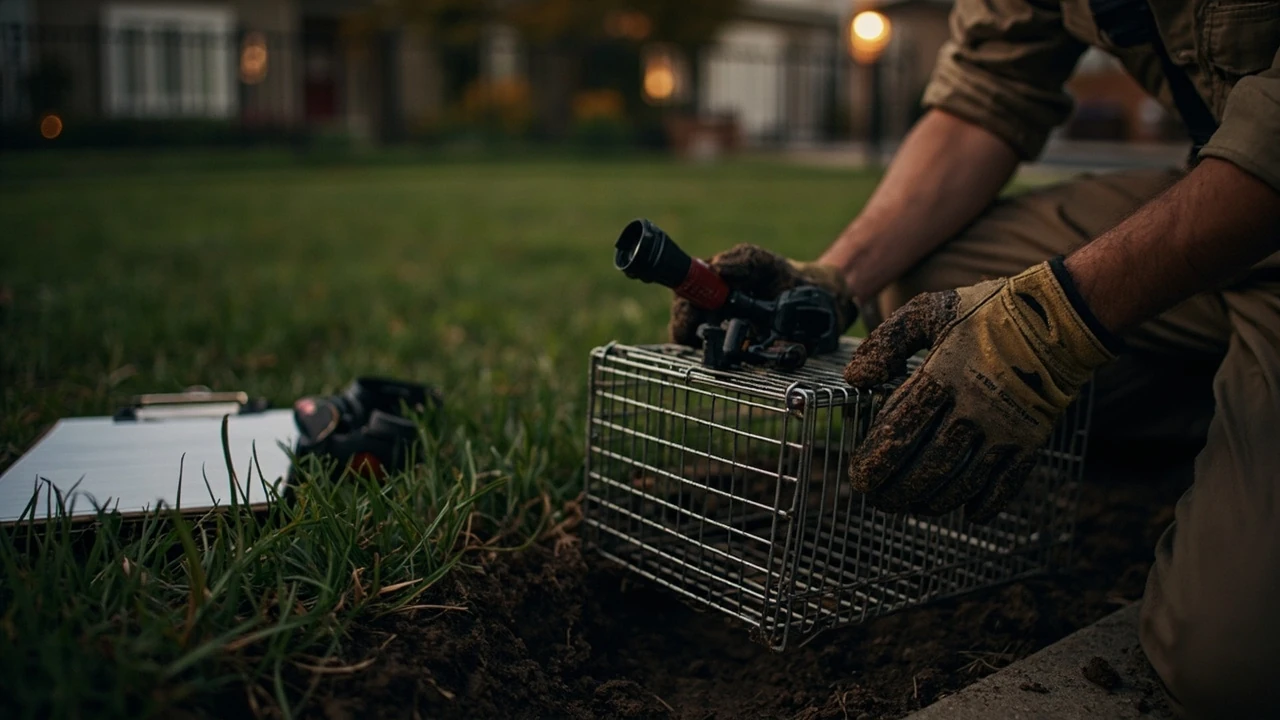
Armadillo removal: what a homeowner should know before the digging gets worse
You walk outside in the morning and the lawn looks like someone ran a rototiller across the flowerbed overnight. Cone-shaped holes pock the yard, a shrub is half uprooted, and a low tunnel disappears under the slab near the porch. In much of the southern United States, that pattern of damage almost always points to a nine-banded armadillo, and the question is no longer whether the animal is there. The question is what armadillo removal actually involves, what it costs, what is legal in your state, and how to keep the animal from coming back once the burrow is empty.
This guide walks through the practical decisions a homeowner faces when armadillo damage shows up: how to confirm the culprit, which methods are realistic for a homeowner, when a licensed wildlife professional is the smarter option, and what long-term exclusion looks like. It is written for property owners, not for trappers in a regulated context, so the focus stays on what you can observe, what you can legally do, and what questions to ask before signing a service contract.
Why armadillos cause so much damage so quickly
Armadillos look slow and clumsy, but the species most often responsible for yard damage in the United States, the nine-banded armadillo, is a relentless digger. The animal feeds almost entirely on insects, grubs, and earthworms found in the top few inches of soil, and it locates that food with an unusually sensitive nose. According to field descriptions published by wildlife control operators, an armadillo can root through soft soil, mulch, and thatch with surprising speed, and a single animal can disturb a large section of lawn in one feeding session.
A few behaviors explain why armadillo damage rarely stays small:
- Burrow density. Armadillos maintain multiple burrows within a territory, often 5 to 10 across a small home range. Burrow entrances are roughly 7 to 10 inches wide and tend to appear at the edges of structures, foundations, and fence lines.
- Nocturnal feeding. Most digging happens at night, so homeowners see the result before they ever see the animal.
- Loose, sandy, or moist soil. Anywhere the ground is easy to work, armadillos will work it. Newly landscaped beds, irrigated lawns, and garden edges are common hotspots.
- Repeat visits. If the food supply is steady, an armadillo returns to the same area night after night, deepening burrows and expanding the damage pattern.
None of that behavior is malicious. It is simply a medium-sized mammal following a high-protein food source. The problem is that the food source is often your yard, and the burrows it leaves behind can threaten landscaping, irrigation lines, and in some cases slab foundations.
Confirming you actually have an armadillo problem
Before scheduling any armadillo removal service, it is worth verifying the culprit. Skunks, raccoons, opossums, and even domestic dogs produce digging damage that can look superficially similar, and the right response depends on the animal. A few checks help narrow it down.
Damage signature
Armadillo digging has a recognizable look. The soil is usually turned in shallow, irregular patches, with conical probe holes where the snout has been pushed into the ground. There is no tidy excavation the way a dog leaves, and there is no rolled-back sod the way a skunk typically produces when hunting grubs. Burrow openings are round, about the size of a softball, and often dug into a slope, a shrub bed, or right at a foundation edge.
Timing and tracks
Because armadillos are mostly nocturnal, fresh damage that appears overnight is a strong signal. Tracks, when visible in soft soil, show three or four long, evenly spaced claw marks from the front feet, often with a dragging tail mark behind. The prints are distinctive once you have seen a clear reference image, and several state wildlife agencies publish comparison charts that show armadillo tracks alongside raccoon and opossum tracks.
Other clues
Look for a faint musky smell near active burrows, and listen at dusk. Armadillos moving through a yard often make a low, constant rustling sound in leaf litter as they forage. If you have a security camera or even a cheap trail cam pointed at the damage, it will usually catch the animal within a night or two.
Legal and safety basics before you do anything
Armadillos are classified differently from state to state. In some southeastern states they are treated as a furbearer with a defined trapping season. In others, especially at the western edge of their range, they are classified as a non-protected nuisance species that can be addressed year-round. A small number of states restrict transport or relocation.
Before you set a trap, buy a repellent, or sign a service contract, take ten minutes to confirm three things:
- Whether nine-banded armadillos are present and established in your county, and how your state wildlife agency classifies them.
- Whether live trapping and relocation require a license in your state, and whether relocation is allowed at all.
- Whether there are local ordinances about discharging firearms, using body-grip traps, or relocating wildlife across county lines.
Safety matters as well. Armadillos can carry Mycobacterium leprae, the bacterium associated with Hansen’s disease, and while transmission to humans in the United States is rare, wildlife handlers should wear gloves, wash tools, and avoid handling the animal directly. A more common practical concern is fleas and ticks, which any trapped wildlife animal can carry.
Methods used in armadillo removal
There is no single best way to handle an armadillo problem, and the right choice depends on your state rules, the severity of the damage, and how close the burrows sit to occupied structures. The table below compares the methods most commonly used by professionals and homeowners.
| Method | How it works | Best for | Limitations and cautions |
|---|---|---|---|
| Live cage trap at burrow entrance | A medium-sized cage trap is placed at an active burrow opening, baited with earthworms, overripe fruit, or a small amount of canned pet food, and checked every 12 to 24 hours. | One or a small number of animals, rural and suburban yards, properties with a clear active burrow. | Requires a license in many states, and relocation rules vary. Traps must be checked frequently in hot weather to avoid harming the animal. |
| Exclusion and habitat modification | Burrows are identified, filled, and fenced off. Food sources such as grubs are treated, and debris that shelters insects is removed. | Long-term control after the active animal is gone, and prevention on properties with recurring pressure. | Does not remove an animal that is already in residence. Works best as a follow-up to trapping. |
| One-way doors on burrows | A door is installed at the burrow entrance that lets the animal leave but prevents re-entry, then the burrow is filled once activity stops. | Burrows near foundations, slabs, and hardscape where filling blindly is risky. | Effective only if all alternative burrows are also addressed, and monitoring must continue for several days. |
| Repellents and deterrents | Castor-oil-based granules, predator urine, or commercial armadillo repellents are applied to the active area. | Light pressure, short-term relief while planning longer-term work. | Results are inconsistent in the field. Best treated as a supplement, not a solution. |
| Professional wildlife service | A licensed operator inspects the property, sets compliant traps, handles exclusion work, and documents the work for warranty purposes. | Recurring damage, burrows near structures, properties where the homeowner cannot check traps daily. | Cost is higher than a DIY approach, and quality varies between operators. Vet the company the same way you would vet a contractor. |
Most successful armadillo removal plans combine a method, not a single tactic. A licensed operator removes the active animal with a properly sized cage trap, then the property is walked a second time to find and fill every burrow, then the lawn and bedding areas are treated to reduce the insect supply that brought the animal in the first place.
Step-by-step plan for a homeowner
Even when a professional ends up doing the work, the order of operations below is a useful framework. It keeps costs down and avoids the common mistake of filling a burrow while an animal is still inside.
- Confirm the animal. Use a trail cam or a phone video at the damage site to verify it is an armadillo rather than a raccoon, skunk, or dog.
- Map the burrows. Walk the property at dawn, mark every opening with a small flag, and count them. Burrow maps are also useful evidence if you end up hiring a service.
- Check state rules. Confirm your state’s classification and any trapping or relocation rules. This is the step most DIY homeowners skip, and it is the one that causes legal problems.
- Reduce the food supply. Treat the lawn for grubs, remove thick thatch, and clean up rotting fruit or accessible compost. This step alone often makes the rest of the work easier.
- Set or hire a trap at the active burrow. Set the trap at a main entrance, not at a probe hole. Bait lightly, and check the trap on a schedule allowed by your state.
- Close every burrow once activity stops. Fill entrances with packed soil and gravel, then monitor for fresh digging for at least a week.
- Install exclusion where pressure is recurring. A buried L-footer of hardware cloth along a fence line, or a low wire apron at a foundation, can discourage a returning animal.
What professional armadillo removal typically costs
Because prices vary widely by region, the table below shows a realistic range rather than a single number. Use it to sanity-check quotes, not as a guaranteed quote.
| Service component | What is included | Typical range per visit (USD) | Notes |
|---|---|---|---|
| Initial inspection and burrow mapping | Property walk, identification of active burrows, written estimate, treatment plan. | 75 to 200 | Often credited toward the work if you proceed. |
| Live trap setup and monitoring | One or more cage traps, bait, daily checks, and removal of the captured animal. | 150 to 400 | Pricing often assumes a set number of trap-days. More captures or longer monitoring raise the cost. |
| Exclusion and burrow closure | Filling burrows, installing one-way doors where needed, and minor hardscape repairs. | 200 to 600 | Cost rises with the number of burrows and whether the work is near a foundation or utility line. |
| Follow-up and warranty visit | Return visit if activity resumes within a warranty window, often 30 to 90 days. | Often included | Confirm the warranty in writing before signing. |
Total armadillo removal projects for a typical single-family property often fall in the 300 to 900 dollar range, with heavier infestations, larger lots, or properties with foundation-adjacent burrows running higher. The bigger variable is not the headline price, it is whether the work stops the problem or just slows it down for a month.
How to vet a wildlife removal company
Wildlife control is an unregulated industry in many states, which means quality varies a lot. A short checklist keeps the conversation focused.
- Ask for the state license number and verify it through your state wildlife agency. A license to run a pest-control business is not the same as a license to handle wildlife.
- Ask which species they specialize in and how many armadillo jobs they completed in the past year. General pest companies often have less experience with armadillos than with rats or raccoons.
- Request the trapping method in writing. Body-grip traps, snares, and relocation across state lines are red flags.
- Ask about exclusion work. A company that only sets traps and walks away is rarely the right choice.
- Get the warranty in writing, including what happens if a new animal shows up within the warranty window.
Reputable operators document the burrow count, the active versus inactive status, and the trap locations. Photos and a map are a good sign. A verbal estimate with no inspection is a bad sign.
Prevention that actually works
Once the active animal is gone, the next round of armadillo removal work is keeping the next one out. A few changes tend to make a real difference, and they are the same changes that show up in field reports from wildlife control operators.
- Treat the lawn for grubs. The single most effective change is reducing the food supply. A grub treatment in late spring or early summer removes the high-protein layer that draws armadillos into a yard in the first place.
- Reduce thick thatch and leaf litter. Thatch is a buffet of beetles, larvae, and worms. Dethatching and clean edges make the lawn less attractive.
- Block access under structures. Skirts of hardware cloth, buried 12 to 18 inches and tied into the bottom of fences, close the routes that armadillos use to move under sheds, decks, and porches.
- Manage water and mulch. Heavy mulch and constantly damp soil are magnets. Pull mulch a few inches back from foundations and avoid overwatering near the house.
- Close off crawl spaces and gaps. A 7-inch gap is enough for an armadillo. Walk the foundation once a season and fill any opening wider than a softball.
Common mistakes that make armadillo problems worse
Most recurring armadillo problems come from a small set of avoidable errors. Worth flagging because they show up again and again on service calls.
- Filling a burrow while the animal is still in it. The animal simply digs out and starts a new burrow, often right next to the one you closed.
- Setting a trap at a probe hole instead of a main entrance. Probe holes are exploratory. Main burrow openings are the reliable capture points.
- Using repellents as the only tool. Castor oil and predator urine occasionally help on a small edge, but they do not remove a resident animal.
- Ignoring the food source. Treating the lawn after the animal is gone is fine, but leaving the food supply in place while trapping is slow is a common reason trappers fail to catch anything.
- Letting a fence or shed become a long-term den site. Once an armadillo dens under a structure, removal without exclusion rarely sticks.
When the damage is near a foundation, slab, or utility line
Burrows next to a slab, a porch, or a buried utility line are a different category of problem. The animal itself is the same, but the consequences of leaving the burrow in place are higher. Soil loss under a slab can lead to cracking, settlement, and in severe cases, a section of the slab dropping. Soil loss around a buried line can expose the line and create a future repair.
The right approach is to slow down rather than rush.
- Confirm which burrow is active and which are old, using a trail cam or a careful disturbance test.
- Install a one-way door on the active burrow so the animal can leave but not return, while leaving other burrows untouched.
- Wait until no activity has been seen for several days, then fill the burrow with compacted soil and gravel in layers.
- After filling, monitor the area for at least two weeks. If new digging appears, the food source or access has not been addressed.
For burrows that sit directly under a slab, a structural engineer or a foundation specialist is the right next call, not a general handyperson. A slab can be evaluated for voids with a simple ground-penetrating radar scan, and the cost of that scan is small compared with the cost of repairing a settled section of foundation.
How armadillo removal fits with broader home maintenance
Wildlife pressure on a home is rarely an isolated issue. The same property that attracts armadillos often has soft soil near the foundation, exposed gaps under porches, irrigation that over-saturates the bedding areas, and a thriving grub population under the lawn. Handling the armadillo removal job well usually means treating it as part of a broader look at how the home and yard are maintained.
For homeowners thinking about related projects, two pieces on the broader site are useful context. A practical walk-through of plumbing repair decisions covers how to think about buried lines that may sit near active burrows, and a guide to planning an egress window is a useful reference for any project that involves cutting into a foundation wall, which is the same area of a home that an armadillo will try to burrow into. Both are worth reading before any foundation-adjacent wildlife work begins, because the order in which projects are done matters.
Seasonal timing that affects results
Armadillos do not hibernate, but they are less active during cold spells and more active during warm, wet stretches. The most common peak damage periods in the southern United States are late spring, when grubs are near the surface, and early fall, when cooler weather and rainfall bring worms back up. A quick calendar of when to plan work:
- Late winter to early spring. Good time to inspect the property, fill old burrows, and treat for grubs before the active season starts.
- Late spring to early summer. Peak damage in most southern states. Trapping is most effective because the animal is active and feeding heavily.
- Mid to late summer. Heat slows the animal and shortens the active window. Traps need extra shade and water, and check intervals matter more.
- Fall. A second peak in some regions as soil moisture rises. This is a good time to finish exclusion work so the property is sealed before winter.
DIY or hire it out: a short decision aid
Not every armadillo problem needs a professional. A small, contained issue on a property with one active burrow, a homeowner who can check a trap daily, and a state that allows relocation is a reasonable DIY project. A larger, recurring, or foundation-adjacent problem is a different story. The matrix below can help frame the choice.
| Situation | DIY makes sense when | Professional is the better call when |
|---|---|---|
| Damage scale | One or two small patches in a flowerbed, no foundation involvement. | Damage is spread across the yard or near a slab, porch, or utility line. |
| Burrow count | One or two visible burrow openings. | Three or more openings, or any opening under a structure. |
| State rules | Your state allows homeowner trapping and relocation, or you can dispatch the animal on site. | Your state requires a license, restricts relocation, or limits trap types. |
| Schedule | You can check a trap every 12 to 24 hours, including weekends and holidays. | You cannot commit to a daily check, or the property is a rental you do not visit often. |
| Recurrence | First time you have seen damage on the property. | Damage has come back after a previous removal attempt. |
A short checklist before you sign a service contract
If the project is large enough to justify a professional, a short pre-contract conversation protects both sides. The points below are the ones most often skipped.
- Confirm the scope in writing, including the number of traps, the number of visits, and what happens if a second animal shows up.
- Confirm the warranty window and the response time if damage resumes.
- Confirm who handles exclusion work and whether it is included.
- Confirm the disposal method and, if relocation is used, the destination.
- Confirm the total cost, including any per-visit fees that show up after the first visit.
What success looks like after the work is done
A good armadillo removal project ends quietly. The damage stops, the burrows stay filled, and the lawn recovers over the next growing season. A few signals that the work was done well:
- No new digging for at least four weeks after the last capture.
- No burrow reopens after filling, even after heavy rain.
- Foundation edges, fence lines, and utility penetrations are sealed against future access.
- Grub and thatch pressure is reduced, so the food signal that attracted the animal is weaker.
If any of those conditions is not met within a few weeks, the right next step is a return visit from the same operator while the warranty is in force, not a brand new contract with a different company. Documentation from the original job makes that return visit faster and cheaper.
Frequently asked questions
How do I know the damage is from an armadillo and not a raccoon or skunk?
Armadillo digging shows shallow probe holes and torn-up soft soil, usually with no rolled sod and no single deep hole the way a skunk leaves. Burrow openings are round and roughly softball-sized, often dug into a slope or a foundation edge. A trail cam pointed at the damage for a night or two will confirm the animal quickly.
Is armadillo removal something I can legally do myself?
It depends on the state. Some states allow homeowners to live-trap and relocate armadillos on their own property, others require a license, and a few restrict relocation across county lines. Confirm the rules with your state wildlife agency before setting a trap.
What is the most effective method of armadillo removal?
In field experience, a properly sized live cage trap set at an active burrow entrance, combined with closing every burrow and reducing the food supply, is the most consistent approach. Repellents alone are not reliable, and filling burrows without removing the animal usually fails.
How much does professional armadillo removal cost?
For a typical single-family property, the total project often falls between 300 and 900 dollars, including inspection, trapping, and burrow closure. Larger properties, foundation-adjacent burrows, or recurring infestations run higher. Get the scope in writing so the price is comparable across quotes.
Are armadillos dangerous to people or pets?
Armadillos are not aggressive and tend to avoid people and pets. The two practical concerns are the burrows, which can cause injury if a person or pet steps into one at speed, and the small but real risk of disease transmission, which is why direct handling without gloves is not recommended.
Will an armadillo keep coming back after removal?
It can. Armadillos maintain multiple burrows within a territory, and a new animal can move into a burrow that was left open. Closing every burrow, reducing the food supply, and installing exclusion at the property edges is what keeps a new animal from settling in.
What time of year is best for armadillo removal?
Late spring and early summer tend to be the most productive trapping windows in the southern United States, because the animal is feeding heavily on grubs and is easier to predict. Late winter is a good time to do prevention work before the active season starts.
Do repellents or ultrasonic devices work on armadillos?
Results are inconsistent. Castor-oil-based repellents and predator urine occasionally help on a small edge, and ultrasonic devices have very little published evidence behind them for armadillos. Treat these as supplements, not as the main approach.
Can armadillo burrows damage a foundation or slab?
Yes, especially when burrows sit directly next to a foundation, a porch, or a slab. Soil loss around the burrow can lead to settlement and cracking. Burrows in those locations should be handled carefully, often with a one-way door and professional input rather than a quick fill.
How long does it take for a yard to recover after armadillo damage?
Most lawns recover within a single growing season once the digging stops, the burrows are filled, and the underlying grub pressure is reduced. Re-seeding or re-sodding the worst patches speeds recovery, and a light top-dressing of compost helps level the surface.
Leave a Reply