
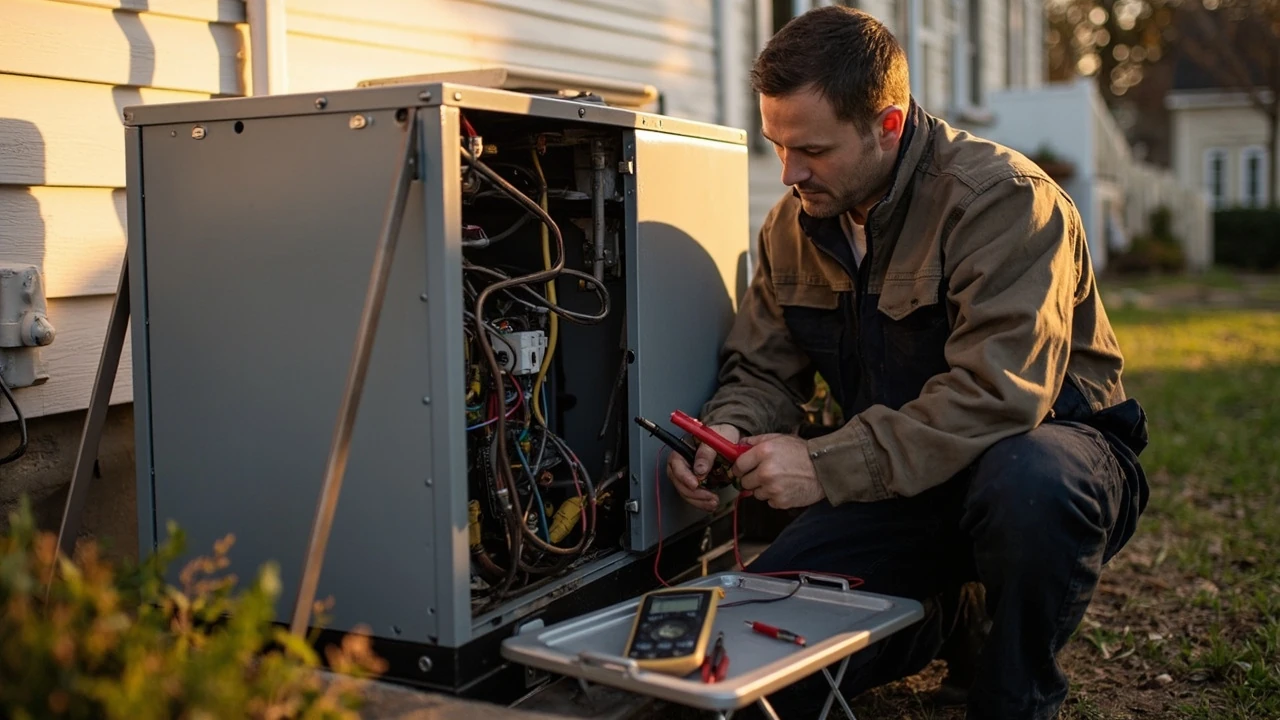
Generator repair: what homeowners should know before calling a technician
A standby generator that fails to start during a winter storm or a portable unit that stalls after ten minutes under load is more than an inconvenience. For many U.S. households, the generator is the line between a normal outage and a burst pipe, a flooded basement, spoiled food, or a medical device that stops working. Generator repair is therefore less about mechanical curiosity and more about timing, cost, and knowing when a problem is something a homeowner can safely diagnose and when it belongs in a service van.
This guide walks through the practical side of generator repair for homeowners: how standby and portable units actually fail, which symptoms point to which underlying causes, what a realistic service call looks like in parts and labor, and how to choose a technician without overpaying. It also explains the small set of checks worth doing yourself before paying a trip charge, and the larger set that should be left to a licensed professional.
How standby and portable generators fail
Most generator problems fall into a handful of categories: starting and battery issues, fuel delivery problems, oil and coolant failures on larger units, sensor and control board faults, and wear items such as spark plugs, air filters, and voltage regulators. The exact mix depends heavily on whether the unit is a portable gasoline model or a permanently installed standby unit running on natural gas or propane.
Standby generators run automatic weekly self-tests, so failures often appear as an alarm code on the unit’s controller or in a mobile app rather than as a sudden non-start. Portable generators tend to fail silently between uses, which is why a load test before storm season catches more problems than waiting for an actual outage.
Starting and battery faults
The single most common cause of a no-start condition on a modern standby unit is a weak or dead starting battery. Batteries in outdoor enclosures last roughly three to five years, and a unit that has sat through several weeks of cloudy weather can drop below the cranking threshold without any other fault being present. Many controllers log this as a specific alarm code, often labeled something similar to “Battery Low” or “Charger Fault.”
Portable generators do not rely on a battery for starting in the same way, but battery-powered electric start models have the same vulnerability. A trickle charger or a brief top-off with a smart charger before the storm season is often the cheapest repair a homeowner will ever make.
Fuel system problems
For gasoline portables, stale fuel is the dominant cause of rough running and no-start conditions. Gasoline begins to lose volatility after about 30 days, and ethanol-blended fuel can absorb moisture and leave varnish deposits in carburetors within a few months. The result is a unit that cranks, may even fire briefly, and then dies or runs so roughly that connected loads will not run safely.
For standby units running on natural gas or propane, fuel issues usually show up as under-voltage, frequency fluctuation, or the generator starting but dropping out under load. The fix is rarely inside the unit. A propane tank that has dropped below about 30 percent, a stuck or partially closed gas valve, or an undersized supply line will all create the same symptoms. A qualified technician will check fuel pressure at the unit before opening the engine.
Oil, coolant, and wear items
Standby air-cooled units in the 8 to 26 kW range are common in U.S. residential service. They use a single automotive-style oil and typically have scheduled service intervals of every 100 to 200 hours of run time, or annually, whichever comes first. Skipped oil changes lead to high-temperature shutdowns triggered by a low-oil-pressure sensor, which protects the engine but leaves the homeowner without power.
Liquid-cooled standby units in the 30 kW and up range add a radiator and coolant circuit. Coolant failures mirror automotive failures: leaks, degraded coolant, and occasional water pump failure. Spark plugs, air filters, and oil filters are wear items, not repair items, but they are responsible for a meaningful share of service calls because they are routinely neglected.
Control board and sensor faults
Modern standby generators use an electronic controller to manage cranking speed, voltage, frequency, and self-test cycles. The controller depends on a network of sensors: oil pressure, coolant temperature, frequency, voltage, and sometimes a fuel-pressure sensor. When one of these sensors drifts out of specification, the controller often shuts the unit down protectively. Replacing a single sensor is a small repair. Replacing the controller is one of the more expensive repairs a homeowner can face on a residential unit, but it is also less common than online forums suggest.
Symptoms, likely causes, and what each one means
The table below pairs the symptoms a homeowner is most likely to notice with the underlying causes that a technician will check first. It is not a substitute for diagnosis, but it helps set expectations before a service call.
| Symptom | Most likely causes | Typical service category |
|---|---|---|
| Unit will not crank, no lights on controller | Dead or weak starting battery, tripped charger breaker, failed battery charger | Minor repair or preventive service |
| Unit cranks but will not start | Stale or contaminated fuel (portable), low fuel pressure (standby), faulty fuel solenoid, failed ignition coil | Moderate repair |
| Starts, then shuts down within seconds | Low oil pressure sensor, oil level low, flame-out on propane | Minor to moderate repair |
| Runs but voltage is low or unstable | Undersized fuel supply, failing voltage regulator, governor issue | Moderate repair |
| Tripped breakers or overload alarm | Overloaded circuit, short in transfer switch, failing breaker | Electrical service call |
| Visible smoke, unusual noise, or fluid leak | Worn engine component, coolant leak, broken mount | Major repair, possibly replacement evaluation |
| Controller shows a specific alarm code | Sensor or wiring fault related to that code | Depends on the code |
Two symptoms deserve a quick note. Visible smoke from a generator under load is a reason to shut the unit down, not push through. And any symptom that involves arcing, burning smell, or soot around the transfer switch should be treated as an electrical fault, not a mechanical one, and routed to a technician qualified to work on the transfer switch and the service entrance.
What a typical generator repair service call costs
Costs vary by region, fuel type, and unit size, but the structure is consistent. Homeowners pay a trip charge or diagnostic fee, then labor at an hourly or flat rate, then parts on top. The table below reflects typical U.S. ranges rather than guaranteed prices. Always request a written estimate before authorizing work beyond diagnosis.
| Repair category | Common parts | Typical total range (parts + labor) |
|---|---|---|
| Battery replacement (standby) | Group 51 or similar AGM battery | $180 to $350 |
| Spark plug, air filter, oil filter service | Maintenance kit specific to model | $150 to $300 |
| Fuel solenoid or fuel pump replacement | OEM solenoid or pump assembly | $250 to $600 |
| Voltage regulator replacement | Regulator assembly | $350 to $800 |
| Control board replacement | OEM controller | $900 to $2,000 or more |
| Engine major repair (valves, head gasket) | Gasket kit, valves, machine work | $1,500 to $3,500+ |
A few rules of thumb help with budgeting. The diagnostic fee is usually credited against the repair if the homeowner proceeds. A service call that ends in a recommendation to replace the unit is still a paid diagnostic visit. And on older units, the labor hours can rival the cost of a new mid-size portable, so a technician who offers a replacement option alongside the repair estimate is doing the homeowner a favor, not pushing a sale.
What a homeowner can safely check first
There is a narrow band of checks that make sense before scheduling a service call, and a much wider band of work that should stay with a professional. The list below covers the safe checks.
- Confirm the controller has power and no breakers are tripped on the generator or in the home’s electrical panel.
- Check the starting battery’s age if known, and the battery voltage if the homeowner has a basic multimeter.
- Verify fuel level for portable units, and confirm that propane or natural gas supply valves are open for standby units.
- Look for visible leaks, loose wiring, rodent damage, or obvious debris blocking the air intake or exhaust.
- Run the unit’s manual self-test from the controller to see whether the alarm reappears under the unit’s own diagnostics.
- Replace fuel from a portable unit if it is more than a couple of months old, and try a fresh tank of ethanol-free fuel if rough running is the symptom.
What should not be on that list: opening the engine cover on a standby unit, pulling the spark arrestor on a hot unit, working near the transfer switch, or attempting to test fuel pressure without a gauge rated for the fuel type. The list is short on purpose.
What a professional service visit usually includes
A well-run service visit follows a predictable sequence, which is part of why a good technician is worth the trip charge. The steps below are typical on a standby unit, in the order a homeowner is most likely to encounter them.
- Confirm the symptom by reading the controller’s history log and any active alarm codes.
- Check battery voltage, charging rate, and battery health under load.
- Verify fuel pressure at the unit and inspect fuel supply components for obvious faults.
- Inspect the air filter, spark plug, and oil level and condition on air-cooled units.
- Run the unit under a known load bank or through the transfer switch to confirm symptoms under real load.
- Provide a written estimate for any repair beyond the basic diagnostic before starting work.
Homeowners can ask for each of these steps to be confirmed verbally, and a reputable technician will not object to being asked. If a technician is unwilling to explain what was checked before quoting a repair, that is a useful signal in itself.
Choosing a generator repair technician
The generator trade in the U.S. is For additional context, not uniformly licensed at the state level, so selection leans on credentials a homeowner can verify directly. The list below is a reasonable baseline, not a guarantee of quality.
- Authorization from the generator’s manufacturer to perform warranty work. Manufacturer-authorized service is a meaningful filter.
- Electrician licensing for any work on the transfer switch, service entrance, or interconnection with the home’s electrical panel.
- General liability insurance and workers’ compensation coverage. Both are reasonable to ask about for any contractor working on the property.
- Experience with the specific fuel type on site. Propane and natural gas work adds a layer of safety and code compliance that gasoline work does not.
- References from neighbors with similar units, or local reviews that mention standby generators by name rather than only portable equipment.
One practical signal: technicians who service standby generators often publish their service areas, typical response windows, and an after-hours rate. A clearly stated service area and a published rate structure usually correlate with a sustainable service business rather than a one-off handyman operation.
How repair decisions interact with warranty and age
A repair on a unit still inside its manufacturer warranty should go through an authorized service provider whenever the failed component is covered. Using a non-authorized shop can void the remaining coverage on that component, and on some brands on the entire unit. The trade-off is slower scheduling and slightly higher cost in exchange for warranty protection.
For units past warranty, the calculus shifts. A 10 to 15 year old standby generator with a major engine fault is often a poor repair candidate, because the cost of the repair approaches the cost of a new comparable unit, and the older unit has other wear items that will surface in the next year or two. For portable units, the threshold is shorter. A portable generator that has been stored with fuel in the carburetor for more than one season, and that now needs a carburetor rebuild plus a new recoil, is usually better replaced than repaired.
A useful framing for homeowners: a generator repair makes sense when the repair is less than roughly half the cost of an equivalent replacement, and the unit is less than about 12 years old with a documented service history. Outside that envelope, replacement is usually the lower total-cost option.
Common mistakes homeowners make before calling for repair
Most of the costly mistakes in generator repair happen before a technician arrives, often with good intentions. The list below covers the ones that show up most often in service notes.
- Cranking the unit repeatedly with a low battery, which overheats the starter motor and can damage the engine control board.
- Spraying starting fluid into a standby or modern portable unit, which can ignite outside the intake path and damage sensors.
- Refilling a hot generator’s oil without checking the dipstick, leading to overfill and aerated oil pressure.
- Running a portable generator in an attached garage or near an open window, which is a carbon monoxide hazard rather than a repair issue but shows up in service calls as a tripped sensor or flooded engine.
- Using non-standard fuel lines or undersized propane regulators as a temporary fix, which turns a small repair into a safety finding.
None of these are exotic errors. They are the predictable result of trying to bring a generator back online during an active outage, which is exactly the moment that patience and a flashlight tend to outperform improvisation.
How standby generator maintenance reduces the need for repair
The strongest predictor of an unexpected generator repair is skipped preventive maintenance. Manufacturers publish service intervals for a reason, and those intervals are calibrated to the failure modes that drive warranty claims. A few practices consistently reduce repair frequency.
- Annual oil and filter service on air-cooled units, every 100 to 200 hours of run time on liquid-cooled units.
- Replacement of the starting battery on a three to five year cycle, regardless of test results, because standby batteries are cheap relative to a no-start outage.
- Quarterly exercise under at least 30 percent of nameplate load, so the engine reaches operating temperature and the windings do not corrode.
- Annual inspection of the fuel supply, including regulators on propane and supply line sizing on natural gas.
- Keeping the area around the generator clear of vegetation, which both improves airflow and reduces rodent intrusion.
Homeowners who buy a service contract from the original installer tend to see fewer emergency repair calls than those who wait for a fault. The cost of a maintenance contract is generally lower than a single emergency service call, which is the part that is often missed in the moment.
When replacement is the right answer
Three situations push the answer toward replacement rather than repair. The first is an engine block failure or a head gasket failure on a unit past warranty. The second is a control board failure on a discontinued model where parts are no longer available. The third is repeated repairs within a short window, which usually means one of the other wear items is about to fail next.
Replacement also makes sense when the home’s load has grown past the generator’s rating. Adding a heat pump, an electric vehicle charger, or a finished basement with a small kitchen can push a 12 kW standby unit past its useful limit. In that case, sizing a new unit to the actual load is a better outcome than repairing an undersized one.
Working with insurance, warranties, and service contracts
Generator repairs that follow a covered event, such as a lightning strike or a flood, may be partially covered by the homeowner’s insurance policy. Documenting the event with photographs, saving the technician’s diagnosis, and keeping the failed parts until the adjuster visits all help. Warranty repairs require the original purchase documentation, the unit’s serial number, and the installation date in most cases.
For service contracts, the homeowner should read what is and is not covered. A common gap is labor on diagnostic calls, where the contract covers parts but not the technician’s time to find the right part. Another is travel time for rural addresses, which some contracts exclude. Knowing those gaps before an outage is the difference between a routine repair and a budget surprise.
A short checklist before the service van arrives
The list below is the most useful pre-call preparation, in roughly the order it pays off.
- Write down the unit’s make, model, and serial number, and the controller’s current alarm code if any.
- Note the unit’s approximate age, the date of the last service, and any recent storms or power events.
- Confirm that the unit is accessible, that the area is safe to work in, and that pets are secured.
- Have the original purchase documents and any service contract paperwork ready.
- Ask the technician in advance whether the diagnostic fee is credited against a completed repair.
That list, more than any specific tool, tends to produce a faster and less expensive visit.
Frequently asked questions
How do I know whether my generator problem is fuel-related or electrical?
If the unit cranks normally but will not start, or starts and quickly dies, fuel is the more likely cause. If the controller will not light up, or the unit trips breakers or shows unstable voltage, the cause is more often electrical. A technician will usually confirm this distinction within the first thirty minutes of a service call.
How long does a standby generator typically last before major repair?
With regular service, residential standby units commonly run 10 to 15 years before a major engine repair or replacement becomes likely. Units that skip oil changes or run frequently under heavy load tend to reach that threshold a few years earlier.
Can a portable generator be repaired, or is it better to replace it?
Small repairs such as a recoil spring, a carburetor clean, or a fuel petcock are usually worth doing. A carburetor replacement on a unit more than a few years old often approaches the cost of a new comparable portable, so replacement tends to be the better value in that case.
What is the most expensive part of a generator repair?
On standby units, the engine control board and major engine work such as a valve job or head gasket tend to be the costliest line items. On portable units, an engine replacement usually pushes the repair into replacement territory.
Do I need a licensed electrician for any part of the repair?
Yes, for anything involving the transfer switch, the service entrance, or the home’s electrical panel. Mechanical work on the engine itself does not require an electrician, but the work that ties the generator into the home usually does.
How often should a standby generator be serviced?
Air-cooled residential standby units are commonly serviced once a year, with oil and filter changes and a battery check. Liquid-cooled units follow a similar calendar but use engine hours as the primary trigger, often every 100 to 200 hours of run time.
Can I run my generator while waiting for a technician?
Only if it is safe to do so. That means outdoors, away from openings, on a stable surface, with proper fuel handling, and within the unit’s rated load. If the symptom is electrical, fuel-related, or involves smoke or leaks, the unit should stay off until a technician has looked at it.
Will a home warranty cover a generator repair?
Some home warranties include standby generators as an add-on or as part of a higher-tier plan, and some exclude them. Coverage typically pays a defined amount per repair visit, with the homeowner responsible for the difference. Reading the specific plan language is the only reliable way to know.
What information should I have ready when I call for service?
The unit’s make, model, and serial number, the controller’s current alarm code if any, the unit’s approximate age, the date of the last service, and a short description of the symptom. That list turns a five-minute call into a five-minute call, instead of a callback.
How quickly can a generator repair be completed?
Common repairs such as a battery, a fuel solenoid, or a maintenance kit are often completed in a single visit. Major engine work and control board replacements may need a return trip once parts arrive. Service during peak storm periods can stretch lead times for both diagnosis and parts.
For more context on standby power and the choices homeowners face, see egress window decisions for finished basements and water heater repair basics, which cover related parts of keeping a home running during a power outage.
For a useful external overview of standby generator sizing and installation considerations, Alexander Pacific’s guide to home generator installation summarizes the basic differences between portable and standby units. Background on the two broad categories, their typical capacities, and the role of transfer switches in residential service is also covered in the English Wikipedia article on standby generators, which provides useful background for this point.
Leave a Reply