
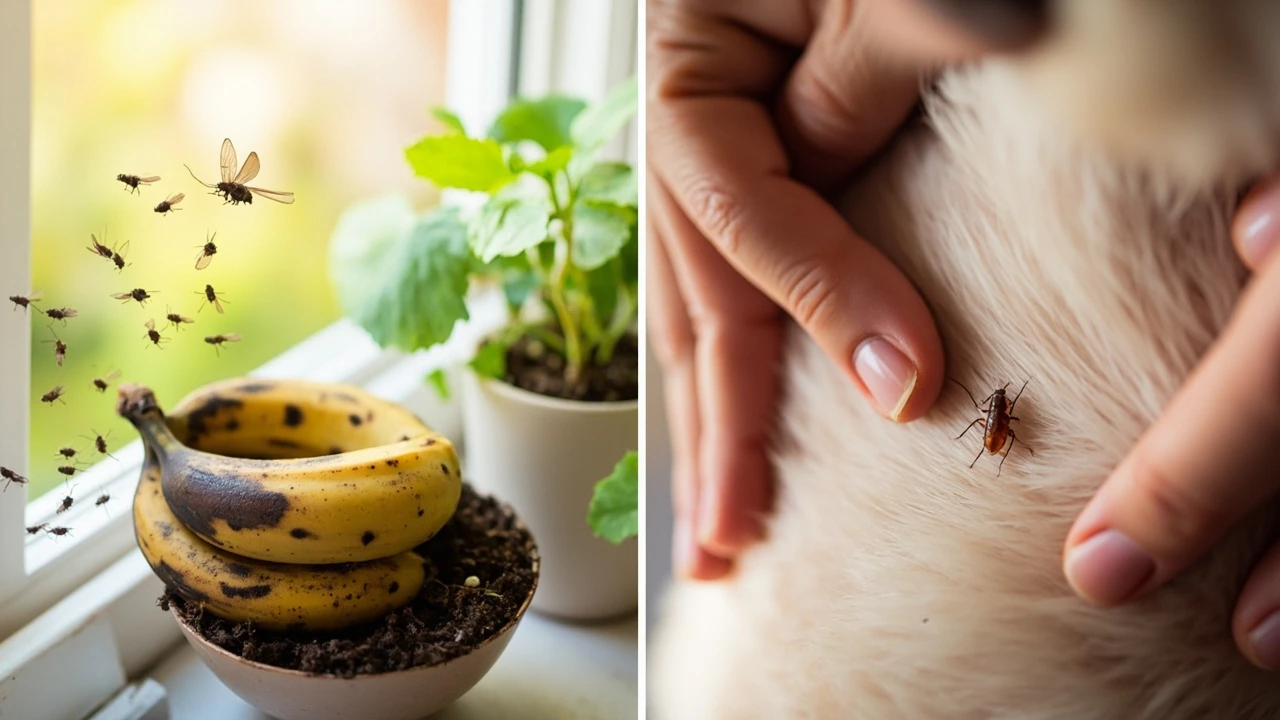
Gnats vs fleas: how to tell the difference in your home
You notice something small and dark on the kitchen counter, then a sudden itch on your ankle, and within ten minutes you are standing in the middle of your house trying to decide whether you have a fruit fly problem or a flea problem. That is the moment most people start searching for gnats vs fleas, because the two pests are very different even when they show up in the same week. Gnats are mostly a nuisance that signals moisture or ripe produce. Fleas are blood-feeding parasites that bite people and pets, reproduce quickly, and are harder to remove once they settle in.
You do not need a microscope or an entomologist to sort this out. A few careful observations around the room, on the dog, and on your own skin will usually tell you which pest you are dealing with. The rest of this page walks through what to look for, why the two problems call for different responses, and which steps actually move the needle in a typical home.
What the words gnats and fleas actually mean
Before comparing the two side by side, it helps to know that both words are loose everyday labels rather than tight scientific categories. People use them to describe small insects that bother them, and the same insect can be called different things in different regions.
Gnats as an everyday term
In most U.S. homes, the word “gnat” refers to one of several small flying insects that show up indoors, especially in kitchens, bathrooms, and basements. The three most common are fungus gnats, fruit flies, and drain flies, and they look similar enough to the naked eye that people just call them gnats. None of them bite, and none of them feed on blood. Their main effect is annoyance, plus the underlying problem that is attracting them, which is usually moisture, organic buildup, or fermenting food.
Fleas as a more specific category
Fleas are wingless, jumping insects that survive by feeding on the blood of mammals and birds. The cat flea is the species that bothers most U.S. households, and it is just as happy to bite dogs as cats. Dog fleas and human fleas exist but are far less common in homes in the United States today. Adult fleas are about the size of a sesame seed, dark brown, and known for their strong hind legs that can launch them many times their own body length.
Because the word “gnats” covers a mixed bag of species, the gnats vs fleas comparison really comes down to comparing two lifestyles: flying insects that hover around moisture and food, versus flightless blood feeders that live on a host animal or in carpet and bedding.
Quick identification: gnats vs fleas in plain English
If you only have thirty seconds to figure out what is in your house, this short checklist is the fastest way to sort it out. Most clues show up within a minute of looking in the right place.
- Where you see them: gnats cluster around fruit, drains, or houseplants; fleas show up where pets rest, on socks and ankles, and in carpet fibers.
- How they move: gnats drift or hover and tend to fly away when you wave at them; fleas crawl quickly and then jump, often disappearing before you can grab one.
- What they leave behind: gnats leave small dark specks where they gather, especially near drains; fleas leave tiny black “flea dirt” that looks like ground pepper on pet bedding and turns red when wet.
- What they do to you: gnats do not bite; fleas leave small red, itchy bumps, usually around the ankles, lower legs, and waistline.
- Time of year: gnats peak in late summer and fall, but fungus gnats and fruit flies can show up any time; fleas are worst in warm, humid months but survive indoors year-round.
Two of those clues are usually enough to know which problem you have. If pests are flying around the kitchen and never bite, you are almost certainly looking at gnats. If your ankles itch at night and the dog scratches constantly, fleas are the more likely cause.
Side-by-side comparison of gnats vs fleas
The table below pulls the most important differences into one view. It is meant to be a quick reference for readers who want a single place to look things up rather than a long narrative.
| Feature | Gnats (typical indoor species) | Fleas (cat flea and similar species) |
|---|---|---|
| Size | About 1 to 4 mm, depending on species | About 1.5 to 3.3 mm as adults |
| Color | Usually gray, black, tan, or yellowish-brown | Reddish-brown to dark brown, shiny |
| Wings | Yes, two wings, weak fliers that hover | No wings as adults |
| Movement | Fly in short bursts, hover, drift in swarms | Crawl and jump, can leap over 100 times their body length |
| Where they live indoors | Kitchens, bathrooms, basements, houseplant soil, drains | Pet fur, pet bedding, carpets, rugs, upholstered furniture, cracks in flooring |
| What they eat | Fermenting fruit, fungi, organic matter in drains and soil | Blood from mammals and birds; larvae eat organic debris in carpet |
| Bite humans | No, indoor gnats do not bite | Yes, common, especially around ankles and lower legs |
| Main health concerns | Mostly nuisance; can spread some bacteria from decaying matter | Itchy bites, allergic reactions, tapeworms in pets, and in some regions flea-borne diseases |
| Common attractants | Moisture, ripe or rotting produce, damp soil, organic film in drains | Pets, wildlife in the yard, rodents in walls or attic, secondhand furniture |
| Speed of reproduction | Eggs hatch in days, life cycle of roughly 2 to 4 weeks indoors | Eggs hatch in roughly 2 to 12 days, life cycle of about 3 to 8 weeks |
| Easiest control approach | Remove the food or moisture source and clean the area | Treat pets, wash bedding, vacuum thoroughly, and treat the home environment |
This comparison is a starting point, not a substitute for actual inspection. Two things that are easy to confuse are flea dirt with regular household dust, and small gnats with very young fleas that have not yet had a blood meal. A damp paper towel test or a sticky trap can confirm which one you are dealing with.
Where each pest comes from and why they are in your house
Both gnats and fleas are good at finding the things they need, but they are looking for very different things. Understanding what attracted them is often the most important step in getting rid of them.
How gnats get inside
Indoor gnats usually arrive in one of three ways. Fruit flies and similar species come in with produce from the grocery store or a farmers’ market, then multiply in the fruit bowl or compost pail. Fungus gnats are usually brought in with houseplants, because their larvae develop in moist potting soil. Drain flies breed in the organic film that builds up inside sink, shower, and basement floor drains. In all three cases, the insects themselves are a symptom of a specific condition: food for the adults and a moist place to lay eggs.
How fleas get inside
Fleas usually arrive on a host. A dog that spends time outdoors can pick up adult fleas from grass, shaded areas, or contact with other animals, and those fleas will then set up a small population inside the home. Cats that go outside, or indoor-only cats that live with a dog, can carry fleas the same way. Rodents in walls, attics, or crawl spaces can also seed a flea problem, especially in older homes. Once inside, fleas drop off the host and lay eggs in carpet, pet bedding, and the gaps between floorboards, which is why an infestation can come back even after you treat the pet.
Because the root cause is so different, the gnats vs fleas question is really a question of what to clean, what to treat, and what to call a professional about.
Health and comfort: what each pest actually does to people and pets
Most people searching for gnats vs fleas are also quietly wondering whether the bugs they see are dangerous. The honest answer is that gnats are mostly an inconvenience, while fleas carry real medical risk and can quickly become a serious problem for pets.
Why gnats are mostly a nuisance
Indoor gnats do not bite and do not feed on blood. The main ways they affect daily life are:
- Swarming around fruit, drinks, and faces, which is unpleasant at meals and parties.
- Triggering mild reactions in people who are sensitive to insects flying near their eyes or mouth.
- Potentially carrying small amounts of bacteria from decaying matter to clean surfaces, which is one reason kitchens benefit from quick cleanup.
None of this is trivial, but it is very different from the health picture on the flea side.
Why fleas are a more serious problem
Fleas are blood feeders at every adult stage, and that changes the risk profile. Pets with a heavy flea burden can lose enough blood to develop anemia, especially small or young animals. Flea saliva is a strong allergen, and a single bite can set off hours of itching in sensitive people and pets. The most common secondary issue is flea allergy dermatitis in dogs and cats, which can lead to hair loss and skin infection from constant scratching.
Fleas are also intermediate hosts for the tapeworm Dipylidium caninum, which pets can pick up by swallowing an infected flea during grooming. In some regions, fleas transmit bacterial diseases to people as well. Public-health agencies like the U.S. Centers for Disease Control and Prevention track these illnesses because they can require antibiotics and, in rare cases, lead to hospitalization. A practical regional overview of how gnats and fleas are handled in the Southwest is offered by Mosquito Squad of Las Cruces, which describes why fleas warrant a different response than gnats and what professional treatment can include.
Anyone who owns pets and sees itchy bites around their own ankles should treat the situation as a flea problem until proven otherwise, because the risk to animals is the larger of the two concerns in this comparison.
How to confirm which pest you have in five minutes
If the table and checklists still leave you uncertain, a few quick tests will settle the gnats vs fleas question with high confidence. None of these require special equipment.
White sock test for fleas
Pull on a pair of clean white knee-high socks and walk slowly around the rooms where pets rest, paying special attention to carpeted areas and the edge of rugs. Fleas are attracted to movement and warmth, and they will often jump onto the socks and be visible as small dark specks against the white fabric. If several specks appear and jump off, fleas are almost certainly present.
Sticky trap or jar test for gnats
Set a few yellow sticky traps near suspected hot spots, such as the fruit bowl, kitchen sink, or houseplant pots, and leave them overnight. Gnat-sized insects are typically stuck to the trap by morning. For drain flies, tape a clear piece of plastic over the drain overnight; if you see small flies on the underside in the morning, the infestation is coming from inside the drain.
Flea dirt test on pet bedding
Brush pet bedding with a dark towel and then shake the debris onto a damp white paper towel. Flea dirt, which is digested blood, will partly dissolve and leave a reddish-brown halo. Regular dirt will not do this. This single test is often the deciding factor in a gnats vs fleas inspection.
How to get rid of gnats
Gnat control is mostly a source-removal problem. Once the food, moisture, or organic film that they depend on is gone, the population collapses within a couple of weeks. The following steps cover the three most common situations.
Kitchen and fruit fly cleanup
- Move ripe fruit into the refrigerator and empty the fruit bowl daily.
- Take out kitchen trash frequently and keep the bin lid closed.
- Wipe down counters with a standard household cleaner to remove sticky residues and fermenting liquids.
- Check the pantry for potatoes, onions, and other stored produce that may be starting to spoil.
Setting a small dish of apple cider vinegar with a drop of dish soap can help monitor the population, but it is not a substitute for cleaning up the source.
Drain fly cleanup
- Pour a kettle of hot water down each suspect drain once a day for a week.
- Scrub the inside of the drain opening with a long brush to break up the biofilm.
- Avoid relying on bleach alone, since it does not penetrate the thick film that drain fly larvae feed on.
Fungus gnat cleanup
- Let the top 1 to 2 inches of potting soil dry out between waterings, because fungus gnat larvae need moisture to survive.
- Use yellow sticky traps near the base of plants to catch adults.
- For persistent problems, repot plants with fresh, sterile potting mix and clean the pots before reuse.
How to get rid of fleas
Fleas are more involved. Because only a small percentage of the population is on the pet at any one time, treating just the animal almost never solves the problem. A typical plan covers the pet, the home interior, and in some cases the yard.
Step 1: Treat the pet
Talk to a veterinarian about the right product for the species, age, and weight of the animal. Options commonly recommended by vets include oral treatments, topical spot-ons, and prescription collars. Over-the-counter flea shampoos knock down adults but usually do not stop re-infestation, so they are best used as part of a broader plan. Keep the pet on the recommended preventive for several months, because flea eggs in the environment will keep hatching after the adults are gone.
Step 2: Clean the home interior
- Wash all pet bedding, throws, and removable covers in hot water and dry on high heat.
- Vacuum carpets, rugs, and upholstered furniture daily for at least two weeks, then seal and discard the vacuum bag or empty the canister outside.
- Pay special attention to edges, baseboards, and under furniture where flea eggs tend to settle.
- Use a flea comb on long-haired pets and drop any caught fleas into a container of soapy water.
For a more thorough treatment, homeowners often combine thorough vacuuming with a labeled indoor insecticide or a product containing an insect growth regulator, which keeps eggs and larvae from developing. Always follow the label and keep pets and children away from treated areas until they are dry.
Step 3: Address the yard when needed
If pets spend time outdoors and fleas keep coming back, treat shaded, moist areas where wildlife or stray animals might rest. In warm, humid regions this can be a meaningful part of control. Local pest-control companies can be a useful resource for the gnats vs fleas question, since the treatment plan looks different in the Southwest than it does in the Midwest or on the Gulf Coast.
Common mistakes when trying to tell gnats vs fleas
Most failed attempts at identification come from looking at the wrong place or trusting the wrong clue. The mistakes below show up again and again in online forums and in calls to pest professionals.
- Judging by size alone: a hungry flea can look smaller than a fat fungus gnat, especially on a dark countertop.
- Assuming flying insects cannot be fleas: fleas do not fly, but they can hitch a ride indoors on clothing and be mistaken for tiny flying bugs when they crawl across a shirt.
- Treating only the pet during a flea infestation: the majority of fleas, including eggs and larvae, live in the environment, not on the animal.
- Treating only drains during a gnat infestation: fungus gnats in houseplants and fruit flies in the pantry will not respond to drain treatment.
- Using outdoor foggers for an indoor gnat problem: the chemical will not reach the source, and you will have wasted time and added unnecessary exposure.
When to call a professional instead of handling it yourself
Some situations are worth handing off, especially when the gnats vs fleas question has tipped toward a heavy flea problem or a structural moisture issue that is feeding gnat populations.
- Fleas are still showing up two to three weeks after treating the pet and vacuuming daily.
- Multiple pets or small children make chemical treatments harder to apply safely.
- You suspect rodents in the attic, walls, or crawl space, because the fleas will return until the rodents are removed.
- Gnats are coming from a broken drain trap, a sump pump, or a wet basement area that needs repair rather than spraying.
- Bites are causing severe skin reactions, or family members show flu-like symptoms that could suggest a vector-borne illness.
For homeowners who need broader home repair or moisture control work in addition to pest management, it can be useful to coordinate with a remodel or home-services team that understands how building conditions affect pest pressure. The plumbing and drain cleaning crew at Urban Remodel Works is a good example of the kind of contractor that can clear the kind of organic buildup that feeds drain-fly populations in the first place.
A short checklist for next steps
If you are reading this with an active problem in front of you, this is the order in which most people get the best result.
- Do the white sock test and the damp paper towel test to confirm which pest you have.
- Clean the suspected source: drains, fruit, or soil for gnats; pet and bedding for fleas.
- Treat the right target: traps and source removal for gnats; veterinarian-approved treatment for the pet plus thorough vacuuming for fleas.
- Watch for two to three weeks and repeat the most effective step from the list above.
- Call a professional if the problem is still active after that, especially for fleas or moisture-driven gnat issues.
Once you work through the gnats vs fleas question and act on the right answer, most of these problems clear up within a month. The key is matching the response to the pest, because the habits and risks are different enough that the same plan will not work for both.
Gnats vs fleas: at-a-glance summary
This second table condenses the comparison for readers who want the shortest possible version. It is the same information as the first table, just in a different format for quick scanning.
| Category | Gnats | Fleas |
|---|---|---|
| What you see | Small flying insects near fruit, drains, or houseplants | Small jumping insects on pets, socks, or carpet |
| Bite humans | No | Yes, usually ankles and lower legs |
| Main risk | Nuisance and food contamination | Itchy bites, anemia in pets, flea-borne disease risk in some regions |
| Root cause | Moisture, fermenting food, organic buildup in drains | Pets, rodents, or secondhand items carrying fleas indoors |
| First step to fix | Clean the source and dry the area | Treat the pet and vacuum thoroughly |
| Typical timeline | Population drops within 1 to 2 weeks of source removal | 8 to 12 weeks of consistent treatment for full resolution |
| When to call a pro | Recurring drain or moisture problem you cannot reach | Fleas still present after 2 to 3 weeks of home treatment |
Both pests are common, and both are manageable once you know which one you are looking at. The mistake most homeowners make is treating the wrong one, which is why the identification step matters more than the product you buy.
Frequently asked questions
Can gnats turn into fleas?
No. Gnats and fleas are unrelated insects with different life cycles, and one does not transform into the other. If you see small insects in different places and at different times, you are most likely dealing with two separate populations rather than a single pest changing form.
Do gnats bite like fleas do?
No. The typical indoor gnats, including fungus gnats, fruit flies, and drain flies, do not bite people. If something is biting your ankles or lower legs, fleas, bed bugs, or biting midges are far more likely than gnats.
How can I tell flea bites from gnat bites?
Indoor gnats do not leave bites at all. Flea bites usually appear as small red bumps with a darker center, often in clusters around the ankles, lower legs, and waistline. The pattern of fresh bites every morning, combined with a pet that scratches constantly, is a strong signal that fleas are present.
Can I have gnats and fleas at the same time?
Yes. A home with houseplants, a kitchen, and pets can support both populations independently. The fix for one will not affect the other, so it helps to confirm which pests you actually have before you start treatment.
Are gnats or fleas more dangerous to my pets?
Fleas are the greater health concern for pets. Heavy infestations can cause anemia, flea allergy dermatitis, and tapeworm infection, and some species transmit bacterial diseases. Gnats are mostly a nuisance, although fungus gnat larvae in very damp soil can damage roots of sensitive houseplants.
How long does it take to get rid of fleas in a home?
Most plans take 8 to 12 weeks to fully resolve because flea eggs already in the environment keep hatching during that time. Treating the pet consistently and vacuuming thoroughly each day shortens the timeline and is usually the difference between a quick fix and a recurring problem.
Will a bug bomb get rid of gnats?
Bug bombs are not very effective against gnats because the chemical does not reach the breeding sites, which are usually inside drains, in moist soil, or in produce. Cleaning the source and using sticky traps is faster, safer, and far more reliable.
Can fleas live in a home without pets?
Yes, though it is less common. Fleas can survive on rodents in walls or attics, and they can also hitch a ride indoors on clothing or used furniture. If a home without pets develops a flea problem, it is worth checking for rodent activity and any secondhand items brought in recently.
What attracts gnats indoors in the first place?
Moisture, fermenting food, and organic buildup are the main attractants. A bowl of overripe fruit, a slow drain with a thick film, or constantly wet houseplant soil will almost always lead to a gnat problem within a couple of weeks.
When should I worry about a gnat or flea problem getting out of hand?
Call a professional if the problem persists after two to three weeks of focused effort, if bites are causing severe skin reactions, if pets are losing fur or seem unusually tired, or if you suspect rodents or moisture problems that need repair work in addition to pest treatment.
Leave a Reply