
Ovo de pulga: how to spot, remove, and stop flea eggs before they hatch
A single adult flea can lay dozens of eggs a day, and those eggs are the part of the infestation most homeowners never see. The white, salt-grain-sized specks tucked into carpet edges, pet bedding, or couch seams are usually the first warning that a flea problem is building under the surface, even before bites show up on ankles or pets start scratching.
Understanding the ovo de pulga is the most practical way to break a flea cycle, because the eggs are the stage that survives vacuuming, hitches rides on socks, and hatches into the next generation of biting adults. This guide walks through what a flea egg actually looks like, where it hides, how to tell it apart from flea dirt, and the cleaning and treatment steps that meaningfully reduce the population in a real home.
What an ovo de pulga actually looks like
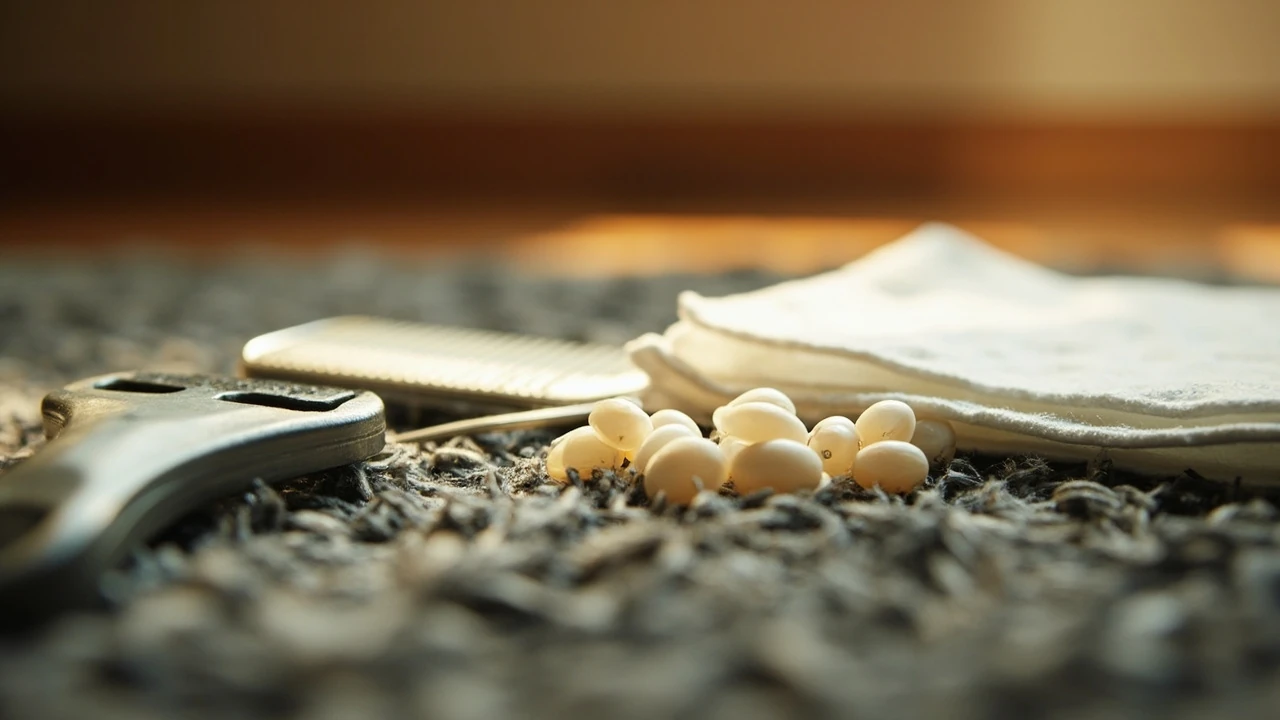
Flea eggs are small, oval, and whitish, often compared to a grain of salt or a tiny grain of rice before it cooks. Freshly laid eggs are smooth and slightly sticky, which helps them fall off the host and lodge into fibers rather than slide across hard floors. Within a day or two, the surface dries to a duller, almost translucent off-white as the larva develops inside.
Size is the most common reason people miss them. A typical ovo de pulga measures roughly 0.5 mm long, well below the threshold most people notice during casual cleaning. Under a bright lamp and against a dark towel, the eggs look like scattered specks. Under normal room lighting on a beige carpet, they essentially disappear, which is why infestations grow quietly for weeks before the first bite.
Three physical traits are worth memorizing before any inspection:
- Color: off-white when fresh, turning slightly translucent or pale tan as the larva matures inside.
- Shape: smooth oval, slightly tapered at one end, never perfectly round.
- Texture: dry and non-sticky once it has been off the host for more than a few hours, which is why eggs end up deep in carpet and upholstery rather than stuck to fur.
Ovo de pulga vs. flea dirt: how to tell the difference
The single most useful skill during a flea inspection is distinguishing a flea egg from flea dirt, because the two are often found in the same spots and at a similar size. Confusing them leads to wasted effort, since each one calls for a different response.
Flea dirt is the dried blood excreted by adult fleas after they feed. It looks like ground black pepper, dark brown to black, and it tends to clump along the lower back, tail base, and groin of pets. Flea eggs look like salt grains, white to off-white, scattered in the environment rather than concentrated on the pet itself.
A simple test removes the guesswork. Comb debris from the pet or rub a suspicious speck off a fabric onto a damp white paper towel. If the speck is flea dirt, it will dissolve and leave a reddish-brown halo as the dried blood rehydrates. If it is an ovo de pulga, it will stay solid and slightly translucent, with no red ring around it.
| Feature | Ovo de pulga | Flea dirt (excrement) |
|---|---|---|
| Color | Off-white to pale tan | Dark brown to black |
| Texture | Smooth, oval, dry | Crumbly, gritty, irregular |
| Location | Carpet, bedding, cracks, pet fur | Pet skin, bedding, floor near pet |
| Wet paper test | Stays solid, no halo | Dissolves into a reddish halo |
| What it tells you | Breeding is happening in the environment | Adult fleas are actively feeding |
Where flea eggs hide in a home
Adult fleas lay eggs while they are on a host, but the eggs are not sticky enough to stay in the fur. Within a few hours, they fall off the pet and roll into whatever the pet is lying on. That means the heaviest concentrations of ovo de pulga are wherever the pet spends the most time, not necessarily where bites show up on people.
The most common hiding places, ranked roughly by infestation density, are:
- Pet bedding and blankets: fabric holds eggs in the weave and protects them from foot traffic.
- Carpet and area rugs: especially along baseboards, under furniture, and at the bottom of stairs.
- Couch cushions and upholstery seams: the deep crevices where pets nap.
- Cracks in hardwood or laminate flooring: gaps between planks act as reservoirs.
- Car interiors: dog beds, seat covers, and trunk liners are often overlooked.
- Cracks in baseboards, under doors, and along wall edges: quiet, dark, undisturbed zones.
Bedrooms where pets are not allowed can still harbor eggs carried in on socks, pant cuffs, or slippers, which is one reason infestations survive even in clean homes. Garage floors, laundry room corners, and the spot under the kitchen table are also common secondary reservoirs.
The flea life cycle and why eggs matter most
Breaking an infestation depends on attacking the stage that is most resistant to whatever you are doing. Adult fleas are the visible part of the problem, but they make up only about 5 percent of the total population in a home at any given time. Eggs, larvae, and pupae together account for the other 95 percent, and the egg stage is the foundation of the next generation.
Here is how the cycle runs in a typical indoor environment:
- Egg: laid on the host, falls off within hours, hatches in 2 to 12 days depending on humidity and temperature.
- Larva: worm-like, avoids light, feeds on organic debris including adult flea feces, lasts 5 to 18 days.
- Pupa: spins a cocoon in carpet or cracks, can stay dormant for weeks or months until vibration, warmth, or CO2 signals a host.
- Adult: emerges, finds a host, starts feeding within hours, and begins laying eggs within 24 to 48 hours.
This is why a single treatment almost never works. Killing the adults on the pet leaves the ovo de pulga in the carpet to hatch and restart the cycle. Successful control means combining a pet treatment with environmental cleaning that targets eggs and larvae at the same time.
Health and comfort risks that come with a flea infestation
Fleas are not just a nuisance. A meaningful infestation in a home carries real health consequences for both pets and people, and the egg stage is the upstream cause of every bite that comes later.
For pets, the most common issues include flea allergy dermatitis, which can flare from a single bite in sensitive animals, hair loss along the tail base and hindquarters, and tapeworm transmission when a pet grooms and ingests an infected flea. Heavy infestations in kittens or puppies can cause enough blood loss to trigger anemia, which is a veterinary emergency.
For For additional context, people, fleas usually show up as itchy red bumps around the ankles, lower legs, and waistline. Scratching can break the skin and lead to secondary bacterial infection. In rare cases, fleas have been linked to the transmission of bacterial pathogens, including organisms associated with murine typhus and plague in specific regions. The practical point is that an untreated ovo de pulga reservoir in the home is a health risk, not just a cleaning problem.
Step-by-step plan to remove flea eggs from your home
There is no shortcut, but the plan is straightforward once it is broken into stages. The goal is to reduce the egg and larval population faster than the surviving adults can replace it.
1. Treat every pet on the same day
Pet treatment is what stops new ovo de pulga from being laid. Options recommended by veterinarians include oral or topical adulticides, growth regulators that sterilize eggs as they are laid, and prescription flea collars. Over-the-counter products work for some households, but a vet can match the product to the species, weight, and health of each animal. Every pet in the home needs to be treated at the same time, including indoor-only cats and any foster or visiting animals.
2. Wash all soft materials in hot water
Pet bedding, throw blankets, removable cushion covers, and human bedding where pets sleep should all go through a hot wash cycle, ideally at 130°F (54°C) or higher, followed by a long high-heat dry. Heat destroys eggs and larvae. Items that cannot be machine washed can be sealed in a plastic bag for two weeks, which starves the larvae and prevents any new adults from emerging.
3. Vacuum with intention, not just habit
Vacuuming is the single most effective mechanical control against ovo de pulga and larvae in carpet. A standard vacuum removes a large share of eggs from the surface, and the vibration alone stimulates dormant pupae to emerge, where they can be picked up by a follow-up pass. Focus on:
- Baseboard edges and corners
- Under furniture, especially beds and couches
- Area rugs and runners in their entirety
- Cushion crevices using an upholstery attachment
- Car interiors and trunk liners
Empty the vacuum canister or bag into a sealed plastic bag and put it in an outdoor trash bin immediately. Eggs can survive inside a vacuum if the bag is left indoors.
4. Steam clean carpets and upholstery
Steam at temperatures above 140°F (60°C) kills eggs, larvae, and even some pupae on contact. A slow, methodical pass with a commercial-grade steamer on carpet, area rugs, and upholstered furniture reaches the deeper layers where vacuuming leaves residue. Allow treated areas to dry fully before letting pets back on them.
5. Use an insect growth regulator in the environment
Insect growth regulators, often labeled IGRs, do not kill adult fleas but they stop eggs and larvae from developing into the next stage. Many household flea sprays and foggers contain an IGR alongside an adulticide. Treating the entire floor, not just the rooms where pets sleep, is important because eggs travel on socks and shoes.
What to do about hard-to-reach spots
Most failures happen because the cleaning missed a few small reservoirs. Crack and crevice treatment is what separates a real reduction from a temporary lull.
| Problem area | Why it matters | Best approach |
|---|---|---|
| Baseboard gaps | Quiet zone, hard to vacuum | Vacuum with crevice tool, then apply IGR spray |
| Hardwood floor cracks | Eggs fall between planks | Vacuum thoroughly, mop with hot water, treat with IGR |
| Under heavy furniture | Pets nap there constantly | Move furniture, vacuum, steam, replace bedding |
| Car interiors | Often skipped, reinfest home | Vacuum seats and trunk, wash covers, apply IGR |
| Laundry room and entryways | Eggs tracked in on shoes | Wash floor mats weekly, vacuum daily during outbreak |
For homeowners who would rather not handle chemical treatments themselves, professional pest control can handle the environmental side while a veterinarian handles the pet side. The two tracks need to run in parallel rather than in sequence.
Common mistakes that keep the infestation going
Even a well-meaning cleaning effort can fail when a few predictable mistakes repeat. Knowing them in advance saves weeks of frustration.
- Treating only the pet. Adult fleas die, but the ovo de pulga in the carpet hatches and restarts the cycle within a week.
- Skipping vacuuming in favor of sprays alone. Sprays work best on top of mechanical removal, not as a replacement for it.
- Using foggers as the main treatment. Foggers do not reach under furniture or into cracks where most eggs are.
- Stopping treatment once scratching stops. Eggs take longer to clear than adults, so the cleaning cycle needs to continue for at least 3 to 8 weeks.
- Forgetting the car or a second floor. Any untreated zone becomes the source of the next generation.
How long it actually takes to get rid of flea eggs
Realistic timing helps avoid the false sense of security that comes a week into treatment. Most homes need at least 8 to 12 weeks of consistent work to bring a serious infestation under control, because the pupal stage can stay dormant for a long time and then hatch all at once when the home is quiet.
A reasonable schedule looks like this:
- Days 1 to 7: treat all pets, deep clean, wash all soft goods, vacuum daily, apply IGR.
- Weeks 2 to 4: continue vacuuming every other day, repeat steam cleaning on high-traffic areas, monitor pet scratching and any new bites.
- Weeks 5 to 8: maintain vacuuming, repeat IGR treatment per label instructions, watch for late hatches from pupae.
- After week 8: shift to maintenance, monthly vacuum of pet areas, year-round parasite prevention for all pets.
If bites are still appearing after six to eight weeks, the most common cause is a missed reservoir such as a crawl space, a rarely used guest room, or a vehicle interior.
Preventing the next infestation
Once the home is clear, the goal is to keep it that way. Prevention is cheaper and faster than treatment, and it mostly comes down to consistent habits and year-round parasite control for pets.
Year-round prevention on every pet is the single biggest factor. Fleas do not take a winter break indoors, and even a single untreated animal can restart the cycle. Most modern preventives, including oral chews and topical spot-ons, also sterilize flea eggs so they never hatch, which is the cleanest way to keep the ovo de pulga population at zero.
Supporting habits that make a real difference include weekly washing of pet bedding, vacuuming at least once a week in pet areas, keeping the yard trimmed so wildlife cannot bring fleas close to the house, and checking pets with a flea comb after outdoor time in wooded or grassy areas. When hosting other people’s pets, the same preventive approach should be in place to keep visiting fleas from getting a foothold.
When to call a professional
Some situations genuinely call for a pest control company rather than a DIY plan. A professional is usually worth the cost when the infestation has been going on for more than a couple of months, when multiple pets are involved, when a household member has severe flea bite reactions, or when a previous DIY effort did not reduce bites after six to eight weeks of consistent work.
A good technician will do a thorough inspection first, identify every reservoir including the ones a homeowner is likely to miss, and combine an adulticide with an insect growth regulator that prevents re-infestation. The pet side still needs a veterinarian, and the two plans should overlap by at least one full treatment cycle.
Frequently asked questions
How long does an ovo de pulga take to hatch?
Under typical indoor conditions, flea eggs hatch in 2 to 12 days. Warmth and high humidity shorten the window, while cool, dry conditions can slow it. Because the eggs are constantly being laid by feeding adults, the practical answer is that new eggs are entering the environment every day until the adult population is controlled.
Can I see ovo de pulga with the naked eye?
Yes, but they are at the edge of what most people notice. They look like small white specks, about the size of a grain of salt, and they are easiest to spot against a dark background such as a black towel, a dark sock, or a damp paper towel. A bright flashlight and a magnifying glass help in low-infestation inspections.
Does vinegar or baking soda kill flea eggs?
Neither is a reliable standalone treatment. Baking soda can help with mechanical removal when worked into carpet and vacuumed out, and vinegar is sometimes used in homemade sprays, but neither one consistently destroys ovo de pulga in real-world conditions. Heat, vacuuming, steam, and approved insect growth regulators are the methods that actually work.
Do I need to throw away my couch or carpet?
In almost all cases, no. Thorough vacuuming, steam cleaning, and an insect growth regulator will reach the eggs and larvae in most fabrics. Furniture only needs to be replaced when the infestation has been so severe that the structure itself is holding a reservoir, which is rare. Mattress encasements can also help protect sleeping areas during treatment.
Is ovo de pulga dangerous to humans?
The egg itself is not dangerous, but it is the stage that produces the biting adults that cause the actual problems. Heavy infestations can lead to significant itching, skin infections from scratching, and in rare cases transmission of bacterial pathogens. Anyone in the home who has severe reactions to bites should see a doctor, and pets with heavy scratching, hair loss, or lethargy should see a veterinarian.
Why am I still getting bites after treating the house?
Most often it is one of three things: new fleas emerging from a pupal reservoir that was missed, a pet that is not on consistent prevention, or a secondary location such as a car or guest room that has not been treated. Walking through the inspection checklist again and treating every zone where pets spend time is usually enough to find the gap.
Can fleas live in a home without pets?
Yes, though the population tends to be smaller. Fleas can be introduced on clothing, in used furniture, or by rodents or wildlife that get close to the house. The same environmental cleaning plan applies, with extra attention to entry points, storage areas, and any secondhand fabric that has come into the home recently.
How do I know the infestation is really over?
The clearest sign is zero new bites for at least 4 to 6 weeks while normal household activity continues, combined with no fleas on a white sock test after walking on carpet or upholstery. A flea comb check on each pet, going through the coat slowly, should also come up clean. Until all three are true, the cleaning and prevention cycle should continue.
A practical next step for any homeowner
The most useful single move after reading this guide is to spend 20 minutes with a flashlight, a magnifying glass, and a damp white paper towel checking the top three spots where ovo de pulga shows up: pet bedding, the carpet under the couch, and the area along the baseboard where the family pet sleeps. Identifying the stage of the infestation sets the size of the response, and a small response caught early is much cheaper than a full environmental treatment caught late. For homeowners dealing with a broader household problem at the same time, it is worth reading up on the kind of routine maintenance that prevents other small issues from turning expensive, the way plumbing repair decisions benefit from the same early-action mindset. Anyone also trying to keep a car flea-free while treating the home can borrow a few practical lessons from the way routine auto services are scheduled and tracked, since both jobs reward consistency over crisis response.
Leave a Reply