
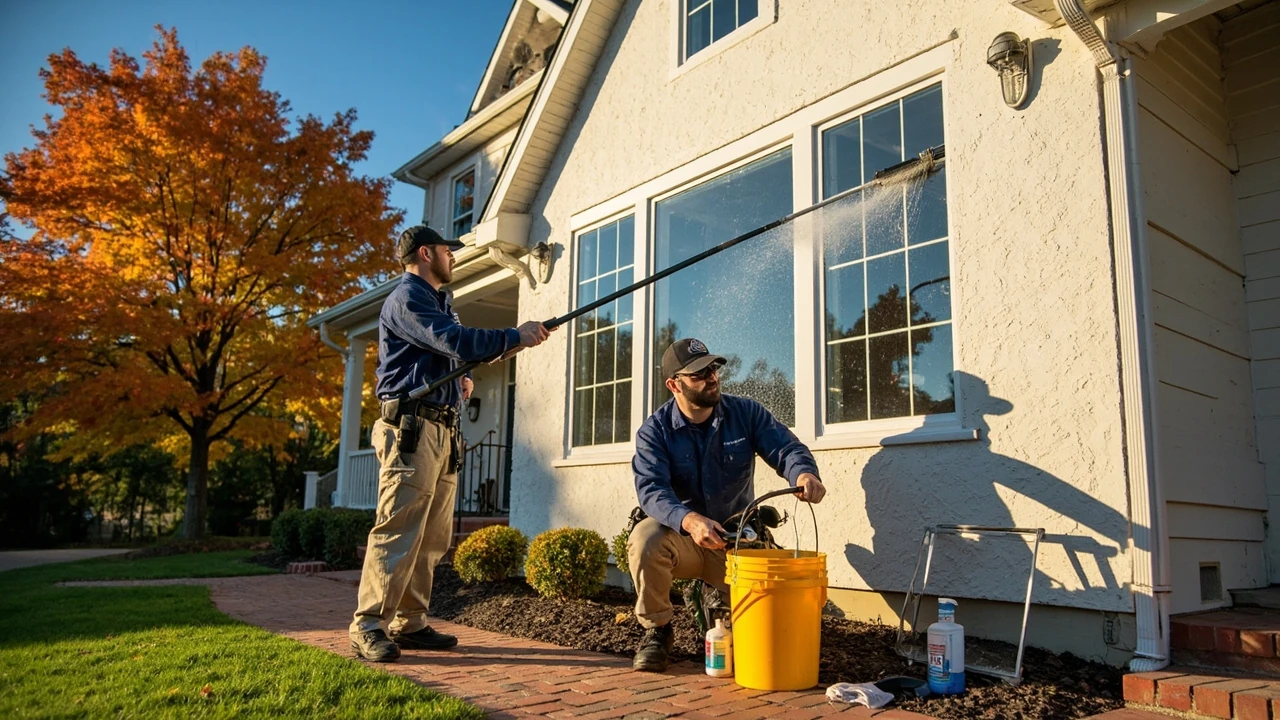
Window cleaning service
A water spot on a picture window, pollen baked onto a south-facing pane, or a child pressing sticky fingers against the glass is usually what pushes a homeowner to call a window cleaning service. The trade looks simple from the ground, but the difference between a quick wipe-down and a properly done job is significant. The right crew uses the right tools, works safely at height, protects the seals and frames, and leaves glass that stays clear for months rather than days. The rest of this page walks through what a professional window cleaning service really does, how it is priced, how often it makes sense to book, and what to check before you let anyone onto a ladder outside your home.
What a window cleaning service actually covers
Most homeowners picture a squeegee and a bucket. In practice, a residential window cleaning service is a small workflow with several distinct steps, and the quality of the result depends on whether each one is done properly.
A standard visit usually includes:
- Pre-inspection of the glass, frames, sills, and screens to identify issues such as cracked panes, failed seals, oxidation, hard-water stains, or paint flecks.
- Dry dusting or brushing of frames and sills to remove grit that would otherwise smear under the wet stage.
- Application of a cleaning solution, typically a professional surfactant mixed with filtered or deionized water, applied with a T-bar applicator or a water-fed pole.
- Squeegee work from the top down, with each pass overlapping the last, and a detail wipe of edges and corners with a lint-free cloth.
- Sill and track wipe-down so that dirty runoff does not settle back onto the cleaned glass.
- Optional extras such as screen cleaning, mirror cleaning, skylight cleaning, gutter clearing, or pressure washing of surrounding trim.
The exact scope varies by region and by company. Some services only touch the glass. Others treat the visit as a light exterior detail, including frames, tracks, and screens. When you request a quote, ask the company exactly which surfaces are included so the price you are quoted matches the result you expect.
Indoor glass, outdoor glass, and why the difference matters
Interior windows and exterior windows collect different types of soil. Outside, you are dealing with rain spots, dust, pollen, bird droppings, road film, sprinkler water, and oxidation. Inside, the build-up is lighter but harder to remove: cooking grease in the kitchen, soap film in bathrooms, fingerprints, pet nose prints, and the haze that comes from indoor humidity cycling against cold glass.
Many homeowners book an exterior-only service because the inside still looks acceptable. That is a reasonable choice, but a full-service window cleaning service should be able to handle both sides in one visit. The interior work is slower because the technician is working around furniture, curtains, and flooring, and the cleaning solution is usually gentler to avoid damaging wood sills or adjacent surfaces. If you have newly painted or stained interiors, flag this in advance so the crew can bring low-moisture tools.
Cleaning methods professionals actually use
Three methods dominate the residential trade. Each has strengths, and a good service chooses the one that fits the property rather than applying the same approach to every job.
| Method | How it works | Best for | Limits |
|---|---|---|---|
| Traditional squeegee and bucket | Technician applies solution with a T-bar, then pulls it off with a squeegee, finishing edges by hand. | Ground-floor and easily accessible windows, interior glass, and detailed spot work. | Requires ladders or lift access above one story; slower on large window counts. |
| Water-fed pole system | A telescoping carbon-fiber or aluminum pole feeds purified water through a soft brush head; the brush agitates the glass and rinses at the same time, leaving no spots. | Multi-story homes, homes with fragile landscaping, and properties where ladders are risky. | Heavier frames or screens still need a follow-up by hand; very heavy mineral deposits may need pre-treatment. |
| Scraper and restoration cleaning | Specialty razors, rubbing compounds, or cerium oxide are used to remove paint, tape adhesive, hard-water etching, or construction residue. | Post-construction or post-renovation windows, and panes with mineral damage that ordinary washing cannot fix. | Risk of scratching if used by an inexperienced hand; usually priced as an add-on. |
If a company only offers one of these methods, that is not necessarily a problem, but it is worth asking which method they plan to use and why. The answer tells you a lot about how they think about the job.
How often a window cleaning service should visit
There is no universal schedule. The right interval depends on the home’s exposure, the surrounding landscape, and how visible you want the glass to be. A few realistic benchmarks for U.S. homes:
- Every two to three months for homes near a busy road, construction site, or coastal salt air, where dust and salt build up quickly.
- Every three to four months for typical suburban homes with mixed sun and shade exposure.
- Every four to six months for homes set back from roads with limited tree cover and no sprinkler spray on the glass.
- Twice a year, in spring and fall, for homeowners who treat window cleaning as maintenance rather than aesthetics.
Many services offer a quarterly or bi-monthly plan at a discounted per-visit rate. The math usually works in the homeowner’s favor if you would otherwise be booking three or more one-off visits per year. Just be sure the plan is cancellable with reasonable notice, because companies change ownership and pricing over time.
What drives the price of a window cleaning service
Quotes vary widely because the inputs vary. The four biggest drivers are window count, accessibility, glass condition, and add-ons.
| Cost factor | Why it matters | Typical effect on the quote |
|---|---|---|
| Number of panes | More panes means more time on site, even when each pane is small. | Per-pane pricing often falls between $4 and $10 per pane, with a minimum service fee for small jobs. |
| Story count and access | Second- and third-story windows usually require ladders, water-fed poles, or lifts. | A two-story home commonly costs 20 to 40 percent more than a one-story home with the same pane count. |
| Glass condition | Construction residue, hard-water etching, paint flecks, and oxidation require extra products and time. | Restoration or post-construction cleaning is often quoted as a separate line item at a higher per-pane rate. |
| Add-on services | Screen cleaning, sill detailing, skylights, mirrors, chandeliers, and gutter clearing fall outside standard glass work. | Each add-on adds a small labor charge; bundling them at the same visit is usually cheaper than booking them separately. |
Per-pane pricing is the most common structure for residential work, but some companies quote by the job or by the hour. Hourly pricing is fair for unusual properties and restoration work, but it requires trust. Per-pane pricing makes the final number easier to predict before the crew arrives.
Safety and insurance questions worth asking
Window cleaning involves ladders, water near electrical fixtures, and chemicals near landscaping. A reputable window cleaning service should be able to answer basic safety and insurance questions without hesitation. A short checklist:
- Do you carry general liability insurance, and is the policy current? Ask for a certificate of insurance with your name listed as an interested party if the work is substantial.
- Are your technicians covered by workers’ compensation, especially for ladder work above one story?
- Do you follow any written safety procedure for ladder use, lift operation, or water-fed pole work?
- How do you protect interior floors, furniture, and adjacent finishes during interior cleaning?
- What happens if a window is broken or a seal is damaged during the visit?
If a company is vague about insurance, that is a meaningful signal. Ladder accidents are one of the most common sources of homeowner liability when an uninsured worker is hurt on the property. A written answer, ideally with a certificate, is the minimum you should accept.
Eco-friendly and pet-safe options
Most professional window cleaning solutions are mild surfactants that rinse cleanly, but if you have curious pets, a rainwater catchment system, or a sensitive garden bed under the windows, it is reasonable to ask. Common options a service may offer:
- Filtration-based cleaning using deionized or reverse-osmosis water, which leaves no residue and needs very little detergent at all.
- Plant-safe surfactants that are designed to rinse off foliage without burning leaves.
- Indoor-only window cleaning using a separate kit so the same cloths used outside never touch interior glass.
None of these choices is strictly required for a normal home, but they are worth knowing about if you have specific concerns.
What to do before the crew arrives
A little preparation shortens the visit and reduces the chance of a miscommunication. Before your appointment:
- Move small furniture, plants, and decor away from interior windows so the technician can reach the glass without moving your things.
- Close all windows and lock them so screens are not damaged when the crew works from outside.
- Move vehicles out of the driveway if the crew needs ladder or lift access against the front of the house.
- Point out any windows that are particularly dirty, cracked, fogged, or stained, so the crew can plan extra time for them.
- Make sure outdoor pets are secured and gates are unlocked for the sections of the house that need access.
This list is not exhaustive, but it covers the items that homeowners most often forget and that slow the visit down.
Red flags when hiring a window cleaning service
Most residential window cleaning companies are small, local operations. That is normal. There are still a few warning signs that suggest the company is worth skipping:
- No written quote, no business address, and no insurance information on request.
- Pressure to commit to a long-term plan on the first visit, before you have seen the quality of the work.
- Refusal to explain the cleaning method or the products used.
- Door-to-door solicitation offering a discount for an immediate booking, especially after a storm.
- Cash-only payment with no invoice or receipt.
None of these is automatically disqualifying, but each one increases the risk that the result will disappoint.
When a window cleaning service is not the right call
There are situations where professional cleaning is not the answer and may even cause harm. If you suspect a failed insulated glass seal, meaning the glass looks foggy or hazy between the two panes, ordinary cleaning will not fix it. The unit itself needs replacement, and a service that tries to “clean” inside a failed seal is either overpromising or about to make things worse. Likewise, a window with a hairline crack, a loose frame, or rotting wood around the sill should be inspected by a contractor or a glass specialist before any cleaning. A conscientious crew will point this out rather than press on.
A short historical note on the trade
Window cleaning has long been a setting for popular culture, and a 1940 Technicolor short from Walt Disney Productions put the trade in front of movie audiences. The animated short, released by RKO Radio Pictures on September 20, 1940, follows Donald Duck and Pluto on a roped platform and is widely cited as a milestone in the use of vertical space for cartoon comedy. Theatrical reviews at the time called it a crowd-pleaser, and the short later appeared in home video collections of classic Disney animation. For readers curious about how the work has been portrayed in film, the Wikipedia page on the 1940 short covers the production history, voice cast, and critical reception in more detail.
How a typical service visit unfolds
To set expectations, here is how a well-run visit usually looks from the homeowner’s side. The crew arrives on time, walks the property with you, and confirms scope. They set up at the first section, work clockwise or floor by floor, and call out anything unusual as they find it. They finish by walking the property again with you so you can flag spots you would like redone. A good service asks for that walkthrough because it short-circuits complaints and shows they stand behind the work.
Average time on site for a typical suburban home with 15 to 25 windows is between 90 minutes and three hours, depending on access and condition. Smaller jobs can be done in under an hour, and larger homes with extensive glass, including sunrooms, conservatories, and floor-to-ceiling panels, can take most of a day.
Comparing a window cleaning service to DIY
Doing the work yourself is sometimes the right answer, especially on a small one-story home with easy access. The honest comparison looks like this:
- DIY cost is mainly the upfront purchase of a squeegee, applicator, bucket, and a small bottle of surfactant, which pays for itself after a few cleanings if the window count is low.
- DIY time is significant. Even a careful homeowner spends two to four times longer per window than an experienced technician.
- DIY safety is the hidden cost. Ladder falls are a leading cause of home injury, and ground-floor attempts often leave upper stories untouched.
- DIY results vary. Without professional tools and purified water, it is common to end up with streaks that the sun reveals the next morning.
For most two-story homes, a recurring professional service is more cost-effective than it first appears, once you account for time, safety, and the quality of the result.
Special cases: skylights, sunrooms, and high glass
Glass that sits in a roof, a sloped ceiling, or a hard-to-reach atrium needs a different playbook. A water-fed pole system, working from the ground or from a flat roof section, is often the safest option. Sloped skylights should be cleaned with tools that do not require the technician to step on the glass. Sunrooms and conservatories with many small panes are slow even for professionals, because each pane has four edges to detail. When you book a window cleaning service for these features, ask whether the quote includes them or treats them as a separate line item.
How to keep glass cleaner between visits
Small habits extend the time between professional visits without much effort:
- Aim sprinklers away from the glass so mineral-laden water does not bake onto the panes.
- Wipe down kitchen windows after heavy cooking, since grease is easier to remove fresh than after it has set.
- Keep screens free of dust so they do not redeposit grime onto the glass during wind and rain.
- Trim back shrubs and branches that touch or rub against the windows, since sap and abrasion both leave marks.
- Address paint, caulk, or stucco splatters promptly, before they fully cure and need a razor to remove.
None of this replaces a periodic professional cleaning, but it does stretch the value of each visit.
Working with neighbors and HOAs
If your home is part of a homeowners association or a shared community, check whether exterior window cleaning is covered by the association’s maintenance contract. In some planned communities, exterior window cleaning is bundled with other services and the cost is included in dues. In others, each homeowner is responsible. A quick check can save you from paying twice for the same work.
Putting it together on choosing a window cleaning service
Pick a window cleaning service that is licensed and insured in your area, uses a method appropriate for the building, and is willing to walk the job with you before and after the work. Confirm the scope in writing, including any add-ons you want, and ask about a maintenance plan only after the first visit has met your expectations. The cheapest quote is rarely the best one, and the most expensive quote is not automatically a sign of higher quality. What matters is whether the crew shows up on time, does the work they said they would, and stands behind it if something goes wrong.
Frequently asked questions
How long does a window cleaning service visit usually take?
For a typical suburban home with 15 to 25 windows, a professional visit runs between 90 minutes and three hours. Homes with extensive glass, sunrooms, or skylights can take longer, while small one-story jobs can be finished in under an hour.
How often should I book a window cleaning service?
Most U.S. homeowners benefit from a visit every three to four months. Homes near the coast, busy roads, or active construction may need service every two to three months, while homes set back from those exposures can usually stretch to twice a year.
Do I need to be home during the visit?
For exterior-only work, many homeowners do not need to be present as long as the crew has access to the areas they need to reach. For interior cleaning, plan to be home so the crew can move through the house and you can walk the work at the end.
What is the difference between window cleaning and window restoration?
Standard cleaning removes everyday soil, dust, and water spots. Restoration is a separate service for glass with paint, hard-water etching, oxidation, or construction residue, and it requires specialty tools and products. Restoration is usually priced higher per pane.
Can a window cleaning service fix foggy windows?
No. Fog between the panes of an insulated glass unit means the seal has failed, and the unit needs to be replaced. A window cleaning service can clean the exterior and interior surfaces, but cannot fix a failed seal.
Are the cleaning products used by a window cleaning service safe for pets and plants?
Most professional solutions are mild and rinse cleanly, but if you have concerns, ask the company in advance. Many services offer plant-safe surfactants or pure-water cleaning systems that use very little detergent.
What should I do to prepare for a window cleaning service?
Move small furniture and decor away from interior windows, close and lock all windows, secure outdoor pets, and point out any windows that need extra attention. A short walkthrough at the start of the visit sets the scope clearly.
Is a window cleaning service worth it for a small apartment or condo?
Often, yes, especially for upper-floor units where ladder access is risky. Many services have a minimum visit fee that makes small jobs affordable, and the result is usually noticeably better than a DIY attempt on the same glass.
Can a window cleaning service clean skylights and sunroom glass?
Yes, but skylights and sunrooms are usually quoted separately because they require different tools and more time per pane. Ask whether your quote includes them or whether they are an add-on.
What happens if a window breaks during a cleaning visit?
A reputable window cleaning service carries general liability insurance that covers accidental damage. Confirm this before booking, and ask the company how they handle breakage so expectations are clear if something goes wrong.
Leave a Reply