
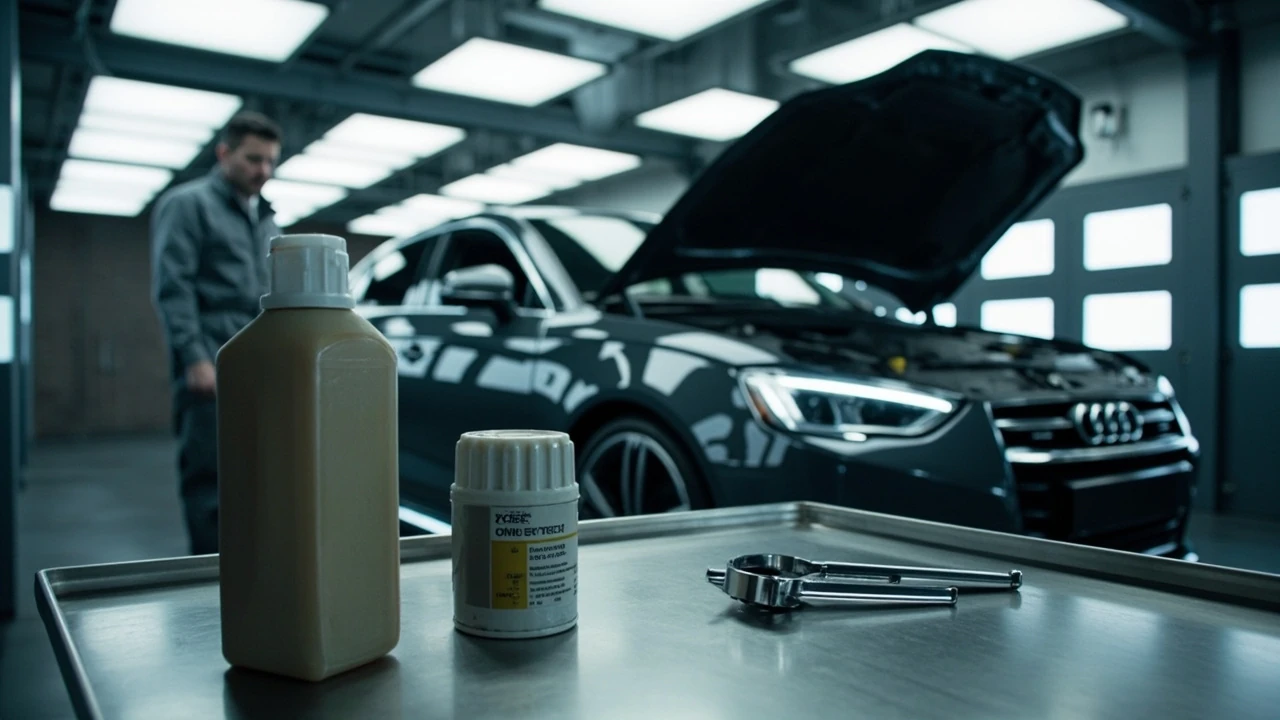
Mercedes oil change: what every driver needs to know before the next service
A Mercedes oil change is not just a routine chore lifted from a generic maintenance checklist. Modern Mercedes-Benz engines are built to tight tolerances, often use specific low-friction synthetic oil grades, and pair that oil with a sophisticated service interval computer that decides when the next change is really due. Treating the service as an interchangeable commodity job, or using the wrong oil specification, is one of the most common reasons owners end up with warning lights, reduced fuel economy, or expensive long-term engine wear.
This guide walks through what actually matters when scheduling a Mercedes oil change: how the brand’s recommended intervals work, which oil grades are approved for modern engines, what a typical service includes beyond the oil itself, how pricing varies between a dealership, an independent specialist, and a home garage, and the signs that the car is asking for attention before the dashboard says so. It is written for owners of current and recent Mercedes-Benz models, including the C-Class, E-Class, GLC, GLE, A-Class, and the more performance-oriented AMG and Maybach variants that share much of the same oil technology.
How Mercedes-Benz service intervals actually work
Older Mercedes-Benz models followed a relatively simple rule: change the engine oil roughly every 5,000 to 7,500 miles, or once a year, whichever came first. The brand still publishes a general recommendation in that range for many models, and most authorized service centers use it as a baseline. You can see the same broad guidance reflected in the answers a typical Mercedes-Benz service center gives owners, where the suggested window is usually framed as every 5,000 to 10,000 miles depending on conditions.
On most Mercedes-Benz cars built since the mid-2010s, however, the service is no longer governed only by a calendar. The vehicle’s Assyst Plus system monitors driving style, engine load, cold-start frequency, idle time, and trip length, then calculates the remaining oil life and displays a message in the instrument cluster when service is approaching. When the message appears, the car is telling the owner that the oil has reached a calculated wear threshold, not that a fixed distance has passed.
That shift has two practical consequences. First, an owner who drives mostly short trips in city traffic may see the service light appear well before 5,000 miles, because short trips create more condensation and fuel dilution in the oil. Second, an owner who drives long highway miles on a regular commute can sometimes stretch beyond 10,000 miles between changes, because steady-state engine operation is gentle on the oil. The right interval is the one supported by the specific car’s service computer, the owner’s manual, and the type of oil that was installed at the last service.
For drivers who do not have a fixed maintenance routine, the safest plan is to treat a Mercedes oil change as a once-a-year event at minimum, and to follow the in-car message rather than a calendar if the car is equipped with Assyst Plus. Both approaches converge on the same idea: the engine should never run for a year or many thousands of miles without a fresh charge of approved lubricant.
Which oil Mercedes engines actually need
The single most important decision during a Mercedes oil change is the oil specification, not the brand on the bottle. Mercedes-Benz publishes an internal approval list, commonly referenced as the MB 229.x series, and most modern gasoline and diesel engines require a fluid that meets one of those approvals. Some of the most common specifications owners encounter include:
- MB 229.5 — a long-life synthetic specification used in many gasoline engines from the late 2000s through the 2010s.
- MB 229.52 — a low-SAPS formulation required by many modern four-cylinder and six-cylinder engines, especially those paired with a gasoline particulate filter.
- MB 229.71 — used in some of the brand’s latest engines, including certain AMG powerplants that demand very low-viscosity oils.
- MB 228.x specifications — dedicated to Mercedes-Benz diesel engines and tuned for their compression-ignition and emissions requirements.
These approvals almost always translate into a low-viscosity synthetic oil. A 0W-40 or 5W-40 MB 229.5 oil is common on older models. Many current four-cylinder engines call for a 0W-30 or even 0W-20 meeting MB 229.52, while some performance applications specify a particular viscosity for a reason: the oil path, piston cooling jets, and variable valve timing components were designed around that exact fluid. The owner’s manual, the data card in the service booklet, or the in-car maintenance menu is the reliable source for the required specification. A general mechanic who reaches for the nearest 5W-30 on the shelf is not the right fit for these engines.
Owners also encounter the term MB 236.x, which refers not to engine oil but to automatic transmission fluid, and the brand also requires specific power-steering and differential fluids on certain models. A proper Mercedes oil change focuses on the engine oil specification, but it is worth confirming during service that the shop is using the correct fluid everywhere it touches the drivetrain.
What a proper Mercedes oil change includes
Even a routine oil service has more moving parts on a Mercedes-Benz than on many other vehicles. The oil itself is the headline, but the service ticket usually includes several related items that, taken together, keep the engine and emissions system healthy.
| Service step | Why it matters | What a careful shop does |
|---|---|---|
| Oil drain and refill | Replaces degraded lubricant with the correct MB-approved grade | Warms the engine briefly, drains into a sealed pan, refills with the exact specification and quantity listed in the owner’s manual |
| Oil filter replacement | Removes the filter that traps metal and combustion debris | Installs a genuine or quality-equivalent cartridge and inspects the housing seal and O-ring |
| Service indicator reset | Clears the Assyst Plus counter so the next interval is calculated correctly | Resets through the diagnostic system rather than by disconnecting the battery |
| Multi-point inspection | Catches issues that could shorten oil life or signal early wear | Checks brake fluid age, coolant level, cabin and engine air filters, wiper blades, and tire condition |
| Underbody and leak check | Identifies gasket or seal failures before they cause damage | Looks for fresh oil trails, weeping from the valve cover gasket, oil-pan seepage, and rear-main seal residue |
The reset step is easy to overlook. If the Assyst Plus counter is not reset, the car will continue to count down from the previous service and may show a service message even though the new oil is fresh. On cars with the older fixed-interval indicator, the reset is simpler, but a Mercedes-Benz specialist will still use a diagnostic tool to confirm that the service record is up to date in the vehicle’s maintenance log.
Mercedes oil change cost: dealership vs. independent specialist vs. DIY
The price of a Mercedes oil change varies more than most owners expect, because the engine, the oil specification, the filter, and the labor rate all move the final number. The table below summarizes realistic ranges across common service channels for a modern four-cylinder or six-cylinder Mercedes-Benz sedan or SUV, using current labor and parts pricing in the U.S. market. Actual numbers vary by region and by the specific model year, so the figures should be read as planning estimates rather than quotes.
| Service channel | Typical oil cost (parts only) | Typical labor cost | Approximate total | Best suited for |
|---|---|---|---|---|
| Authorized Mercedes-Benz dealership | $90 to $160 for MB-approved synthetic oil plus a genuine oil filter | Higher hourly rate, often $130 to $200 per hour | $220 to $450, with a typical service in the $260 to $320 range for a four-cylinder model | Owners under warranty, owners who want a digital service history, owners of AMG and Maybach models |
| Independent European specialist | $60 to $120 for an MB-approved oil sourced through a parts distributor, plus a quality filter | Moderate hourly rate, often $100 to $140 per hour | $160 to $280 for a standard service | Owners out of warranty who want MB-spec work at a lower cost |
| General repair shop or quick-lube chain | Often a bulk 5W-30 or 5W-40, not necessarily MB-approved | Lower rate, but service tends to be transactional | $80 to $150, but the oil may not match the required specification | Owners of older, non-AMG models who can verify the exact oil used |
| DIY in a home garage | $60 to $110 for oil, a filter, a drain plug seal, and a torque wrench if needed | No labor charge, but owner time and disposal cost | $70 to $120 plus a few hours of work and a used-oil disposal trip | Experienced owners with a lift, jack stands, and a torque wrench for the drain plug |
Two pricing patterns stand out. First, the dealership rarely charges less than an independent specialist, but it usually does include a digital service record, a multi-point inspection, and a loaner car in some markets. That package is valuable for owners who are still under the factory powertrain warranty or under a prepaid maintenance plan, because missed or undocumented services can complicate a future claim. Second, the cheapest option is rarely the best option. A quick-lube that pours in a generic 5W-30 may satisfy the basic mechanical step but fail the Mercedes-Benz specification, which can matter to the engine over time and to the car’s value at resale.
DIY is a reasonable choice for owners who are comfortable with the work, but two details deserve attention. The For additional context, drain plug on many Mercedes engines is tightened to a specific torque value, and the disposable plastic sealing washer should be replaced each time. Skipping the washer can lead to a slow drip that stains the garage floor and, over time, lowers the oil level. Owners who choose the DIY route should also confirm that the oil they buy is the correct MB specification, not just a generic synthetic in the right viscosity range.
Signs that the engine wants attention before the service light
Mercedes-Benz service indicators are usually reliable, but the dashboard does not see everything. A few real-world symptoms are worth treating as a prompt to schedule a Mercedes oil change earlier than the in-car message suggests.
- Dark, gritty oil on the dipstick. Fresh MB-approved oil is usually a clear amber color. Oil that has turned black within a few thousand miles, or feels gritty between the fingers, is carrying more combustion byproducts than expected and should be changed.
- Oil level dropping between services. A small amount of consumption, around a quart every few thousand miles, can be normal on some engines. Anything beyond that, or a level that visibly drops between fill-ups, is a signal to inspect for leaks or consumption issues and refresh the oil.
- The service light appears early. If the Assyst Plus message shows up at 3,000 to 4,000 miles, the car has likely experienced many short trips or cold starts. Bringing the car in early avoids running the oil past its useful life.
- Hard cold starts in winter. Heavy cold-start wear is one of the most damaging conditions for an engine. A winter oil change with a 0W-grade fluid improves cold-flow protection and is worth scheduling even if the in-car counter still shows plenty of life left.
- A faint burning oil smell under hard acceleration. Some older engines do show a small amount of oil consumption under load, but a sudden change in smell or visible blue smoke from the exhaust is a reason to inspect the engine promptly rather than wait for the next scheduled service.
None of these signs by itself means the engine is failing, but together they suggest the next Mercedes oil change is overdue or that the previous service used an oil that was not a good match for the engine. A careful owner who logs date, mileage, oil specification, and filter part number at each service can also spot trends, like a recurring early service message, that point to a specific driving pattern or component issue.
Choosing between a dealership and an independent specialist
The choice between an authorized Mercedes-Benz dealer and a good independent European specialist is rarely just about price. It is about the kind of relationship an owner wants with the car, and about how the car is documented over the long term.
Dealership service is the most conservative option. The service writer consults the brand’s database for the exact oil specification, the correct filter, and any model-specific service items. The work is recorded in a digital maintenance log that travels with the vehicle, which can be valuable for resale and for warranty claims. The downsides are higher cost, the occasional upsell, and the fact that a dealership may take longer to slot in a routine oil service during busy periods.
An independent specialist that focuses on European brands can match the dealership on oil specification and often on filter quality, while charging noticeably less for the same labor. Many independents have a Mercedes-Benz factory-trained technician and use the same diagnostic tool to reset the Assyst Plus counter and record the service. The risks with independents are uneven quality, so an owner should look for a shop that can name the exact MB specification it plans to use, that stocks Mercedes-Benz-specific filters, and that can show recent work on similar models. A general repair shop that says “we use a good synthetic” without naming an approval code is not the right fit for a Mercedes engine.
For cars that are still under factory warranty, the safest path is a Mercedes-Benz authorized service point, because the warranty terms usually require services to be performed according to the brand’s schedule and documented in a way the manufacturer can verify. For cars out of warranty, a well-reviewed independent specialist is often the more cost-effective choice without sacrificing the quality of the service.
How a Mercedes oil change differs on AMG, diesel, and plug-in hybrid models
The same general workflow applies across the Mercedes-Benz lineup, but a few model families deserve a brief callout because their service requirements are stricter or different from the standard sedan and SUV.
- AMG performance models. AMG engines often use a unique oil specification, sometimes with a higher viscosity requirement, and may run an auxiliary oil cooler that should be inspected during service. Some AMG models also use a dry-sump lubrication system, in which the oil capacity and the way the level is checked are different from a typical engine. Owners of AMG cars should use a service center that has specific AMG experience rather than a generalist.
- Diesel models (BlueTec and earlier). Diesel engines need an MB 228.x specification oil that is formulated for compression ignition and for the high pressures inside modern common-rail systems. The service interval on many diesels is also longer in miles than on a comparable gasoline engine, because the engines run at lower RPM and the oil contamination profile is different. The oil filter and the fuel filter are both replaced at the service, and the urea system should be checked at the same visit.
- Plug-in hybrid models. Mercedes-Benz plug-in hybrids combine a gasoline engine with an electric drive system. The engine oil change interval is usually longer than on a pure gasoline model, because the engine runs less, but the oil that is used is the same MB-approved synthetic specification. The service visit also includes checks of the high-voltage components, so the shop should be qualified to work on electrified drivetrains.
In all three cases, the underlying principle is the same. The oil must match the engine’s design, the service interval should reflect how the car is actually driven, and the work should be performed by people who know the platform. A Mercedes oil change that ignores any of those three points is the one that tends to cause trouble later.
A practical pre-service checklist for owners
Before dropping the car off for a Mercedes oil change, a few minutes of preparation help the visit go smoothly and make sure the right work gets done.
- Write down the current odometer reading and the date, and bring the last service record if it is not stored in the car.
- Confirm the exact oil specification the owner’s manual calls for, in the format MB 229.x or MB 228.x, and ask the shop to confirm it before service begins.
- Note any unusual symptoms, such as an early service message, an oil level that seems low, or a faint oil smell, and mention them at write-up.
- Ask whether the service includes a reset of the Assyst Plus counter and a digital service record entry, especially if the car is still under warranty.
- Confirm whether the multi-point inspection is included, and whether it covers the cabin air filter, engine air filter, brake fluid age, coolant level, and wiper blades.
- For AMG, diesel, and plug-in hybrid models, ask whether the shop is specifically experienced with the platform, including dry-sump procedures, diesel emissions systems, or high-voltage safety.
This list does not need to be long or technical. Its job is to make the service transparent. A shop that answers these questions clearly, and that records the oil specification and mileage on the receipt, is a shop that will likely do the same Mercedes oil change well every time the car visits.
What an owner gains by keeping the service on schedule
The case for a regular Mercedes oil change is not just mechanical. A documented service history, performed at the right intervals with the right oil, preserves resale value, supports warranty claims, and reduces the chance of a roadside problem on a long trip. Modern Mercedes engines can run for hundreds of thousands of miles when they are looked after, and the oil change is the single most frequent touch point between the owner and the engine. A small amount of discipline on that touch point pays back across the life of the car.
For most owners, the simplest plan is to follow the in-car Assyst Plus message when the car is equipped with it, schedule a Mercedes oil change at least once a year if the message does not appear, and choose a service channel that uses the correct MB-approved oil specification and resets the service indicator properly. That combination, more than any specific brand of oil or any specific shop, is what keeps a Mercedes-Benz engine running the way it was designed to run.
If the owner is unsure about the last service, the most useful next step is to check the maintenance menu in the instrument cluster for the remaining oil service distance and to compare it with the mileage on the last receipt. From there, a single call to a trusted Mercedes-Benz service center, with the VIN in hand, will confirm the right oil specification and the right interval for the specific car. The next Mercedes oil change can then be scheduled with confidence.
Frequently asked questions
How often does a Mercedes-Benz need an oil change?
Most modern Mercedes-Benz models display a service message through the Assyst Plus system when the oil has reached a calculated wear threshold. In practice, the service typically falls between 5,000 and 10,000 miles, with shorter intervals for cars that see many short trips and longer intervals for cars driven mostly on the highway. The owner’s manual and the in-car service menu are the most reliable references for the specific model.
What oil specification does a Mercedes oil change require?
Most current Mercedes-Benz gasoline engines call for an MB 229.5 or MB 229.52 approved synthetic oil, and many recent four-cylinder engines use a 0W-30 or 0W-20 grade. Diesel engines require an MB 228.x specification, and AMG models often use a unique viscosity and approval. The exact specification is listed in the owner’s manual and on the data card inside the service booklet.
Can a Mercedes oil change be done at a quick-lube shop?
It can be, but only if the shop confirms the exact MB-approved oil specification the engine requires and uses a quality filter. Many quick-lube facilities default to a generic 5W-30 synthetic, which is not the right match for most modern Mercedes engines. A Mercedes-Benz dealership or a European specialist is usually a safer choice.
How much does a Mercedes oil change cost at a dealership?
For a current four-cylinder or six-cylinder Mercedes-Benz model, a typical dealership oil service in the United States runs in the range of about $220 to $450, with many routine services landing near the lower end of that range. The exact price depends on the oil specification, the filter, the local labor rate, and any inspection items that are included.
Is a synthetic blend acceptable in a Mercedes engine?
Mercedes-Benz specifies fully synthetic oil for most current engines, and many of the MB approval numbers only cover fully synthetic formulations. A synthetic blend may be acceptable on a small number of older models, but it is worth checking the owner’s manual before choosing one. Using the wrong category of oil can shorten service life and affect long-term engine wear.
Do AMG models need a different Mercedes oil change?
Yes. AMG engines are built for higher outputs and often use a unique oil specification and sometimes a different oil capacity, particularly on dry-sump models. The service interval is also sometimes shorter under track or spirited driving. AMG service is best handled by a shop that regularly works on AMG cars and uses the correct AMG-specific oil and filter.
What is the Assyst Plus service indicator and how is it reset?
Assyst Plus is Mercedes-Benz’s flexible service interval system. It uses data from the engine and the trip computer to estimate the remaining oil life, and it shows a service message in the instrument cluster when the calculated threshold is reached. The reset is performed through a diagnostic tool that writes the new service date into the vehicle’s maintenance log, rather than by disconnecting the battery or pulling fuses.
Can an owner do a Mercedes oil change at home?
Experienced owners with a lift or jack stands, a torque wrench, and a way to dispose of used oil can perform a Mercedes oil change at home. The job itself is straightforward on many models, but the oil must meet the correct MB specification, the drain plug should be torqued to the specified value, and the disposable sealing washer should be replaced. The Assyst Plus indicator should also be reset with a diagnostic tool after the service.
What happens if the wrong oil is used in a Mercedes engine?
Using an oil that does not meet the required MB specification can lead to faster degradation, higher engine wear, increased deposits, and, on engines with a gasoline particulate filter, premature clogging of the emissions system. The Assyst Plus system may also trigger an early service message if the oil life is shorter than expected. Long-term use of the wrong oil can shorten the service life of the engine and the emissions hardware.
How long can a Mercedes go between oil changes if it is driven mostly on the highway?
Under steady highway conditions, many Mercedes-Benz engines can run to the upper end of the Assyst Plus interval, often near 10,000 miles between changes, because the engine operates in a gentle, consistent state. The in-car message remains the most reliable guide, and the car should be serviced promptly when the message appears or when the calendar year passes, whichever comes first.
Leave a Reply