Roof repair: what homeowners should know before calling a contractor
A ceiling stain after a thunderstorm, a shingle tab in the yard after a windy night, and a slow drip that only shows up during sideways rain are the three most common reasons U.S. homeowners start thinking about roof repair. The challenge is that those visible symptoms rarely line up with the actual damage on the roof, and the gap between what a homeowner sees and what a roofer finds is where most repair decisions go wrong.
This guide walks through how roofing professionals think about a repair call: how to read the symptoms, what a proper diagnosis actually includes, when a repair makes sense instead of a full replacement, how costs are typically built, and what to verify on a contractor’s paperwork before any work begins. The goal is to give you a framework for deciding, not to pick a specific brand, product, or contractor for you.
How roofing systems actually fail
A residential roof is not a single surface. It is a layered system, and the order of those layers matters when something goes wrong. From the inside of the house outward, the typical components are:
- Decking, usually plywood or oriented strand board, fastened to the rafters.
- Underlayment, a water-resistant membrane laid over the decking.
- Flashing, the metal or membrane pieces that seal transitions at chimneys, vents, valleys, and walls.
- The primary roof covering, most often asphalt shingles, but also metal panels, tile, slate, or membrane on low-slope sections.
- Ventilation components such as ridge vents, soffit vents, and roof vents.
Most roof repair calls trace back to one of three failure points. The first is the covering itself: shingles can crack, curl, lift, lose granules, or blow off in wind. The second is flashing: the metal transitions around chimneys, skylights, plumbing vents, and wall junctions fail more often than the field of the roof. The third is the underlayment or decking, which can rot or delaminate after a long, slow leak that the homeowner never noticed.
Understanding that layering matters when a contractor describes a repair. A “shingle replacement” only addresses the top layer. If water has already reached the underlayment or decking, the actual scope of work expands, and so does the cost.
Common signs that suggest you need roof repair
Not every roofing problem announces itself with water on the floor. Homeowners often pick up on smaller clues first, and a careful read of those clues usually points to where the roof is actually failing.
Exterior clues
- Shingle granules in the gutters or at the downspout outlets.
- Curling, cupping, or clawing at the edges of shingle tabs.
- Missing shingles or exposed nail heads on the field of the roof.
- Rusted or lifted flashing around chimneys, vents, and wall transitions.
- Damaged or detached ridge caps along the peaks of the roof.
- Sagging sections along ridgelines or in roof valleys.
- Moss or dark streaks that hold moisture against the shingle surface.
Interior clues
- Brown or yellow ceiling stains, especially after wind-driven rain.
- Peeling paint or damp drywall near exterior walls and ceilings.
- Damp or musty smells in the attic after a storm.
- Visible daylight in the attic through the roof deck.
- Higher than expected attic humidity or ice dam formation in winter.
The trick is that interior clues often appear far from the actual entry point. Water can travel along rafters, underlayment seams, and even inside wall cavities before it shows up as a stain. A stain in a bedroom ceiling, for example, can come from flashing failure two slopes away. This is why a visual inspection from the ground or a single stained patch is rarely enough to scope a repair.
Diagnosing roof damage: what a proper inspection includes
Roofing contractors do not all inspect the same way, and the depth of the inspection drives the quality of the repair quote. A basic inspection typically covers the field of the roof, the flashings, the gutters, and the visible attic. A thorough inspection goes further.
When you are evaluating a contractor, it is reasonable to ask what their inspection actually covers. A useful baseline looks like this:
- Walk or drone-scan the field of the roof, photographing each slope.
- Inspect flashing at every penetration: chimneys, plumbing vents, attic vents, skylights, and wall transitions.
- Check valleys, ridge lines, and hip lines for cracked or missing cap shingles.
- Examine gutters and downspouts for shingle grit, sagging, or detachment.
- Inspect the attic for daylight penetration, water staining, and signs of trapped moisture.
- Look at soffit and ridge ventilation for blockages or damage.
- Document the roof’s age, prior repairs, and any visible code issues.
Most reputable contractors will provide photos and a written scope. If a contractor only quotes over the phone without seeing the roof, the quote is almost always incomplete. The exception is a very small, very obvious repair such as a single missing tab on an otherwise sound roof, and even then a quick photo is standard.
Roof repair vs. roof replacement: how to choose
Not every roof problem calls for a full replacement, and not every damaged roof is a good candidate for a repair. The right call depends on the age of the roof, the extent of the damage, and the long-term plans for the house.
| Factor | Repair is usually the better choice | Replacement is usually the better choice |
|---|---|---|
| Roof age | Roof is under 10 to 12 years old, or the existing shingles are still within their rated service life. | Roof is at or past its rated service life, or the existing shingles are discontinued and cannot be matched. |
| Damage extent | Damage is localized to a defined area, slope, or feature. | Damage is widespread across multiple slopes, or involves structural issues at the deck. |
| Leak history | One or two leaks with a clear, repairable source. | Recurring leaks in different spots, often a sign of systemic underlayment failure. |
| Underlayment condition | Underlayment is intact where it can be inspected. | Underlayment is deteriorated, wrinkled, or missing in multiple areas. |
| Future plans | Homeowner plans to stay only a few more years and the repair buys useful service life. | Homeowner plans to stay long term, and a full system reduces total cost over time. |
| Resale plans | Home is being sold as-is and a repair is acceptable disclosure. | Buyer’s inspector flagged the roof, and a warranty-transferable replacement is needed. |
A useful rule of thumb is that if more than about 25 to 30 percent of the roof is affected, or if damage is on multiple slopes, a patch usually costs more in the long run than a full replacement. Conversely, a clean, localized leak around a chimney on a 7-year-old roof is almost always a repair, not a replacement.
What a typical roof repair actually involves
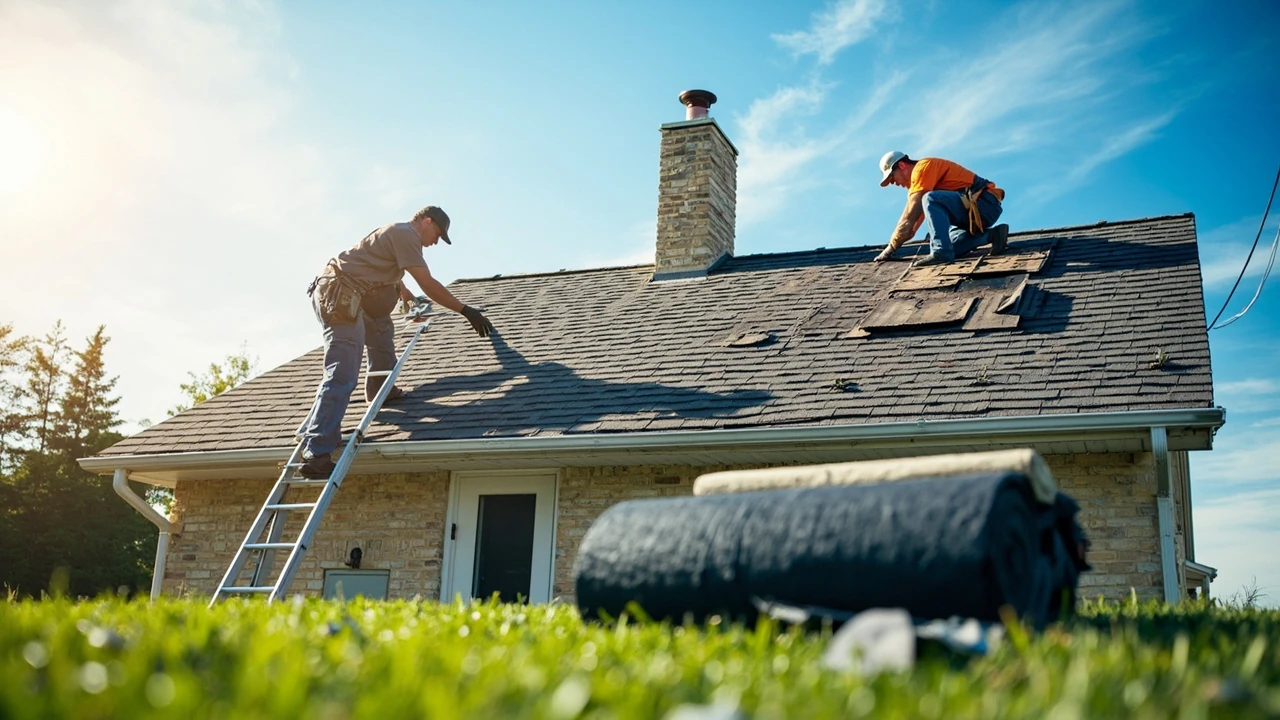
The work itself is more involved than many homeowners expect. A standard shingle repair on a small section of roof usually includes several steps that are easy to underestimate.
- Setting up ladders, fall protection, and a debris catch at the work area.
- Lifting the affected shingles carefully so the surrounding tabs are not damaged.
- Removing the damaged shingles and the nails holding them.
- Cutting back any damaged underlayment and inspecting the decking underneath.
- Replacing rotted or delaminated decking if needed.
- Installing new underlayment that ties into the existing layer properly.
- Installing new flashing if the leak was at a transition rather than in the field.
- Installing matching or near-matching shingles and sealing nail heads.
- Cleaning up nails and shingle debris from the yard and gutters.
That sequence is why a “small” repair rarely has a “small” price tag. The labor to set up, lift, integrate, and clean up is a large share of the total. If a quote seems unusually low, it often means the contractor plans to skip one of those steps, and that shortcut is usually where leaks come back.
How roof repair costs are typically built
Most roof repair quotes break into a few predictable buckets, and understanding the buckets helps you compare one quote to another. The main components are usually labor, materials, access, and the specific scope items for the repair.
| Cost component | What it covers | Why it varies |
|---|---|---|
| Labor | Tear-off, installation, flashing work, cleanup. | Driven by crew size, region, and roof complexity. |
| Materials | Shingles, underlayment, flashing, sealants, fasteners. | Driven by material type, color match, and minimum order quantities. |
| Access setup | Ladders, harnesses, debris catch, dumpster if needed. | Driven by roof height, pitch, and the size of the work area. |
| Decking repair | Plywood or OSB replacement if rot is found. | Driven by the amount of damaged decking, often billed per sheet. |
| Flashing work | Replacement or re-sealing of chimney, vent, or wall flashing. | Driven by the number of penetrations and the metal type required. |
| Permits | Local permits when required for structural or large-area repairs. | Driven by jurisdiction and scope. |
For most U.S. homeowners, a small, targeted roof repair falls in the low four figures, while a more involved repair that includes decking and flashing can run into the mid-to-high four figures or more. Costs vary widely by region, roof complexity, and material. The right comparison is not a national average, but several local written quotes that break the scope into the same buckets.
Choosing materials that match the existing roof
For a homeowner in a major metro area, working with a regional roofing company with a local office is often a useful middle ground. Local offices tend to have a stake in their reputation within the city, they can be on site quickly for warranty follow-up, and they typically carry proper state licensing for the jurisdictions they serve. Homeowners researching their options can review Priority Roofing’s Dallas office as one example of how a regional contractor presents its team, service area, and approach, and use the same kind of detail as a benchmark when comparing local providers in their own city.
Material matching is one of the trickier parts of any repair, and it is where many DIY attempts and budget contractors run into problems. Asphalt shingles in particular are sold in dye batches, and colors shift noticeably between production runs, sometimes within a few years. Even the same product line in the same color can look different if it was manufactured a few years apart.
For a clean repair, contractors usually try one of three approaches:
- Use a shingle salvaged from a less visible slope of the same roof and replace the visible area with a close-enough match.
- Source a discontinued or aged shingle through a roofing supplier’s inventory network.
- Accept a visual difference, document it, and rely on weathering over time to blend the patch.
On metal, tile, or slate roofs, matching is even more sensitive. A repair that mixes metal panels of different gauges or coatings can cause galvanic corrosion, and tile or slate repairs usually require a specialty roofer rather than a generalist. If your roof uses anything other than standard three-tab or architectural asphalt shingles, ask specifically whether the contractor has experience with that covering.
DIY roof repair: where it is and is not a good idea
There is a narrow band of roof work that a careful homeowner can do safely, and a much wider band that looks simple on video but goes wrong quickly. The honest answer depends on the roof height, pitch, and the homeowner’s comfort with heights and basic tools.
Work that is often reasonable for an experienced homeowner:
- Replacing a single missing or lifted shingle tab on a low-slope, easily accessible roof.
- Re-sealing a small flashing gap with roofing cement as a temporary fix.
- Replacing a section of damaged gutter or a downspout elbow.
- Cleaning debris from roof valleys and gutters.
Work that is usually better left to a licensed roofing contractor:
- Any repair that involves lifting multiple courses of shingles.
- Any repair on a steep-slope roof, a multi-story home, or near a fragile skylight.
- Any repair that involves replacing flashing at a chimney or wall transition.
- Any repair where decking may be soft or rotted.
- Any repair that needs to be tied to a manufacturer warranty.
The safety case is straightforward. Falls from a single-story roof are a leading cause of serious homeowner injuries, and the cost of a professional repair is almost always less than an emergency room visit. The quality case is just as important: a DIY repair that fails a few months later usually causes more damage than the original leak.
Working with insurance after storm damage
Storm-related roof damage sits in its own category because the payor is often an insurance company rather than the homeowner. The mechanics matter, and a small number of decisions at the start of the claim usually determine the outcome.
Useful steps for a homeowner dealing with a storm-related repair:
- Document the damage with photos and short video from the ground before any cleanup.
- Make temporary repairs, such as tarping, only after documentation is complete, and keep receipts for any emergency work.
- Contact the homeowner’s insurance carrier and open a claim, then get the claim number in writing.
- Schedule the adjuster visit, and have your contractor meet the adjuster on site if your carrier allows it.
- Compare the adjuster’s scope of loss to the contractor’s quote, line by line, before signing anything.
- Keep all invoices, photographs, and communications until the claim is closed and any repairs are paid out.
Insurers typically distinguish between “sudden and accidental” damage, which is usually covered, and wear-related damage, which is not. The age of the roof, the type of policy, and the local weather event all affect the outcome. A public adjuster can sometimes help on larger claims, but only after the homeowner understands the fee structure and the contract terms.
How to evaluate a roofing contractor
Roofing is a trade where the difference between a good contractor and a poor one is not visible from the curb, and where storm seasons attract out-of-town operators who move through a region quickly. A few checks help separate the two.
Verifying the basics
- Confirm a state or local contractor’s license where one is required.
- Confirm general liability insurance and workers’ compensation coverage, and ask for the certificates directly from the insurer.
- Look for a physical business address, not just a P.O. box or a cell phone number.
- Check the contractor’s standing with the local Better Business Bureau and your state contractor licensing board.
Evaluating the proposal
- The proposal should describe the scope of work, the materials to be used, and the start and completion window.
- It should specify who is responsible for permits, if any are needed.
- It should state the payment schedule, with a small deposit at signing and most of the balance due at completion.
- It should include a workmanship warranty in addition to any manufacturer material warranty.
A good local contractor will be comfortable with all of these. A contractor who pushes for full payment up front, asks the homeowner to pull the permit, or has no verifiable local address is a higher-risk choice, and price alone should not override that risk.
Working with a regional roofing company
Preventive maintenance that reduces future roof repair
Most roof repair calls are the result of small issues that were allowed to grow over several seasons. A light, regular maintenance habit usually reduces the number of those calls, and it is something a homeowner can do without climbing on the roof.
- Clean gutters and downspouts twice a year, in late fall and late spring, so water does not back up under the shingle edge.
- Trim back overhanging tree limbs so debris does not accumulate on the roof and abrasion does not wear the shingle surface.
- Walk the perimeter of the house after major wind events and look for shingle tabs in the yard.
- Check the attic for damp insulation, musty smells, or visible daylight at penetrations.
- Schedule a professional roof inspection every two to three years, or after any major weather event, even if the roof looks fine from the ground.
None of these steps are expensive, and the small ones that a homeowner can do from the ground or from a ladder are the most cost-effective insurance against a future repair call.
How long a roof repair should last
A well-executed roof repair on a relatively young roof should last most of the remaining life of the surrounding shingles. A repair on an older, weathered roof is a different story. Two useful expectations to set before any repair work begins:
- On a roof with several years of useful life left, a proper repair should perform for the remaining service life of the surrounding area, not just a season or two.
- On a roof that is at or near the end of its rated life, even a clean repair is a short-term fix, and the homeowner should plan financially for a full replacement in the near term.
If a contractor cannot explain, in plain language, how long the repair is expected to last given the condition of the existing roof, that is a reasonable follow-up question before any work begins.
Frequently asked questions
How do I know whether I need a roof repair or a full replacement?
The decision usually comes down to the age of the roof, the extent of the damage, and the condition of the underlayment and decking. If the roof is under about 12 years old, the damage is localized to one slope or feature, and the rest of the roof looks sound, a repair is usually the right call. If the roof is at the end of its rated life, the damage is widespread, or there are recurring leaks in different areas, a full replacement is usually more cost-effective over time.
How much does a typical roof repair cost?
Costs vary by region, roof complexity, and the type of covering, but a small, targeted repair on an asphalt shingle roof generally runs in the low four figures, while a more involved repair that includes decking and flashing work can climb into the mid-to-high four figures. The right comparison is several local written quotes with the same scope of work broken into labor, materials, and access.
Can a homeowner do a roof repair without a contractor?
A careful homeowner with a low-slope, easily accessible roof can handle a small number of repairs, such as a single missing shingle tab or a small section of gutter. Most other repairs are better left to a licensed contractor because of the safety risk of working at height, the risk of causing additional damage, and the difficulty of tying a DIY repair to a manufacturer warranty.
How long does a roof repair take?
Most small repairs are completed in a single day, while more involved repairs that include decking or flashing can take two to three days. Weather, material availability, and crew scheduling can all affect the timeline, and a good contractor will set a clear window in the written proposal.
Will a roof repair match the existing shingles?
Not always. Asphalt shingles are produced in dye batches, and the color can shift noticeably between runs. A skilled contractor will use salvaged shingles from a less visible slope, source aged stock through a supplier, or document a small visible difference. The patch will usually weather into the surrounding roof over the first year or two.
Does homeowner’s insurance cover roof repair?
It depends on the cause. Most policies cover sudden and accidental damage from events such as wind, hail, or a fallen tree, but not damage from wear, age, or lack of maintenance. The age of the roof, the policy terms, and the specific weather event all affect the outcome, and a careful documentation process usually improves the result.
What questions should I ask a roofing contractor before signing?
Useful questions include whether the contractor is licensed and insured in your state, whether they will provide a written scope of work and a written workmanship warranty, who is responsible for permits, what the payment schedule looks like, and whether the crew is the contractor’s own employees or subcontracted. Asking for local references and the physical business address is also reasonable.
How do I find a reliable roofing contractor in my area?
Start with local referrals from neighbors, friends, and your homeowner’s association, then check licensing and insurance records with your state contractor board, and read recent customer feedback on independent review sites. A regional roofing company with a local office is often a good middle ground, since they have both the resources of a larger company and a stake in their reputation within your community.
What is the most common cause of roof leaks?
Failed flashing is the most common cause, particularly around chimneys, plumbing vents, skylights, and wall transitions. Shingle damage from wind and impact is the second most common, and deteriorated underlayment or decking is the third. A careful inspection of every transition on the roof is usually how a contractor pinpoints the actual entry point.
How can I prevent roof repair calls in the future?
Keep gutters and downspouts clear, trim back overhanging tree limbs, walk the perimeter of the house after major wind events, and have the roof professionally inspected every two to three years or after any significant weather event. Catching a small problem early almost always costs less than repairing a leak that has been developing for a season or two.
A practical next step
The most useful single step a homeowner can take before scheduling any roof repair is to ask a contractor to put the scope of work, the materials, the timeline, and the warranty in writing, and to walk through the roof photos with you so you can see what they are actually proposing to fix. A clear, written understanding of the scope is the most reliable way to compare quotes, avoid surprise charges, and keep the project on track. If the contractor cannot produce that, the next contractor probably can.
Leave a Reply